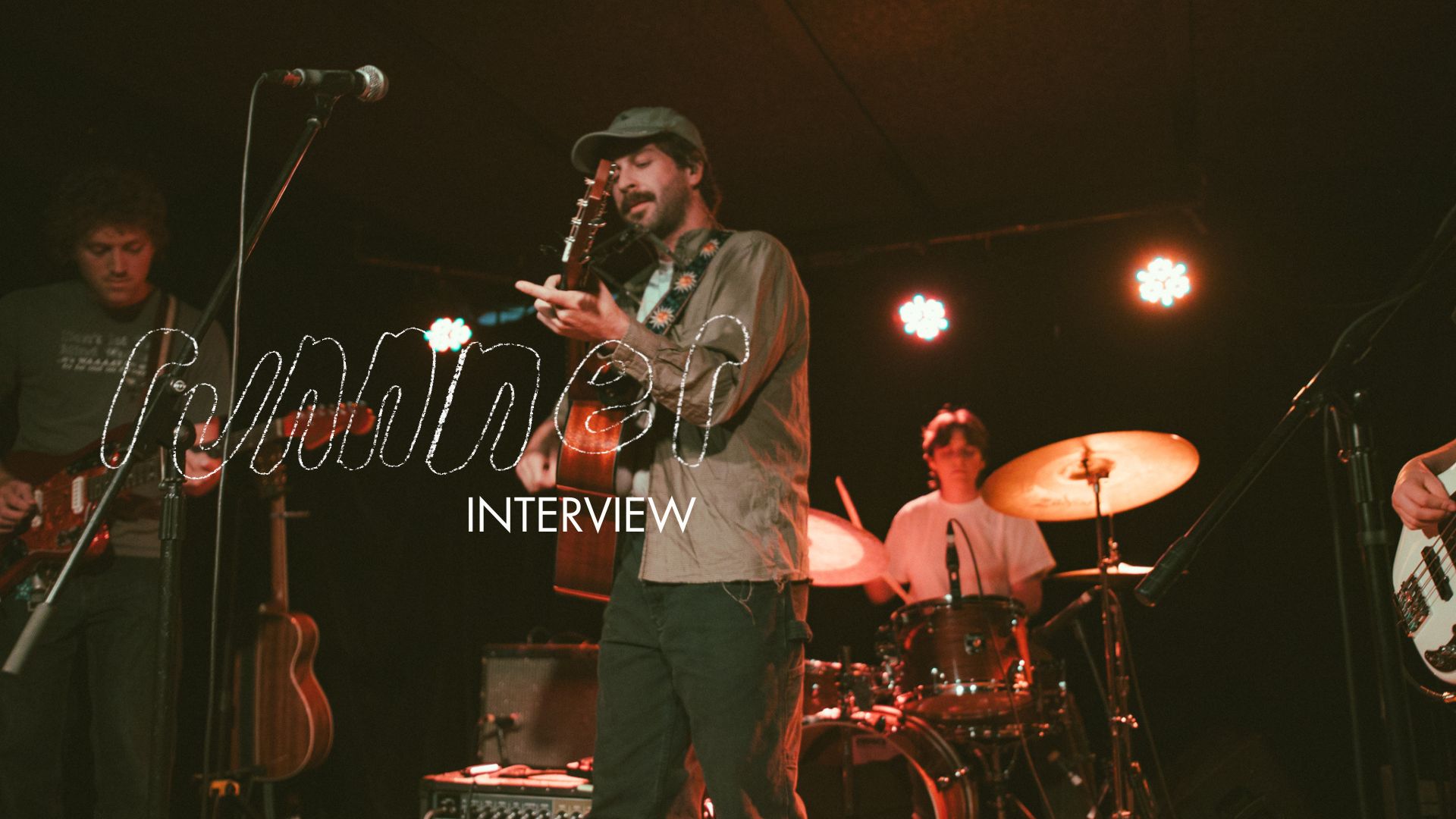

Photo by Weadee at the Baby G
When A Welcome Kind of Weakness (Runnner’s sophomore album) came out, it carried all the restlessness of its writing: songs imagined while stuck in bed, unable to move. A year later, is the welcome mat still out? This week, Noah Weinman takes us through the record, we talk the limits of naming things, being halfway home at 2:30 a.m., re-recording old songs, and the LA house where it all began.
Absent Sounds: It is almost one year to the day since you released A Welcome Kind of Weakness. Is that kind of weakness still welcome a year later?
Noah Weinman: Yeah, well probably that specific kind of weakness is. I feel like I've, it's always a struggle to try and welcome weakness and I think that title is more about agreeing to be in practise of that. So I'm still trying to welcome it, I guess. Yeah.
Absent Sounds: I love the idea of letting yourself welcome or you know, to not fight against in a way. I've been thinking a lot about the idea of a quiet inertia that you mentioned in your Bandcamp, that stationary period of going through the murkiness of whatever you're feeling. What have you learned that you couldn't have learned if you had kept moving through it without staying, and maybe what the past year has brought you as well.
Noah Weinman: I think that I learned mostly that I can just, trust myself a little bit more. I think, you know, I'm an anxious person, but most of my anxiety is always kind of anticipatory anxiety. And, being a musician is being a life or leading a life that is very uncertain most of the time. But the deeper I get into doing this in this life, I think that I'm learning to trust myself that like whatever comes up, once I'm dealing with it, I can do with it. And I'm trying to just let myself off the hook in anticipation more. That's real. I think that period of my life where I was, you know, injured, it was the, like the uncertain point of the injury before diagnosis, before surgery, So much stuff that like was worse. And then once all I had to do was like, get better and I had a plan, everything was okay and, you know, some people would maybe struggle more with that level of isolation and immobility, but I think at that point I was just happy to know what I was doing.
Absent Sounds: It almost feels like when you're holding your breath so much before something drops, you're expecting the worst, even if you don't know what it is. I also was noticing you mentioned, being reminded that you can get through it. Were there points of time where you stopped trusting that you were able to do that in the past?
Noah Weinman: I think that I still struggle with it in a lot of capacities in my life where, you know, you want to feel capable, but you're also like constantly venturing into unknown territory. And even though it's like I've done something similar before, I can do this in the future, every time feels different. And you do have to summon that courage each time. So I think that I'm still very much in practise with it.
Absent Sounds: So A Welcome immediately rushes us in, but so softly. Which comparatively to the next track, Achilles And Feels like we're just dropped into this pit. Tell us about allowing your music to fuel that aggression and also the space between both of those songs.
Noah Weinman: So I guess A Welcome is the first track, and that is like an ambient overture. 'cause the record I did before that was Stars Dust, which was the kind of instrumental ambient album made of stems of the album before. I wanted to connect 'em all together. So A Welcome is like an ambient overture made of stems from the rest of the album. And I wanted it to tease a bunch of songs out and then Achilles And was always in my mind, like the first real track on the album. I was just so stir crazy in bed not being able to move that I was getting myself through that time by just imagining a song that punched you in the face right in the beginning. So I wanted that.
Absent Sounds: You got it.
Absent Sounds: It's like a low one and two. And it also brings up one of my favourite lyrics that you say, “the moment that you notice changes the picture in your head.” And it brought to mind this quote that I had heard through Anne Carson. She was talking about Rainer Maria Rilke who was talking about Inseeing, more specifically that moment maybe when God would look at a thing and say this is the Thing, and then like finally see it for what it is instead of everything. And I don't know. So like the noticing, which I think brings things into focus or makes things what it is. I wanted to just ask about that line and also if there's other points, or maybe a point in time that you felt like you were Inseeing things.
Noah Weinman: No, I love this. This is a cool new word for me to have learned. The moment that you name something, you're closing it off and you're making its own category. So, in that song, what I'm thinking about more is like, when you wake up from a dream and you try to remember the dream. But it seems like the harder you try to remember the dream, the more it escapes you like a so it's almost the opposite of inseeing in that way. Or a type of inseeing where you're just taking the nuance of your dream and just assigning it as dream and then it loses like colour and vibrance and kind of detail along the way, which is maybe more sad, than it really needs to be.
Absent Sounds: Is that a necessary process you think? Of like naming or closing it?
Noah Weinman: Whoa. If we want to have language, I guess. But something that I think I've always been interested in is, by nature of having language, we're always gonna be leaving certain things out. Like not having the right words for something. Selling something short in some way by just trying to reduce it to description.
Absent Sounds: I suppose in some ways that's where music also fills the gap too.
Noah Weinman: Language set to music gets to try to fill in. Yeah.
Absent Sounds: And I love that in comparison to the, well taking note of the fact that this record was so plainly stated, like all the things you were feeling and a lot of the emotions were just- you weren’t hiding.
Noah Weinman: I was trying to be brave.
Absent Sounds: Every time I notice an artist who's not afraid, like I think there's beauty in abstraction and also being a little mysterious, but I guess specifically would be in the next tracks, Spackle.
Noah Weinman: Spackle is very straightforward. And I think that it's more straightforward than I usually let myself, but I think I was like trying to write that idea of a song for a long time and I didn't want to do something that was like too sweeping because then it would feel too much. So then when I had the idea to just do the moment of spackling the hole, I feel okay, that's enough of a separation that I can just say, yeah. Maybe exactly what I wanna say. Or else it's gonna start to get too far away from, the actual heart of the song.
Absent Sounds: I think the idea of fixing is also like emotional fixing, emotional care. That feels pertinent here too.
Noah Weinman: I think is like a lucky accident on my part 'cause I was like literally speckled.
Absent Sounds: And it made us also start to think about the idea of knowing when it's something should be like fixed, whether it's musically or like emotionally or when it's, I should leave it. Let the wound be. Yeah.
Noah Weinman: You know, I was moving out anyway. I don't have to Spackle that
Absent Sounds: Yeah. So it begets the question- why do it?
Noah Weinman: Courtesy. Security deposit.
Absent Sounds: Oh my gosh. You know, actually there's a book like, why do anything when Environmental Catastrophe- it feels like everything's falling apart. And he said
Noah Weinman: Just wait till you hear the next Runnner album.
Absent Sounds: It's crazy 'cause the answer was courtesy. He was like, even if humans all die out, it's just being nice.
Noah Weinman: Yeah, it's true.
Absent Sounds: We'll call back. I guess I was gonna ask quickly too, in terms of the opposite of being ambiguous, right? What are the things that help you feel like a security blanket, like an invisibility cloak? That I am always running to touch this thing that I don't have to face. The
Noah Weinman: Interesting, like in lyrical ambiguity? Like in writing or just like in life?
Absent Sounds: In maybe both. I guess.
Noah Weinman: In life ambiguity's hard, I would say. I'm always working to live in the grey area a little bit more. 'cause I think that kind of goes hand in hand with the uncertainty that we were talking about that makes me jittery. So I don't actually know maybe what I would do. You know, writing music for me is a way of dealing with ambiguity because even if I haven't figured out whatever the thing is that I'm dealing with, if I can put it into a song, then at least it's less ambiguous in some way. Without actually having to you know, define it more.
Absent Sounds: I think I asked just because I know a lot of times people say oh, I can't tell who's talking on the radio if it's your sister or it's you. And I'm like, I don't say my name on purpose 'cause I don't wanna know.
Noah Weinman: That's kind of fun. And that's like the magic of being a twin. My mom's a twin.
Absent Sounds: Oh my gosh. Is she identical?
Noah Weinman: No, they're fraternal.
Absent Sounds: Still close?
Noah Weinman: Sometimes yes. And sometimes I don't know.
Absent Sounds: Well, there's the ambiguity.
Noah Weinman: Yeah. There's some ambiguity.
Absent Sounds: Yeah. I'm gonna skip Chamomile unless there's anything you wanna say about this track.
Noah Weinman: I guess the one thing is that Chamomile has this, it's much older than everything else on the record, and it's part of the same set of songs that is like eggshell and frame. Which are all the like kitchen cupboard songs Yeah. That I seem to have written all in like a two month period.
Absent Sounds: Yeah. Well, you love domestic life. Here we go. Maybe Claritin is another .
Noah Weinman: Songs about things.
Absent Sounds: I wanna know a little bit more about the production choices you did well throughout the record here to make it, 'cause you do something really cool in this track specifically.
Noah Weinman: Yeah. Claritin has the, like I was at a different studio and I just picked up this guitar and I was playing it with my car key and it had this really ridiculous twangy sound. And then I didn't end up using anything else from that session, but then I was trying to recreate it when we were recording this song for real. And I couldn't do it, so I just had to text the other producer And say can I just get that one stem from that session if you have it? And he had it and it was great.
Absent Sounds: Awesome.
Noah Weinman: But that song's probably the most sonically different on the album. It's maybe more similar to how I make music outside of that record, which is more like sample and like drum machine and stuff like that. It just seemed like that's what it needed.
Absent Sounds: Speaking towards more of the themes now on this track, it brought to mind some of the questions that I had been like literally sitting through Reddit, sifting for hours. That idea of, is it better to avoid and numb or face things head on? I'm not totally avoidant, but we have a very strong avoidant tendencies .
Noah Weinman: I'm an avoidant person too.
Absent Sounds: I feel like I could keep running forever. Is it worth it to stop running sometimes?
Noah Weinman: Usually yes, but that doesn't ever really give me the confidence. Like avoidant people when they have that moment of confrontation, it often goes okay, right? Like it never blows up in your face. As bad as the avoidant person maybe thinks it's going to. And yet we don't learn and bring that to the next time.
Absent Sounds: Yeah, I guess it's like even if the worst case scenario does happen, you'll survive, I guess.
Noah Weinman: Yeah. We'll live.
Absent Sounds: I think there's a line you even said it'll probably be okay. I don't remember what fact that is,
Noah Weinman: But Yeah. It Probably.
Absent Sounds: I mean, even talking about the ness of the, of like facing your emotions too. If you go down to PVD
Noah Weinman: PVD or it's, the providence for short, like the place,
Absent Sounds: We were thinking about the geo, the physical locations. Where are some important landmarks that we gotta think of?
Noah Weinman: Providence is a very important place. I lived there for a really short amount of time. But it was like the first place I lived after college and where I really started to understand that so much of being a musician was gonna be sitting at home during the day, working at a restaurant at night and just trying to write as many songs as I could. So that's when a lot of those songs came in. 'cause I would just sit in the apartment and write these songs. And that song kind of was thinking about a night that I had a show in New York and I decided, after the show to just try to drive home to Providence. And at two 30 in the morning, I'm exactly halfway and I just think I've made a horrible choice, but I might as well keep going. And I think that became emblematic for a lot of other things in my life.
Absent Sounds: Would you consider that the sunken cost? Like that?
Noah Weinman: Or I don't even know. Like sunken cost policy, just, like it's just better to make any decision. I stopped at the halfway point and just thought you know, at least I made some decision and I might as well just keep going, which is maybe I'm maybe at this point in so many other aspects of my life and I haven't even realised it yet. So I should just keep going.
Absent Sounds: That's so real. That's such a great little thing. A lot of the things in therapy were like, you have to just make a decision. The more you wait, the worse it gets. And that, I think that's beautiful to go into Coinstar because here is tell us about the last time you flipped a coin or the last time you felt like you were at a coin flipping decision or that you let somebody else decide you.
Noah Weinman: I feel like my life is just coin flips these days. But I'm maybe getting better at it. I am, I'm trying to think of the last there's gotta be some small decision that I made with a coin flip. Usually like watching movies yeah, are you gonna watch this movie? There's like a wheel or something. But, I think that I'm not really much of a coin flipper, but. A piece of advice that someone once gave me is, you should always flip a coin when you're trying to make a decision. Because if you're unhappy with the result, that means that you wanted to do the other thing.
Absent Sounds: Yeah. Or sit for a day and pretend that you made the full decision
Noah Weinman: And then but yeah, in that song I was reading a book and this woman kept flipping coins, to answer questions and I was like, I wish I could be that kind of person, but I don't think I ever could be.
Absent Sounds: I mean, that's so lovely. Wanted to ask you a little bit more about what parts of your life you feel like you're okay to chance or you leave to chance intentionally, if there is any.
Noah Weinman: I would like to leave more of my life up to chance, and that is maybe something I'm practising You know, it's hard to not be in control and we obviously are super not in control of so many things, and I'm constantly like getting frustrated and stressing myself trying to put my hand on the scale more. And I just think that. If I can make peace with everything a little bit more, I'll enjoy it all more too. Yeah.
Absent Sounds: Yeah. I think it's, yeah. Part of it is the radical acceptance that I don't have control, or at least I have the illusion of control Well that, another line that I love that I made to is a passing the baton from one hand to the open. That's what it feels
Noah Weinman: And that is aspirational for me. Like just flinging it into the void and saying figure it out
Absent Sounds: Down to Get Real Sleep. This was written in 2020?
Noah Weinman: 2016, 2017 around then. It would probably the oldest song on the album.
Absent Sounds: I know it can be scary to go back and touch things that I have done in the past or worked on in the past. Do you feel like you're very in touch with the former versions of you? Or that you have to, if it's frozen, you can't let it thaw and continue to change it that way?
Noah Weinman: I think most of the time I don't dig up old stuff that much, but given how much time I had it was like I wanted to work on more music than I felt like I could write.
Absent Sounds: Yeah. '
Noah Weinman: Cause I was so sedentary and so preoccupied with other things, so it was really nice to have preexisting things to pull from. But I haven't really done that much since. But that song, there's a very functional problem that kept holding me up, from doing it earlier. I couldn't get the recording right and I couldn't get the bridge the way I wanted it, so giving myself more time to let it marinate a little more ended up being really helpful for that.
Absent Sounds: Well, I think sometimes also, you finally have a skill that you didn't have, well, not a skill, but you know, I have totally have the capacity to do something that I couldn't have done. I did.
Noah Weinman: I wish I could make every song over at this point.
Absent Sounds: Would you ever?
Noah Weinman: I mean, I have a little bit, like always repeating, has rerecord from songs that I recorded in 2016, and there's like a secret little four song EP that I only gave out to my mailing list a couple months ago that has a couple other rerecord. And that's part of like a series that I've been working on called Photos of Rivers. That idea comes from another lyric, from a microphone song or a Mount Eerie song, I forget, where he talks about. Recorded music is like building a statue of a waterfall, like a song is gonna have a long life and so many iterations, and the recording is only one version of that. So I do feel emboldened to make as many versions as I want. The problem is I only have so much time to make re-record and new recordings. So that was just a fun experiment and I'll probably add more to that as time goes on, but it's on the back burner for now.
Absent Sounds: Have an, I guess I gotta join the mail.
Noah Weinman: Yeah, I'll send mail.
Absent Sounds: I love mailing lists, I wanna sit down and consume everything,
Noah Weinman: I really only send three a year or something.
Absent Sounds: Wow. Well, track number nine, we have split, Split. We've thought immediately about the comparison between, what is it returning back home after you finished college? University. And the parallels.
Noah Weinman: Totally. I think that was what I connected to. 'cause that song was written initially in that first part. Like coming back from college and being in, a very vibrant, active part of your life, and then just all of a sudden being sucked into this still vacuum. And I really felt that all over again. And the funny thing about writing songs is that, you know, you do find that you're repeating, Always repeating. You're like, oh, I've been here before. I've written this song already. And that was cool because that song, in its original version was a mess. And I didn't really like parts of it, but I liked that it was upbeat and I liked that there were certain phrasing things that I felt like I stopped writing in that way. So it was cool to be able to tap back into that. And then the comparisons were just so made, finishing out the lyrics or like changing lyrics. So easy.
Absent Sounds: I mean, even though you're saying you feel like you're constantly repeating things, has your relationship to that sort of feeling of failure changed over time?
Noah Weinman: Yes. But then also my metrics of success change over time. So I'm in this window that feels like it's shifting upward always. And that's hard. And I have to always, remind myself to look back More fondly.
Absent Sounds: I mean, even you mentioning window, I feel Like we were talking about before, how it feels like there's so many tactile domestic dealing with your work. Where would you say this one lives? In the rooms of the house?
Noah Weinman: I feel this one exists on my balcony. Which I had a little like deck out of my, I lived in this really silly house in LA at the time. That was, it was like seven of us living in this house. It was because it was a big house. It was like a music mansion. It was one of those like cheaply built, really thin walled Ugly columns, big houses. And then some musicians had moved in there 10 years before me. And they just kept the lease going. So the rent never really went up and the landlord was chill about it and, yeah, it just became this thing. And I had this room that had a little balcony off on the side and that was the extent that I could really go outside during that time. And I felt like this whole album was me gazing at something moving past me.
Absent Sounds: I love that. The space of the home fits nicely into the next track, which is Sublet. I love Sublet. Tell us a little bit about that.
Noah Weinman: I guess it felt maybe the passing of the baton or something where I wanted to have the song I wanted to appreciate the fact that I was coming out of this stillness and then be well aware that in a few months I was gonna miss that stillness. 'cause my life would just continue on that unending wheel. I really wanted to have a big guitar solo at the end of that, it was super fun to record it.
Absent Sounds: It's also interesting 'cause you were mentioning the tension between the stillness now, but then also knowing that you're, even if you are restless that year, yeah. It's gonna go, you're gonna Do you miss it?
Noah Weinman: Sometimes. I mean, just getting to sit in bed, play guitar. I watch like a lot of like TV and played video games. It's nice. Yeah.
Absent Sounds: Well that's why I'm like, I know COVID was really bad, but sometimes I'm like, I just miss being not have, not feeling anyone's forcing
Noah Weinman: I think people have certain fondness for different periods of the pandemic oh, I just wish that I could be home and watch movies again. Like you can, but then it's hard to pull yourself out. It was easy when everyone was pulled out.
Absent Sounds: The last track, which is Untitled October Song. Before I give you the baton to answer a little bit about it, we wanted to just first off, appreciate the record here. So I'll let it, we'll take it in, but also, yeah. Is it, when you're at this track, are you handing the baton off to the next period of time with the next music that you're creating? Or do you find that you're, like submitting to this spot and resolving, yeah. Done.
Noah Weinman: I think it's more resolve. Because I think of it as being, Like the grounding at the end of the album rather than like the liftoff. Sublet feels like the liftoff. That's like submitting to the maybe like tumultuousness that's to come
Absent Sounds: With the belting at the end.
Noah Weinman: Yeah. And like I, and that feels like if it's a show, like that's the closer of the set and then the Encore is Untitled October Song, and that's when you just have the moment of just hopefully some reflection, some understanding and yeah, just being back in that moment.
Absent Sounds: Yeah. Well, I'm so glad that we got to spend the moment tonight. Yeah. And I guess we'll see if that actually is the encore. But that's the end of the interview.
Noah Weinman: Yay.