
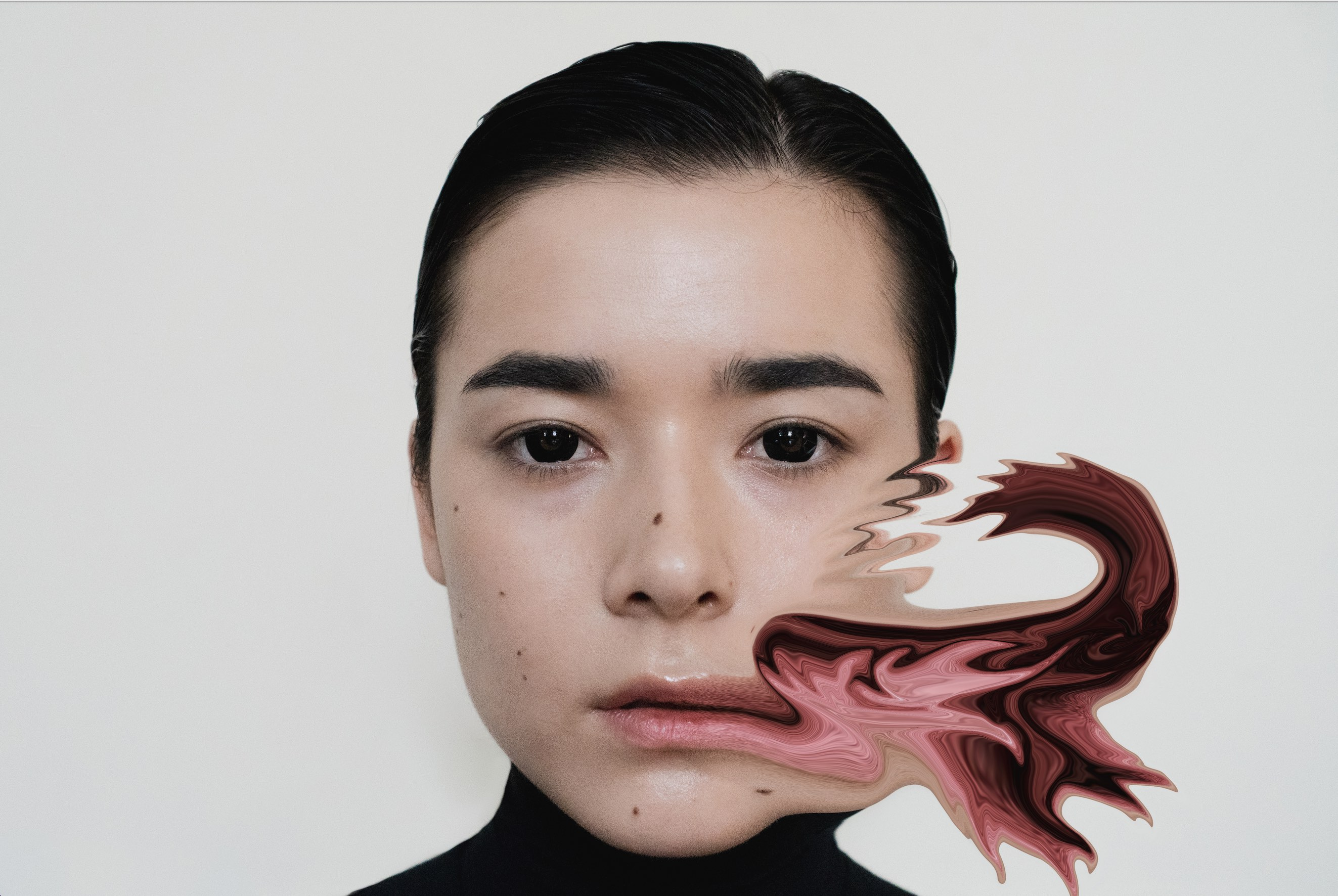
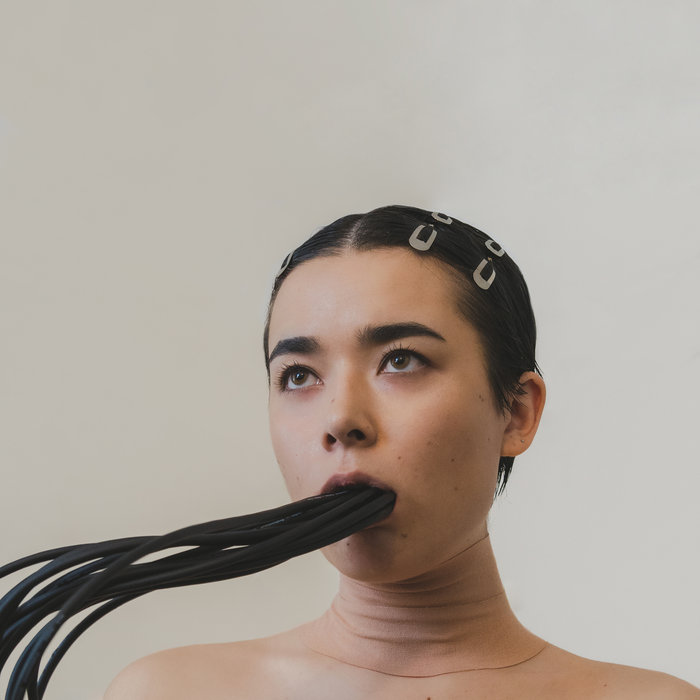
Follow the Cyborg album art, courtesy of Miss Grit / Mute Records
Today's episode is an interview with New York based artist Miss Grit. We dive into some classic anime, what it means to Follow the Cyborg, and play through their latest album of the same name.
Follow the Cyborg is an exploration of identity, technology, and the blurred lines between humanity and machine. On this album, she crafts a soundscape that's as haunting as it is futuristic, inviting listeners into a world where emotions are as digitized as the beats that carry them. Throughout our interview, we discussed how Follow the Cyborg delves into the struggle of finding one's place in a rapidly evolving world.
With each track, Miss Grit dismantles the traditional notions of self, piecing together a narrative that's both deeply personal and universally resonant. The album isn't just a collection of songs, it's a manifesto for a new kind of existence, one that challenges us to redefine what it means to be human.
Absent Sounds: Our first question today is gonna be a lighthearted intro question, especially since we're at the end of the year. What's the smallest thing that's filled you with joy this past year, or that you're thankful for?
Miss Grit: I guess, yeah, just thankful for the apartment that I have. The little space in the world I'm allowed to occupy is a very big thing to be grateful for. That brought me joy this year.
Absent Sounds: How long have you lived in that apartment?
Miss Grit: It's been about two years now. I feel like I've made it my own, so it brings me joy, and I like to take care of it and take care of all the plants inside it. It's a very therapeutic thing for me.
Absent Sounds: Plant parenthood is very good. Does it take you long to make things feel like your home? Does it take a while?
Miss Grit: I guess it just requires a lot of things. I like to surround myself with things that make me happy, so it's a lot of music gear and plants and stuff like that. It's all pretty packed in here.
Absent Sounds: Yeah, I think two years is approximately how long it would take me to officially move into any space. Happy anniversary.
Miss Grit: Thanks.
Absent Sounds: We always like to start off with a little introduction to the artist, for anyone who's not familiar with you or your work. You can begin anywhere, I don't know if there's a place you want to start.
Miss Grit: Yeah. So I've been doing this project, Miss Grit, for about five years now. I've released two EPs and a full length record, and that LP was with Mute Records, this past release. Just a musician. I went to NYU for music technology, that's why I studied there, and I've just been a big music lover for all of my life, I guess.
Absent Sounds: When you say you're a music lover, what would you say is the first album or artist that really got you hooked on music?
Miss Grit: I had some really early artists that I still love, that my parents would play for me, but I feel like the artist that had the biggest impact on me was St. Vincent. I remember her music starting in like middle school, and I feel like that's when I was really starting to take guitar seriously and get really into guitar pedals and stuff. I think she definitely helped launch my motivation and inspiration to become a musician.
Absent Sounds: Yes, those formative years of middle school.
Miss Grit: Yes. The traumatic years.
Absent Sounds: Yeah, I was just gonna say, I was reading this book by Kurt Vonnegut today, and it's kind of related to what you were saying, related to the fact that you were studying music and technology. In the book he was saying that with the arts, it almost seems like the antithesis of anything that uses your brain, the analytical part of your brain. I don't think he was actually saying he agrees with it, but more that if you're a musician coming at it from the lens of science or anything like that. I think one of my favorite things about the album is the whole concept behind it, and I know Weadee was already touching on that as well. Everything you've been mentioning, other than Ghost in the Shell, which is the first one off the top of my head, I'm gonna just jump into Serial Experiments Lain.
Miss Grit: Yeah.
Absent Sounds: Is that what you were also referencing on the album too?
Miss Grit: Yes.
Absent Sounds: I just had to ask that first, because imagine if the entire interview was just that.
Miss Grit: Yeah, totally.
Absent Sounds: I think that's probably one of, I don't want to say the best anime, but it's such a high standard.
Miss Grit: It's really amazing.
Absent Sounds: I love it so much. When was the first time you watched the series?
Miss Grit: I think I watched it over the pandemic, in the early phases, and I was just watching a lot of anime at the time. I hadn't really watched a whole lot before, but I was following the trend and the wave. I'd always watched the Miyazaki movies growing up, and I feel like I really got into the storytelling that a lot of anime has. I watched it over the pandemic and I was just really amazed by the soundscape of it more than anything, and also just the visuals, all the cables, and how her room starts to grow into a monster around her, kind of. I just found a lot of it really powerful imagery, and yeah, a really inspirational series, definitely.
Absent Sounds: I'm kind of assuming that the cables coming out of your mouth on the album art are definitely inspired by that too.
Miss Grit: Yeah, totally.
Absent Sounds: We do have some questions directly attached to the album too, which goes with the little album playthrough we do on the show. The first one jumps off the idea of anime, so Perfect Blue right off the bat.
["Perfect Blue" plays]
Absent Sounds: That was "Perfect Blue" from the album Follow the Cyborg by Miss Grit. You're tuned into an episode of Absent Sounds here on CJAM 99.1 FM, your voice of the underground. Jumping back into our interview with Miss Grit, another great film we were supposed to watch for movie night with some friends. I haven't seen it myself, so let me give a short explanation for our listeners. It's an anime that came out in 1997, and the plot follows a member of a Japanese idol group who retires from music to pursue an acting career. This is all great until she starts being stalked by an obsessive fan, which begins her losing her grip on reality, blurring the lines between what's real, what's fake, and what's fantasy. Why don't we get Margaret to explain the movie?
Miss Grit: Do you want me to explain the movie, or the lyrics?
Absent Sounds: Explain what really stood out to you, we have some lyrics we wanted to ask you about too.
Miss Grit: Okay.
Absent Sounds: Just explain the thing that really stuck with you from the movie.
Miss Grit: I guess the name stuck with me a lot, because I was kind of confused by it, and I was trying to find meaning, looking it up online. There were a couple different interpretations, but I kind of went with the idea of the illusion of yourself in different lenses, through social media, or your social life, or how you are on stage, or how you are through a camera. These different characters of yourself. Perfect Blue shows that in terms of a horror story kind of, and it's a very scary shadow to have around you all the time, these different versions of yourself haunting you in different areas of your life. The tone and the eeriness, but also the cuteness and the beautifulness of the movie, and Satoshi Kon's way of creating movies, it all made me feel really inspired and I wanted to give it a shout out.
Absent Sounds: What character of yourself do you think you've been in the longest, other than an artist or musician?
Miss Grit: I think there's a core self of me that I can identify, that's strengthened me through my childhood to where I am now, so that's probably the longest self of my being that I've known. These different branches aren't necessarily completely different, they're all pretty similar to who I am at my core, just different ways of presenting myself.
Absent Sounds: Is there something that inspired you to change it? Was it just, "I'm tired of being so down on myself"?
Miss Grit: I guess the songwriting process can really highlight my inner voice. I spend a lot of time alone creating, so it's really just my inner voice I have to listen to, and it can be, I found it was often getting in the way of me creating music, which was kind of songwriter's block, I guess. I just felt like there are things I need to do to be kinder to myself, and promote forgiveness in myself, and allow myself to be a flawed person and a flawed musician. So yeah, that's what I've been trying to do.
Absent Sounds: I love the idea of allowing yourself to be a flawed musician or even a flawed person, and letting those flaws seep into your work and just be you. You mention being alone is when your inner dialogue starts to be the meanest or most critical. Do you find that being alone is still a value of yours, or a really big personal thing to your core?
Miss Grit: I think so. I would really like to develop the skill of being able to be more myself around others, and then be able to create more with others and collaborate more. But right now I'm still trying to gain confidence in myself, and doing that alone is kind of the best way for me, I guess. So making sure I have my alone time and giving myself that space is really important.
Absent Sounds: "Nothing's Wrong," the next song on the album, one of the things Weajue and I probably say or think the most often is, "It's fine, there's nothing wrong, it's fine." So we're wondering, is there a phrase you find yourself repeating often, when you're trying to either convince other people that you're okay, or convince yourself that you're okay?
Miss Grit: I guess it's more just my actions, going about business as usual, and doing a lot of masking maybe.
Absent Sounds: I think the lyric that stuck out to me the most was, "Can't figure out how to make things right," because I feel like I've literally written in my journal that I don't know if something's wrong, but I don't know what it is, or I don't know how to fix it. Maybe that's another part of it, you don't have to fix things, or it doesn't have to.
Miss Grit: Right, that's actually a good point. I feel like sometimes just noticing it, but in a neutral light, is kind of the best way to do it, and not get too bogged down.
Absent Sounds: No, yeah. It's just interesting because I was talking to the doctor today about feeling like something is wrong, but you don't know how to change it, and feeling like if you don't change it, you'll be stuck in this hole. So I don't know, because you're not supposed to fight against the feeling, or it's like quicksand and you bury yourself deeper. But I don't know how to not let yourself get sucked into the hole while also being okay with it.
Miss Grit: Yeah, I guess sometimes, because a lot of times when you're masking and trying to avoid facing your problems, it's often because I feel like I avoid it because I'm gonna be met with a lot of judgment from myself. That's probably the number one thing I try to avoid when addressing those things. That's the most productive and easy way to help get through things and untangle these messes.
Absent Sounds: You were mentioning Serial Experiments Lain, so I'm assuming Phone Clone is that same idea. What is a phone clone?
Miss Grit: Yeah, I guess just the version of yourself that lives online.
Absent Sounds: What's the phone clone of Margaret?
Miss Grit: I guess I've tried to make the phone clone of Margaret as close to Margaret as possible, just like a mirror. But I guess, what are my online tendencies? It used to be more concerned about creating a feed, an Instagram feed, all my posts and stuff. But I recently took it all down because I didn't want to have to think about creating something like that. On my Miss Grit Instagram page I try to keep it as professional as possible, just shows, releases, that kind of thing.
Absent Sounds: I will say that every time I try to get rid of a feed, then after a few weeks or months I'm like, "if I had just actually stuck with the feed, it wouldn't look so ugly right now," and now I've wasted months of making it look ugly, and I have to go back and fix it.
Miss Grit: I've never really been able to just sit down and write a song on acoustic guitar. A lot of the things that inspire my songwriting kind of happen in the creation and production process, some of the more technical things you have to learn and troubleshoot while recording a record. So in a way my creative methods do use a good amount of my brain, but there's also a side to my music that occurs just from that natural feeling and instinct inside me. Both are central to how I make music, so pretty balanced, I feel like, between those two.
Absent Sounds: I was just gonna say, I think especially with the idea of the cyborg, it kind of blends the two very nicely.
Miss Grit: Mm-hmm.
Absent Sounds: Breaking off of that, how do you strike a balance between letting it feel organic, but also exploring the possibilities of electronic and the whole web of things?
Miss Grit: I've been thinking about this a lot recently, trying to learn new software and plugins to use, I'm kind of getting back into the songwriting process right now. But I feel like it's really important to make sure that the tools you're using aren't guiding you in the direction that they want to guide you in. Thinking about all the plugins and industry standards I learned while at NYU, and while a lot of that's helpful, it's always important to figure out your own way to use these tools and techniques, that honestly have a lot of depth to them, but sometimes only the surface level gets scratched. So I think it's just not being afraid to experiment with the technology or tools you use, and use them in odd, unique ways.
Absent Sounds: I wanted to ask, do you think you'd ever just throw everything away and get an iPad and use GarageBand?
Miss Grit: Oh, GarageBand. Well, actually, that's so funny you say that, because today I got my first iPad ever, and that's what I'm Zooming with.
Absent Sounds: I was gonna ask if that's what you were using.
Miss Grit: Yeah, I'm still trying to figure out where this camera is and where to look, actually. But I saw that they had GarageBand on there, and I also saw there was Logic Pro, which is the fancier version, but I don't know if you have to pay for that. It is very tempting to condense everything I have into this iPad, but I don't think I could ever do that, honestly. I would get too, well, I do like physical things, and using my hands to turn knobs and stuff like that. So I do love my new iPad, and I'm so glad that I'm now an iPad baby, but I like my gear as well.
Absent Sounds: For sure, it reminds me of how some artists get a new iPad and only use Procreate instead of Photoshop, and it's going to let them do animations, so they think they're going to completely run the game. But I still like using Photoshop, I still like using actual paint.
Miss Grit: Yeah, same. It's also like these layouts of all these different software can be so, not persuasive, but they can guide you, and I feel like it directs the way you create in a certain way, so it can be so strange.
Absent Sounds: And that's so interesting that you mention it guiding you, because the title of your album is Follow the Cyborg. So the idea of following something, could you set the path for us of what that looks like, or if you're even really following a cyborg, or what that is?
Miss Grit: Yeah, I think it's not necessarily meaning the idea of following technology to the end of the world or whatever. It's more alluding to the myth of the cyborg, and how in a lot of movies and films the cyborg story arc starts as a female cyborg being created by a male person and used as a tool by them, basically. And then soon they realize, they begin to become self aware beings, and they can start to have autonomy over their thoughts and feelings and actions. The idea of Follow the Cyborg is to become self aware, and become aware of your place in the world, and how these more powerful branches of anything can oppress you and have an effect on you. Being aware of that, and what it is that you can do to gain autonomy over yourself, and guide your own thinking, I guess.
Absent Sounds: About how you present yourself, with the heritage aspect, I think that's often people's first impression of you, unfortunately, or maybe fortunately, I don't know. Are there aspects of your Korean American heritage that you specifically attempt to infuse into your music? I don't even know if that's ever a constant thought, or if it just naturally exists because you are you.
Miss Grit: I have a hard time seeing my Koreanness sometimes, because being biracial I'm not really sure what is and what is not, I guess. But something I wanted to add onto this album was the song that's written in Korean, it's a Korean translation from Follow the Cyborg lyrics. I've been learning Korean for the past three years or so, and I'm not very fluent at all, not very good at speaking it still, but I wanted to document myself speaking it, and being able to hear myself and perform while speaking it was a really cool thing for me to do, but also learn about myself in a way. Or be introduced to this side of myself, I guess. Growing up I've had a strange relationship with my identity, so there's a lot of figuring out to do still within myself, and taking those parts apart and isolating them can be really helpful for me. So learning the Korean language has been a really cool experience.
Absent Sounds: I think even for us, even though we're kind of just full blooded Liberian, I guess it comes up in a different way than it would for a biracial person. Just the idea of, I don't even feel like I'm African because I've never been there, or I can't speak the language.
Miss Grit: Separated from the culture, that can be a really confusing thing. I totally get it.
Absent Sounds: Follow the Cyborg, I really do love the title, and I know you explained it already a little bit, but it also made me think about this book I was reading called Disability Visibility, which is a book of essays about disability awareness. It's a really great collection, and one of the essays talks about how having certain enhancements, like a hearing aid, or a cane, or medication, is a form of being a cyborg, because those things are also used to, I love the way she described it, but I can't really describe it now. So I was wondering, what are other ways that you think being a cyborg is bigger than just being attached to a robot or something?
Miss Grit: I guess it's sometimes just adapting to the world in weird and different ways that the world isn't really used to, or that aren't the standard of the world. That can be a way of following the cyborg. One of my favorite movies, Sound of Metal, goes through a man who loses his hearing, and I think it really showcased in a beautiful way how you can live one life with certain capabilities and be content, but then also when those things are missing or taken away, it's not gonna be any less than that other life, it's just gonna be a different, beautiful life that you can live. Stuff like that I think is really beautiful, and Sound of Metal captured it really beautifully.
Absent Sounds: I've been afraid of watching that film, because I'm scared every time I go to shows that I'm gonna start going deaf, so I started learning sign language and everything.
Miss Grit: Oh my gosh, yeah.
Absent Sounds: No, you should watch it, Weajue, it's great. Before we start wrapping up, I'll jump to the end and ask, what is the worst way for something to end? It could be a movie, book, or anything.
Miss Grit: Hmm.
Absent Sounds: Because I actually, sorry, I'm gonna say, I didn't like the ending of Sound of Metal. Or the before ending, I like the ending, but not the transition before it.
Miss Grit: I personally don't like when the ending is really drawn out, and you get taken through everybody's aftermath life, you know? It's just too much. But in other things, I do like outros in songs, and I guess music wise, I don't love the fade out ending, but I think it can be used in specific good circumstances.
Absent Sounds: Yeah, maybe it's a little lazy, like a fade to black.
Miss Grit: Yeah.
Absent Sounds: The very, very, very last question about the album I'll ask is about the tax thinking, and how you have people change twice a year. So what are the two times you've changed this year?
Miss Grit: I guess what I was thinking when I wrote that was, I personally feel so altered by the seasons changing, mainly spring and then fall. I feel like during those times of year, something happens where I get very reflective, and on myself, and a little self conscious, I guess. And I think that usually catalyzes not a severe change, but a slight change in how I try to go about my life, or how I try to emote, I guess.
Absent Sounds: And as we enter this new change, I hope that your new self in 2024 is a beautiful self, and one that you take with you further. I don't know, that is my attempt at a segue.
Miss Grit: Thank you guys so much, it's so nice meeting you.
Absent Sounds: No problem, you too. We'll hopefully see you in Detroit sometime around.
Miss Grit: Definitely. Okay, bye.
Absent Sounds: Thank you so much to Margaret for joining us.
