
 Watch the interview here
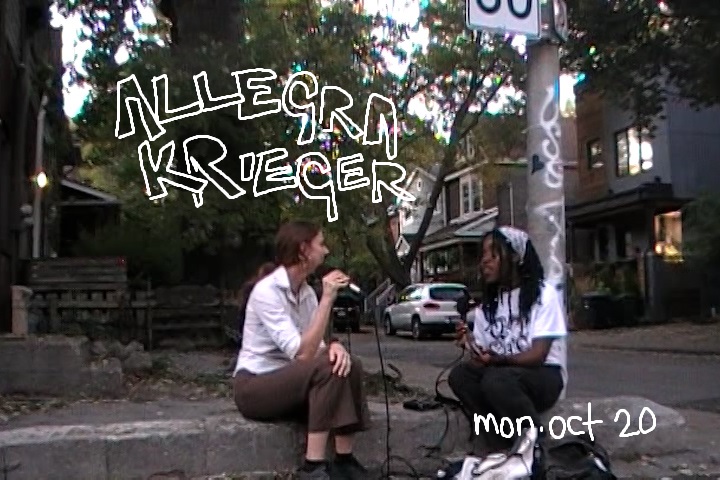
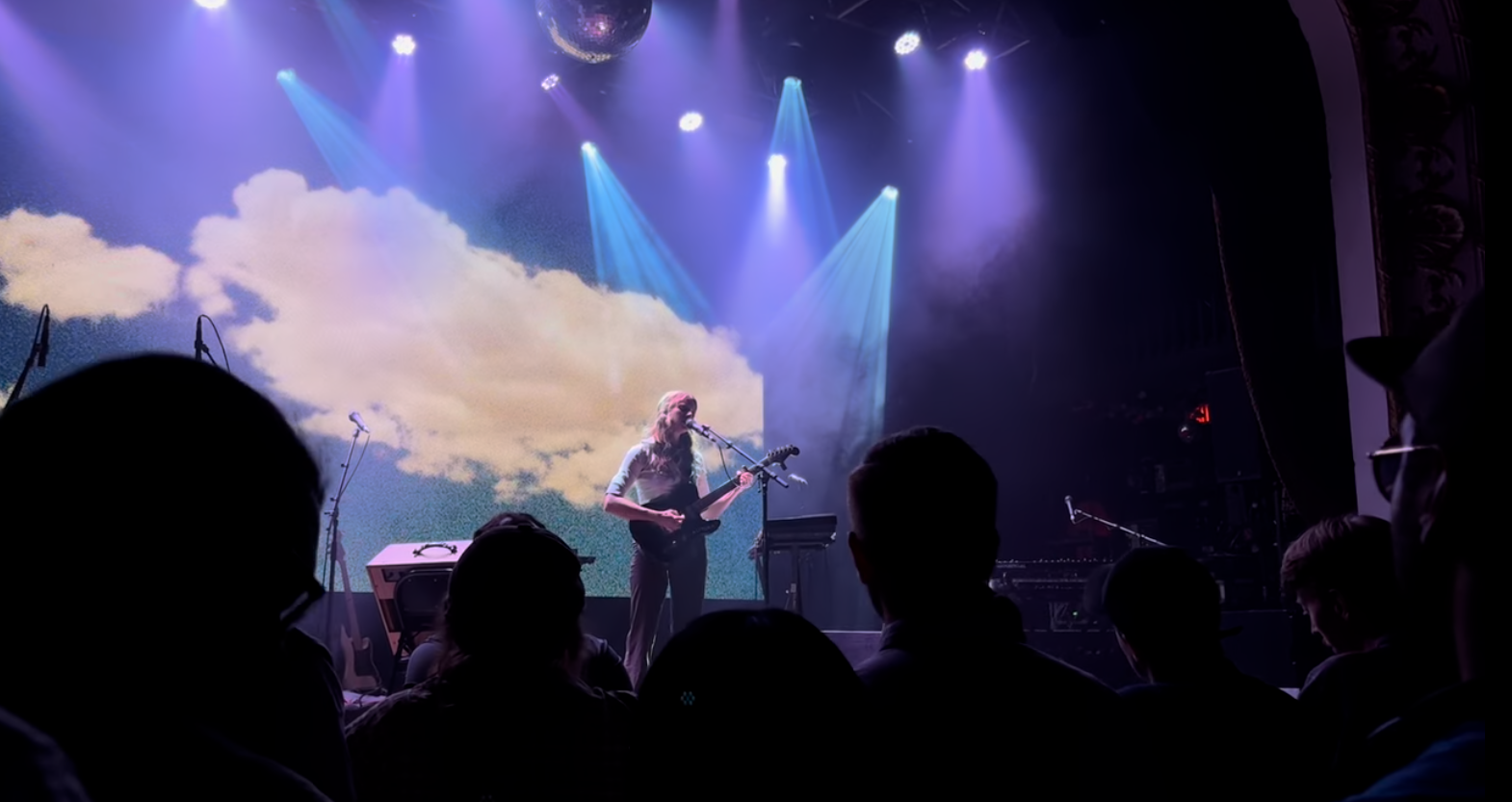
Allegra Krieger joins Weajue for a conversation about her album Art of the Unseen Infinity Machine — a record that grapples with impermanence and the liminal spaces of existence. We talk about the Infinity Machine as a mechanism moving through us, signs, talismans and dream. She explains the strange trinity of pain and joy and compromise, the act of absolving yourself and your body, the binary of here or not-here, and what it means to sit with the pull toward "over and out" when nothing is yours to keep. Recorded outside the Opera House in Toronto on the final night of her tour with Foxwarren. We end off the episode playing tracks from Foxwarren's latest record, 2.
Absent Sounds: Before I get started on the record, I actually wanted to start off a little bit about you. It's a little bit more of the chicken or the egg. When it comes to your music, do you feel like a lot of the part of discovering that side of your artistic self feels like you're uncovering it — like it's something that already exists and you're pulling back the curtain? Or is it something that you're kind of just manifesting or creating as you go along?
Allegra Krieger: I think it feels more like pulling back the curtain. Maybe a little bit of a mixed bag depending on what I'm doing. If I'm writing something that's very lyric heavy, that feels more like an uncovering — sort of like taking in a landscape, looking at some sort of problem or emotional state. But if I'm doing more instrumental or composing, that feels more like you're creating something, like you're painting a blank page.
Absent Sounds: Yeah. No, that's kind of why I was thinking about it — because when I was doing some paintings on my own, sometimes it feels like it's just unfurling in front of me. But other times it's like, is this just always there?
Allegra Krieger: Yeah. I've definitely heard it said before and I feel this way a lot. Especially when you feel like you're onto something — you're exiting yourself a little bit, you're in that place where you don't know where the ideas are coming from, and then you can kind of float back down and edit and change things and make it a whole thing.
Absent Sounds: That brings us to one of the big themes I was getting off this album — a lot of this absence of self, or kind of like removing. But there are two themes. I'll get to those specifically. With the Infinity Machine, I want to know what it does first.
Allegra Krieger: Well, I feel like we're on the same page already. That came — that started because I was working at a bookstore and I was just flipping through some science book. I don't even remember what it was, but I saw "Infinity Machine" on some page and I just started thinking about how there is potentially this mechanism that's consistently, maybe cyclically, just moving all of the time around us and through us. And how all of these light and dark, positive, negative things contribute to the mechanism of this thing that keeps propelling us — at least us humans — forward. For now. And then just propelling the earth forward. And then the cosmos — who knows?
Absent Sounds: Sometimes I think even if humans are gone, there will be something that exists outside of us as well.
Allegra Krieger: Absolutely. Yeah. That's how I feel too. Like, we're so small. We think we have big brains, but I think we're pretty small in comparison to what's going on in nature and all the stuff we don't know. There's a lot we don't know.
Absent Sounds: I feel like our consciousness is what makes us smaller, but also kind of tethers us too.
Allegra Krieger: Yeah. I feel like it does. And it's like — creativity and music and art, I think that's why it's made. That's what it's good for.
Absent Sounds: In reference to the other theme on the other side of the record — which maybe isn't even contrasting — there was a lot of burning. A lot of fire. Do you want to say anything else about that?
Allegra Krieger: Yeah, I think — I mean, that was such a small experience in the scheme of things. When I recorded this record, it had actually just happened. So there were a few songs written in that immediacy. And since then, there have been so many wildfires, so many horrific disasters. I think in that record I was dialing into that sense of a very tactile impermanence — like how you're there one day, the next day you're not. And what does it mean to you to be here now? I think it was me reflecting on, trying to acknowledge that all of these things are happening all of the time on such a grander scale. And then thinking about that blip of what humanity is and what we do while we're here.
Absent Sounds: That brings us to the first track, "Roosevelt Avenue." As soon as the song comes in, it feels like there's so much motion in it that starts us off forward. Can you tell us a little bit about that track?
Allegra Krieger: Yeah. I wrote it — I had this day where I had just moved into temporary living. I was living in a hotel that the city put people in my building up in while they did construction. And that hotel was like a little bit of a trip. It felt like it was stuck in time. And everyone who lived there had been displaced by some other disaster — either flooding or a fire, a lot of people who came from fires. That was just a really surreal experience, meeting some of those people, hearing where they were at — a year, two years later, still living in this hotel. And then I went to Queens. It was also a really smoky day outside, I think there were wildfires. It was a hazy day. There was a lot going on. The world's burning — there always is. But it was a smoky day and we were just walking down the street called Roosevelt Ave. There are a lot of amazing restaurants and just a lot of life there, and it was a really beautiful sunset. It just felt like a nice little weird moment in time where I felt very dialed into all the little details that were passing me by.
Absent Sounds: Yeah. Something about sunsets really dials me into the moment. It feels like a prayer sometimes — to the sky, to the sun. Like it's outside of me.
Allegra Krieger: Yeah. And it's hard to — I mean, the cliché happens every day. It's hard to catch it. And when you do, especially in a city, it feels more impactful or something. Because you're surrounded by so many manmade things and then you're like, oh yeah, this is insane, what's happening above me in the sky.
Absent Sounds: I wanted to use that as a segue for the next track, "Never Arriving." Because these two tracks really emphasize a lot of erasure of the edges outside of yourself. Was that intentional? Do you find the formlessness you're reaching for in those songs is intentional?
Allegra Krieger: Yeah, I feel like that song in particular is really just — just about that. It's kind of short and, yeah, just never arriving to where you're going. Never fully, just constantly moving or something.
Absent Sounds: Yeah. I guess it is a liminal space of life.
Allegra Krieger: For sure. And there's the spiritual liminal and then it all — there's in the phrase "the Art of the Unseen," I kind of wanted to know a little bit more about what the art of the unseen looks like. I grew up really religious and I think even as an adult I was always looking for little signs and talismans. As I got older, just symbolic things. And yeah, I think the art of the unseen is just kind of like me maybe looking up to the sky, praying in some way to something. Having a little hope potentially. Or just appreciating the hopelessness for what it is.
Absent Sounds: Yeah. That definitely does feel a little nihilistic.
Allegra Krieger: Yeah, definitely. I have a healthy dose of, you know —
Absent Sounds: Oh, necessary.
Allegra Krieger: But in a comforting way, you know?
Absent Sounds: Yeah. I agree. When you're talking about the talisman stuff, that reminded me of the track "One or the Other." I'll give you the precon to this. The summer of last year I broke up with somebody. A month later I wrote an apology letter. A few weeks after I sent the apology, I'm at home in my bedroom, my mom comes and says she's getting groceries, something's on the oven, watch it. And because I'm in this weird depressed haze, I fall asleep. I don't wake up. And I wake up surrounded by smoke. And I thought I was dead. So my instinct was to look for my phone and check the time. When I check the time, I see he replied to me at the exact moment. So that felt like a really weird talisman.
Allegra Krieger: That gave me some weird shock.
Absent Sounds: Yeah, it was really strange. And I didn't know if I was looking for signs or looking for things. But I related to that — because you mentioned you had a dream before the fire happened.
Allegra Krieger: Yes. Yeah. I remember that dream so vividly. But yeah, like those moments where you feel like — wake up, you know, kind of like a sign. Yeah. I really felt that. Sometimes you are just looking for signs. And sometimes the world gives you a sign.
Absent Sounds: Yeah. Do you feel like that's helpful for you? Sometimes for me I feel like it's unhelpful to keep looking for signs, so I stop.
Allegra Krieger: Yeah. It depends on my mental state, I think. Sometimes I really get a lot of direction from just feeling confident that things are falling into place in this way that is exciting and feels good and I'm gonna keep going this direction. But sometimes you get no affirmation. And so I do value little signs, even if they're just little stupid things.
Absent Sounds: No, I totally get that. Okay. Bringing it to — because I know I'm gonna come back up to "Came." The line I kind of wanted to highlight here was when you repeated, "what are you doing here anyways?"
Allegra Krieger: What are you doing here? Yeah.
Absent Sounds: I just kind of wanted to know — do you remember what that line was coming from, or that place?
Allegra Krieger: Yeah. I think that song was me entering a new relationship and feeling very hesitant. I had just come out of another relationship that was really difficult to uncoil. And I tend to be very — yeah, like a little both/and. I see a lot, I feel a lot, I have a lot of inner conflict. So I can feel very strongly in one direction and very strongly in the opposite direction. And I think it was kind of navigating those conflicting feelings at the start of something.
Absent Sounds: I really appreciate that. Yeah. There is a lot of tension that I feel like I find through your work too. Balancing the dialectics, as they say.
Allegra Krieger: Yeah. I just gotta keep it all up in the air, you know?
Absent Sounds: Absolutely. And with track four, "Burning Wings" — this track felt like, rather than catching the story while it's in motion the way a lot of your music does, this one felt like a lot of fragmentation coming into it.
Allegra Krieger: Yeah. That song to me also just feels kind of like a passing moment. Like a passing mood of fear, or maybe just some instinct popping in. But yeah, definitely feels like a lot of maybe conflicting emotions coming in at one time and then just moving through it.
Absent Sounds: Absolutely. What keeps you grounded when you're dealing with it?
Allegra Krieger: More recently I've developed a pretty healthy coping mechanism of just being active. I really do think I get so in my head sometimes that doing something physical is really helpful for me. Every time I physically exert myself I can come back down to a place of rationality or something.
Absent Sounds: Yeah. I think for heady people —
Allegra Krieger: Yeah. When I learned that that worked, I was like, this is cool. Who would've thought? I've been told this my whole life, but finally —
Absent Sounds: Turns out that drinking water helps. All that crazy stuff.
Allegra Krieger: Have a glass of water, just basic stuff. Yeah.
Absent Sounds: And I love that because the next track — well, actually I'm going to go to "Over and Out." That one, it feels like such a juxtaposition. To me it was jaw-dropping. Or more like — it reads like a goodbye note. An internal goodbye note.
Allegra Krieger: I know. Yeah. That one I feel like I wrote just in kind of when I hit a low mood where — yeah. Like, sometimes you just want to walk away or just float away. Where you're just like, I'm not here anymore. I don't want to touch anything. I want to cause no harm. I don't want anybody to cause me — you know? It's just that feeling where you're like —
Absent Sounds: Exactly. Yeah, I totally get it.
Allegra Krieger: It might be slightly a childish emotion expressed in a way that is — but yeah —
Absent Sounds: No, no. I think the childish emotions are the ones that are really driving us.
Allegra Krieger: It's so true. Yeah. It's so true.
Absent Sounds: When you say floating away, it makes me think of the track before it — "I'm So Happy I Cannot Face Tomorrow." I love the title because of the juxtaposition you embrace. But the question I had here — I was sitting in the car and I do this thing sometimes where I start to imagine myself in the future looking back at me as a memory. Maybe 50 years. I'm like, I don't have my parents, I don't have this person in my life. And so I try to hold that perspective — okay, I'm living this memory right now, so how do I not hurt it while it's here?
Allegra Krieger: How to not hurt it, and also how to know which path to take. No, I feel that so wholeheartedly. Especially when things are feeling really good and exciting and then — you don't know what's gonna happen tomorrow. Being alive is a very volatile experience and anything could happen.
Absent Sounds: You never know when something might be the last time.
Allegra Krieger: I know. Yeah. And it's so crazy to dial into that thought. But it's really valuable.
Absent Sounds: Yeah. That's what I really love about this record. It feels like it is dialing into eternity.
Allegra Krieger: Yeah, exactly. I love that.
Absent Sounds: Which is track number seven. Yeah.
Allegra Krieger: Perfect segue.
Absent Sounds: How about you tell us about this one first before I go on?
Allegra Krieger: Yeah. That one I wrote when I was on tour, actually. I was just driving — it's a little stream of consciousness. I wrote it without music at first and it just kind of came, yeah, in one fell swoop, I think. I was driving through Richmond and it was a condensed version of a few different moments in my life that kind of stuck out to me.
Absent Sounds: I definitely love the way that you bring in all those pieces together. It reminded me a lot of — I don't know if you've probably got this — Sun Kil Moon, if he wasn't a terrible person.
Allegra Krieger: I am. I am. Definitely. Before the news got out. Yeah, me too. I mean, he's a great songwriter. I feel like there was a moment when I discovered certain songwriters bringing in very mundane elements into their songwriting, but they're painting the big picture. I really love when that happens in a song.
Absent Sounds: Me too. One other thing I wanted to ask about this track specifically was the phrase "pain and joy and compromise." The pain and joy was kind of intuitive to me. And then the compromise part — every time I hear that, it just kind of — what's the compromise?
Allegra Krieger: I think the pain and the joy and then to live amongst other people — whether it's relationships, friendships, community, city or whatever. The compromise is that it should never be all pain, it should never be all joy — it can't, in an interpersonal sense. Just accepting that life is mostly compromise. And individuals — myself included — you want so much, everybody has dreams, everybody has these things that give them life force, and then it's hard for everybody to have everything that they idealize and see. I think initially I was focusing more on a relationship stance, but then it grew into a bigger thing. Yeah.
Absent Sounds: At the end there's some kind of sampling that happens, or — I don't know if it's a sample, but there's a —
Allegra Krieger: Oh yeah, the little piano. Yeah. That was just a little piano improvisation thing that I did. It was recorded on my phone — a voice memo. I really love it. And then at the end I think we cut it and did a little repeat action. Just a little — what's the doodle form in music? Whatever it is. But it's beautiful.
Absent Sounds: With "Absolve" — that one, I feel like that's probably — when we reach the halfway point of the album, the tears start coming out. And I think for me the interlude heading into Absolve is where it really hits me.
Allegra Krieger: Cool. Interesting. I also feel very sensitive around that point.
Absent Sounds: Yeah. Tell me about it.
Allegra Krieger: Absolve is — that one was an older song and I just kind of remembered it when I was in the studio and I was like, should we just record it? And it ended up being one of my favorites. I think to me it starts with me as a young adult and then sort of those glimpses of childhood — how they're like bright flashy memories. Your younger self. And just kind of amalgamating and forgiving yourself. Yeah. And forgiving. Just refreshing. And certainly related to my Catholic upbringing — just confession, you know, when you sin or sometimes not even when you sin, but you just need to be washed clean every once in a while. Sometimes a good shower, you just feel new. Go to the ocean and you're fully — I mean, that song feels like it happens part in Salt Lake City and part on a beach, I feel like. Yeah. You know.
Absent Sounds: When you mention the childhood part, it might be a little bit of the loving-kindness meditation. I don't know if you've ever done that.
Allegra Krieger: No.
Absent Sounds: It's probably the one thing that actually kind of helped me break through a lot of this self-loathing thing. So basically — you imagine yourself walking into a room and you're sitting there and yourself, or if you can't do it, use a mirror. And then you see the pain, you see the hurt that this person has gone through, and then you go through, you know — may you be well, may you feel peace — and you just talk through that person. There's something about remembering that little you, or the other version.
Allegra Krieger: Checking back in with the baby that we all were.
Absent Sounds: Exactly, exactly.
Allegra Krieger: That's sweet. I've never heard of that, but that's cool.
Absent Sounds: Yeah, it's really good. We did talk about "One or the Other." Yeah. And one question I had about that was more about the binaries — do you think that life is really able to exist in boundaries like life and death? Or is it just a trick of the language that we use?
Allegra Krieger: I really don't know. I tend to err on the side of — I think our spirits are recycling potentially. I have no idea what happens after life. But I think in that song, as we know it now, it's like — sometimes you're so focused on all these things that you plan to do or want to do, or just little daily stresses, like work sucks, whatever. But this is the living that's happening right now. And this is all of it. And then so it's this, or it's just nothing. Or you just are dead, and we don't know what that is. Yeah. We'll see. It could be a lot of different things, or it could be nothing. But I feel like that was just — yeah, it's like you're here or you're not here. At least on this earth.
Absent Sounds: Yeah. So that's a really hard thing — here, not here. Because I know from people who deal with the other side — dealing with the pull towards the other side — sometimes it's like, if I'm not here, it's okay too. Which — it's not actually such a bad thought, but, you know.
Allegra Krieger: No, totally. I mean, I've definitely felt that. That inner conflict where I'm like, yeah, it's like it's one or the other, and the other is okay too. Like sometimes when you're in that headspace. And I think, yeah, it's also the other is unknown, so we really — yeah. I don't know. It's hard to know. We only know this. And there is so much suffering and so many difficulties that people have to move through every day here on this earth. And then there also are a lot of incredibly joyful things and beautiful things. And yeah, it's just hard to sometimes see past certain things. But yeah, this is all we know for now at least. I think that's sort of where my head was at.
Absent Sounds: That brings me to the next track — track 12, "Where You Want To Go." Because there's a lot of the destination, like the arriving, but arriving's not the actual part. All about the journey. But sometimes I think it's like the wanting that makes it so painful, rather than even arriving.
Allegra Krieger: Exactly. Like desire — yeah. Like desire is kind of the thing that is so painful. Because the getting, normally the getting feels different than what you thought or what you maybe wanted. I don't know.
Absent Sounds: Tell me a little bit about where you want to go, or what that means to you.
Allegra Krieger: Yeah. And that track to me — I was feeling a little depressed when I wrote it. Yeah. So that track for me is — I tend to, in music, find a lot of relief in just being able to say things that are typically not okay to say in public. Talking about things that are more taboo. And I find a lot of relief in writing those emotions and feelings into a song. That is helpful to not dive so deep into those feelings. And I think, yeah, I guess unrelated to the song — where I want to go in my life. My healthy life is — I ebb and flow, but — I just want to go towards making a positive impact on my loved ones. Keeping grounded. Just staying aware of my place in this whole sort of equation. When I talk sometimes I'm like, I sound so — like I'm practicing gratitude. This is maybe not how I am in my everyday life, but it is a reminder. Music to me is sometimes like the worst parts of myself and the best parts of what I aspire to. And trying to find all of the connections between those. And where I want to go — I feel pretty good where I'm at right now. I'm healthy, I have a really safe place to live. And yeah. Well, I'm in Toronto for some reason. I'm like — I'm in Toronto, playing a show. And that's really kind of all I wanted. Ask me five years ago — all I wanted to do was tour. So, yeah. Feeling good.
Absent Sounds: Yeah. I love that. And I guess all roads seem to lead to New Mexico for the end of the track. To close off the track by track — can you tell us where this one stands?
Allegra Krieger: That was just sort of a little folk song I wrote when I was on tour in 2022. I think it was a little DIY tour I had booked and I was driving this car that was basically a hand-me-down from my friend's brother that was just sitting in the desert. And they were like, you can take it if you need to get across country — because I was planning to do a bus tour, but I took this car and it felt extremely dangerous, but I did drive it across country.
Absent Sounds: Wow. Impressive.
Allegra Krieger: Impressive. And I feel like it was just a really memorable tour. I was by myself. And yeah, I wrote that song when I was in New Mexico. I was having some car troubles and pulled over in Truchas, New Mexico and just kind of took a moment to play my guitar before figuring out some more logistics and some light reflection on my life. And I was listening to a lot of Townes Van Zandt at the time too. So it was super heavily influenced by a Townes song, but yeah. Thank you for having me.
Absent Sounds: Yeah, I can't wait to hear you tonight at the show. Thanks.
