[Transcript is abridged for clarity!]
Absent Sounds:
They have one of the most expansive discographies — one of our favorites that we've ever had the opportunity to go through. So for starters, the music that we often hold dearest to ourselves are ones that we've managed to build into our own personal philosophies. And with mewithoutYou, obviously it feels like they've built this living philosophy that's wrapped in music.
When you first got involved with the band, what drew you to their music or the philosophy, or what was the first thing that caught your attention?
Mike Almquist:
I mean, I first started listening to mewithoutYou and it was between A to B Life and Catch for Us the Foxes, like a tooth and nail sampler — or maybe it was just a tape and it had three bands on it, and it was Mates of State, the Smiths, and A to B Life by mewithoutYou. And so we were on this road trip and we just kept getting more and more into the songs. And I think it was just the energy behind it.
I think I heard you on another — on the Catch for Us the Foxes slash Farewell one. You were talking about, I don't know what mewithoutYou songs were about, and I was like, wow, I can really relate to that. Especially as the discography comes. I'm just like, wow, this is getting necessary. I think the thing that I gravitated towards obviously is Aaron's vocal style. There's this strained longing, there's this passion behind it. Just an incredible energy and conviction I think that comes through.
Absent Sounds:
Mm-hmm.
Mike Almquist:
And a lot of his delivery. And it's just so singular, so unique — I understand why people don't like it, but I understand why people come to love it. 'Cause that was kind of me. I had that tooth and nail sampler, that was my first introduction. I was like, I'm not really into this. I'm not into Gentlemen, I'm not into the song. And then, like I said, on that road trip I just started being like, oh, this is really unique. This is actually very interesting. This is actually really fun. And then by the time Catch for Us the Foxes came out, they were my favorite band.
But then I didn't get involved with the group until 2006. I went on tour with the guys in June of 2006. We're both from Philadelphia and we kind of were in the same social circles. I made myself in that social circle because I was like, yo, these guys are in a band that I love and I wanna be around these guys, you know? They were fun guys and a cool band, an up-and-coming band at that time, and I felt like there was a lot of energy around it. I just wanted to be close to it.
Absent Sounds:
This is a bit of a side note, because you mentioned not initially being into the band, and it reminded me of a few bands where it took a while to click. I mean, there's Pinegrove, there's also Converge.
Mike Almquist:
It's funny you mentioned Pinegrove. First time, first song of Cardinal — I was like, wow, this is a good dance. Instantly I was like, I wanna listen. I already know that I wanna listen to this album again. Like, first song.
You know what, I don't — I tend to like music that's kind of very accessible. I like pop music. I grew up listening to ska and pop punk and stuff that had big hooks and was very digestible that way. So I don't tend to skew more experimental. And I'm trying to think if there's another band it didn't take very long to win me over.
I feel like what happened was you put on that tooth and nail sampler, you hear Gentlemen, you're like, this is just too rough for me.
Absent Sounds:
What is this?
Mike Almquist:
And so I just kinda move onto the next song. And so yeah, I don't know if I really have — I can't even remember at this point. I feel like there was a time in the early aughts with Pitchfork where there were these tastemakers trying to like, oh, you should listen to the Fiery Furnaces, you'll love the Fiery Furnaces. And I'm like, they get a perfect ten on Pitchfork, I'm like, alright, I'll listen to it. And I'm just like... I don't like the Fiery Furnaces. I'm just, I don't understand this. I'm trying right now and I just can't get in.
There's lots of bands in that era where I was like, maybe if I just push myself to understand what this is, I'll like it more. But I'm always like, nah, let me listen to the Thermals. Let me listen to Joyce Manor. Bands that have big hooks that I can really sing along to. And so that's kind of where I always end up.
There's something about being a millennial that introduced me to that third wave emo, second wave emo, and now it's just in my bones. Gotta have it. It influences so much for me.
Absent Sounds:
Because I was gonna say, at that point you know what you like and there's nothing wrong with it. 'Cause a lot of times I feel like I have to, oh, I really gotta push myself to listen to this thing that I really am not enjoying. Like sometimes why? Don't suffer through music.
Mike Almquist:
Yeah.
Absent Sounds:
For the sake of saying that I listen to it.
Mike Almquist:
Listen to, oh, I'm cool. Like I get it. And I think there's something to that — there are times when music isn't totally accessible, or art or film isn't totally accessible. You can understand why it's been made or what's happening. I always say education equals appreciation. If you can know more about it, you can just increase your enjoyment, or at least your understanding of it just makes it more fun.
Yeah, that's a really good point that you bring up, which I think is interesting, at least in the context of mewithoutYou — because of how we mentioned before, a lot of the lyrical depth of it becomes lost, maybe not on people that spend time with the weird depth of symbols, signs, meanings that they have. That I think also is probably reflected in their creative process, a creative process that feels so expansive. And I don't know how much Aaron does on his own, or how much each person is doing on their own.
Mike Almquist:
Yeah. The creative process for mewithoutYou — and I'll include myself in this a little bit — is we basically have four musicians, or three musicians at one point, four musicians, that go into a basement or into a loft, and they just try out riffs and try and structure songs together. And then they record every day what it sounds like, these creepy demos. And then eventually they get sent off to Aaron. Aaron's kind of mostly separate from this process. He does play instruments — piano, drums, guitar, accordion — but they're largely auxiliary things. They don't make up the meat of the songs themselves. His vocals and his melody and his shouting, or whatever you want to call it, is what goes on top of that.
That's one of the reasons why I think the post-hardcore moniker for mewithoutYou is appropriate — it has this hardcore, this punk root where band writes song, the singer puts their stuff on top of it. It doesn't always happen in concert with each other. And so you have the band writing their part, then Aaron writing his part, then the actual recording process.
And then my role is the contextualization of all those things as their manager — and as a creative partner as well, which is not typical of management, I don't think. I'll listen to every demo that comes in, and as soon as I start listening I'm already trying to arrange how they will sound on a record. Like from one to eleven. What is the structure of this thing? What does the picture look like? What's the flow of this record? Do we have an opening track? Do we have an ending track? What's the trajectory of this thing? And the band is very much involved in that as well. That's just when I start sticking my foot in the door — 'cause I have a lot of opinions on that kind of stuff.
And it's always a fairly unanimous thing. There's not really a lot of push and pull. When a record is being written, everyone understands what the first track is, what the last track is. There's not a lot of consternation around those things.
Or even when Aaron puts in lyrics — which, by the way, are always a complete mystery. He'll be writing the stuff in secret and no one will know. The band will go in and record the song, and then Aaron will step in, and then one day we will get a rough mix from the producer or the mixer. And we're like, oh, I guess this is what it sounds like with Aaron on it now. And sometimes that completely shifts how the song sounds. Burnham Wood from Pale Horses is a really good example — this was gonna be like the single, it's gonna be a really big song on this record, people are gonna love it. And then Aaron and the producer, Will Yip, come back and he's edited the track and removed the guitar part and added the acoustic. And instead of being this big pump-up song, it's gonna be much more of a ballad, it's gonna be more sung, a little more somber. And everyone's just kind of, oh, that's not what we wrote. But that's what we have.
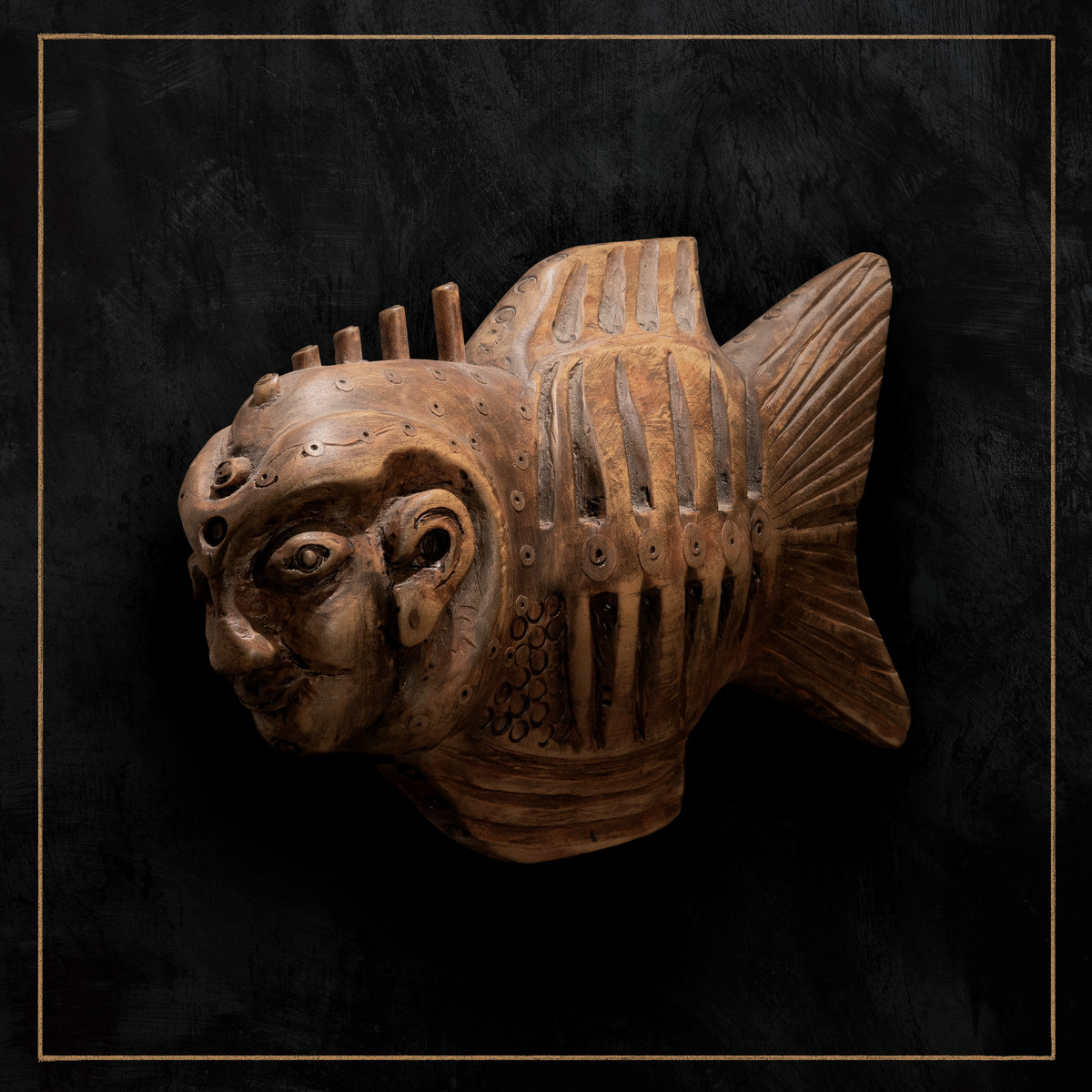
So the process is very fluid. And with something like Untitled — Aaron and I working together, he wants to make a self-titled album, and I say, how about we make it an untitled album but we give it the title Untitled. Like we actually play with some irony here. And we work on the artwork together and the art direction. Aaron and I more specifically bring some of these ideas together — we're sort of the committee, picking out album artwork, presenting it to the band, bringing up concepts and how we're gonna market it and what the colors are gonna be and what the typography's gonna look like. And you don't think of it as being that important, but I'm always very interested in continuity.
What is the release date? Is it a unique release date? Does it share a release date with another mewithoutYou album? Does this mewithoutYou album look like another mewithoutYou album? Is the title A to B Life — is Untitled in brackets an intentional callback to A to B Life, which is also in brackets? That's supposed to be a bookending sort of thing. So that's where I come in, trying to find how can mewithoutYou be contextual within itself all the way through — trying to make everything feel very intentional.
Absent Sounds:
I was gonna say, I heard the podcast where you were talking — you're saying you're just so opinionated and —
Mike Almquist:
No, not at all. Wow, this is —
Absent Sounds:
Crazy.
Mike Almquist:
No, first of all, it was never asked of me.
That idea of intentionality — of bookends, brackets, quiet callbacks across decades — is something we always admired deeply about bands like mewithoutYou. Rather than just focusing on building the architecture of one song, it feels like everything that revolves within this world comes to a pinnacle. The final farewell release dates don't feel like random gestures towards the algorithm, but rather it's a fascinating conversation to see where those patterns fall, intentionally and serendipitously, at the same time.
And as much as that conversation lives within the detail, there's so much left to discover that we don't even get to touch within this episode. Yet still, I'm very grateful that Mike joined us to talk about mewithoutYou, and I'm so grateful that you've joined us.
Absent Sounds:
Is that a role that was difficult for you to step into when you first came to know the band?
Mike Almquist:
Yeah. So one of the ways that I got introduced to the guys in the band is that we were all friends. They're recording Brother, Sister, they're listening to demos at home, I'm over at the house hanging out — this is down in South Philly. Mike and Greg lived together and they would listen to the demos, and I would listen with them. And I had this opinion about — they had the spider song and I said, yo, you should chop this up into three different things and make it like a motif throughout the record.
This is how I ingratiated myself to the band — because they took that idea and they actually did it. So I kind of started off in this place where I've got an opinion, I've got an idea, it's a good idea, and now my opinion is valued, I guess I'll put it that way. And I just — yeah, like I said, I didn't keep my mouth shut. I always offered my opinion. I went to art school where critique was valued, where a third party looking at your work and saying, I think this could be better — especially if they're a studied-in-practice third party, which I am not necessarily, I was just a twenty-year-old kid just talking. But I guess the first idea was good and so I was given the benefit of the doubt moving forward. And I think it has worked out so far.
Absent Sounds:
So just the idea that within a lot of bands, there's this sort of power struggle that happens over time.
Mike Almquist:
Sure.
Absent Sounds:
Specifically bands with brothers — I don't have to name them, but I think Aaron mentioned in an interview that he once realized, during some era that I don't remember him specifying, there was like a struggle happening between them because everyone was wanting different things. And sometimes those different things don't even come back to the idea of success. But do you remember what those things were? Was there a point in time where you wanted something different as a manager who — I feel like you have such an interesting role that I respect, because you actually put yourself in there.
Mike Almquist:
Yes, yes. I do put myself in there, for better or for worse. I think that one of the hallmarks inside mewithoutYou is that everybody always wants different things. There's constant tension where person A wants to be the biggest band in the world and person B doesn't care, or is satisfied with where they're at, or somebody wants more money, or it's always about: are we comfortable or do we want more? Are we comfortable or do we want something totally different?
That's more of where Aaron comes in, I think. He wanted to be more of a radical sort of thing. A band that shared more of his ideals, whether that be religious or social. And for things to be more fluid. Other people want things to be more rigid. It's this constant thing — what is professional and what is good? Are they the same? Like where do we find this common ground? Do we want to be a big rock band, or do we just want to be whatever the heck we want to be?
Between Mike and Aaron, they're very different kind of guys. Maybe I can give an example. There was a time when Aaron wanted to invite other musicians on stage — just random people. So we'd be playing Denver and you bring a trumpet, we'll figure out a place for you on stage right now. The other guys, who need more structure and creative control, don't want that. They don't need the potential chaos of a guy who says yeah, I can play trumpet, and then he comes up and he can't play trumpet, or he's playing off key. But I think for Aaron specifically, he thrives off of that chaos. I think that mewithoutYou, for him over time, became or was becoming too rigid, too creatively boring — when he maybe saw something that could be more expansive and rich and community-oriented and really outside the box.
But there's also the other side: people are buying a ticket. They've spent twenty bucks, thirty bucks, depending on the year, and they want to see mewithoutYou play. They don't need to see some gutter punk who jumped off a train with a banjo. They want the songs performed live. And I think there's a tension where the performer also wants to do something different — they want to find the beauty where it's unexpected. There's this freewheeling tendency and then there's this rigid tendency. But we pulled back more on the freewheeling over time. Even something as simple as hiring a sound engineer, Michael Lane, to come out with us and keep the day-to-day stage operations controlled and comfortable — as opposed to just being like, no, we don't need a sound guy, we'll just take whoever's at the venue. It's like, it actually won't be just as good. Those are some ways that I feel like there's been tension in terms of what people want.
Ultimately where we ended up — I hope it feels like a happy medium where Aaron's gonna be Aaron. He can't find his shakers, a string is broken on his guitar, something has happened that creates this moment. But they have in-ear monitors, the set list is ready. That kind of productive tension — I feel like it's good to have. Tension is good. I think in art it's good to have limitations.
Even one of the things I don't like about mewithoutYou — I don't like the introduction of the acoustic guitar, and I've tried my best to make suggestions, like, don't bring it out on Fox's Dream, I don't wanna see it in your hands. I tell them —
Absent Sounds:
You're a godsend, you're doing the Lord's work.
Mike Almquist:
Because I like to see Aaron more let loose. I like his body language on stage, and the acoustic just feels like you're tied to this thing. His response is, I don't know what to do during this song — and sometimes it would be just like a security blanket in some way. Pull the guitar out, strum it, whatever.
But ultimately — to the credit of that acoustic guitar — what it did was introduce this dynamic to the band's sound where if you don't have the acoustic guitar, you don't have that beautiful rendition of Cardiff Giant on the live record we just released. You don't have Messes of a Man without the acoustic, you don't have Magic Lantern Days, you don't have just so many great mewithoutYou songs that do sort of rely on that sound. So I don't get my way, but ultimately it leads to all these other wonderful things.
You can really hear how much care lives inside that tension — between the structure and chaos of the band, the rigidity yet improvisational sound that they always seem to strive for. That push and pull is what creates the foundational DNA of mewithoutYou, and why Weadee and I have loved them for so long.
Absent Sounds:
Wwhen you mentioned the bookends and just like all the circles presuppose, they'll end where they begin — we had asked this to Algernon Cadwallader, for example, but how does the end of mewithoutYou look like the beginning?
Mike Almquist:
Okay, I wasn't there at the very beginning. I wasn't there in oh-one. So I can't really accurately say that. And —
Absent Sounds:
Neither was —
Mike Almquist:
Yeah, but you weren't born in 2001.
Absent Sounds:
We were. That's our birth year, we were born.
Mike Almquist:
The year you were born. Wow.
Absent Sounds:
Yeah.
Mike Almquist:
So I wasn't there so I can't really speak to it exactly, but if I had to guess, it doesn't look anything like it, to be quite honest.
I think that what germinated from that first EP in March 2001 to what happened even this past month with the live record is unfathomable. I personally don't think that the band who recorded that EP on March 17th, 2001, would have believed they could sustain a career over two decades. And also — I don't think mewithoutYou is done. I don't try to put a fine point on it. And I think with the Farewell Tour even, we really tried our best — I tried my best — to not make it so final. We all understand what a farewell tour is, but we always put it in quotations. Like we're saying farewell. It could also be interpreted as being ironic in some way. When we did the shows at the Fillmore in August 2022 — those were the final farewell shows. They weren't the final shows.
Just really not trying to do what a lot of bands do. We were still guilty of it to a certain degree — we did say this was a farewell. But the possibility of return was something we really wanted to make implied somehow. So even the poster art has the stump cut off, but a stump is still a living tree. It just doesn't have branches. If you cut down a tree, it'll still grow from its stump. Twigs will come out, a branch will go up, more shoots will come out. In some ways the farewell is almost like a farewell to the past. To what mewithoutYou was. This band that grinded, that toured two, three, four times a year, that put out records every two to three years, that was this concerted effort to sustain the lives of five to six people. And now it's a new thing.
mewithoutYou still lives on. People listen to it. They love it. This series of live albums is supposed to be these sort of crystallized live shows — so mewithoutYou can perpetually live on these albums. And so yeah, I don't think of it as having ended.
And there's something that's been happening — what has happened when mewithoutYou did play their final farewell shows.
Mike Almquist:
You see a lot of hashtag mewithoutYou forever — people like that. And I took that to heart. mewithoutYou forever. It's not gonna leave me. It's not gonna leave these guys. It's not gonna leave the people that care about it. So I don't see it as having an end per se.
It's also an abstract idea. mewithoutYou is the record, mewithoutYou is a live show, mewithoutYou is the people, mewithoutYou is the notation of the music, the lyrics. It's always different things. So the target's always moving. Like I said, not trying to put too fine of a point on farewell or finality.
In some ways the thing that people love about mewithoutYou — like the whole package, all together — is Schrödinger's mewithoutYou. It could be alive. It could not be alive. I'll tell you right now there are no plans outside of doing these live albums. But the possibility is still there. It has to be. It just has to be. Who can predict any of this.
And I don't think we want to make plans and be so certain about what the future holds that I'm gonna say mewithoutYou will never play another show again. Maybe it will, but also maybe it won't. So let's just live in that uncertainty.
Absent Sounds:
Yeah. The quote — if you wanna make God laugh, tell him your plans.
Mike Almquist:
Exactly.
Absent Sounds:
But also, just as you were talking, I just kept getting this image — the idea that the laughter of children is eternally young, because even when they're no longer children, it's like continually being there. There's always the laughter of children. And yeah, even as you were speaking I just kept thinking about all the emotion that's tied to the band mewithoutYou. Even though the Farewell Tour wasn't actually a farewell and doesn't put a period to the end of mewithoutYou — I guess we're just curious about what planning the Farewell Tour was like for you, or anything that it brought up. Like, this marks some sort of closing of whatever iteration it was.
Mike Almquist:
Yeah, absolutely. Planning the Farewell Tour — plural, because I feel like I planned five of them. Going from 2019 when we announced that the band would be disbanding in 2020 to: okay, we're gonna do a tour with Riceboy Sleeps, we're gonna do a Brother, Sister tour, we're gonna do a European tour, we're gonna do a headlining farewell tour. And we got as far as that first tour and then — Nope, can't do that. So we announced another Brother, Sister tour for later that year. And then — Nope, can't do that.
So it was a lot of sitting and waiting. And thank God it happened the way that it did, because 2020 would've been maybe too packed to do all of that and do it right. I feel like there was this blessing — we did the Riceboy tour, and that was a really great fun tour. But then I actually had time. 'Cause I also run the merch store. I'm their label as well — I do all the distribution, all the art direction, all the packaging. So I just put too much on my plate. And when it came time to officially postpone the Brother, Sister tour indefinitely, that was like, okay, wow, we really have to figure out what to do now.
And then things became more spaced out. We did the return-from-COVID shows in Philadelphia that allowed us to get our footing again, and then we could plan out to do the actual Brother, Sister 15 and 16 year anniversary — which, by the way, I'm very proud of that 15 and 16. I just think it's silly and I love it. Because the anniversaries are very arbitrary. What's the difference between ten and nine years, or eleven years and fifteen? They're arbitrary markers. I'm like, hey, I want to reissue this record. Oh, it's not exactly on the ten year. So then I make a point of being like, it's the eight year anniversary of this album. So the fifteen-and-sixteen thing falling in between the two different years — I was like, this is perfect. This is exactly what I love about this.
Anyway, I got four months between the Brother, Sister tour and the beginning of the end shows in Philadelphia, and then another five months after that to do the Farewell Tour. And we didn't get to do a European tour, so we just kind of ran out of time. But the process getting elongated made things so much easier — to make a lot of merch, different kinds of merch, with intentionality behind it. Like all our merch on the Farewell Tour was always based off of the last song of every album. This idea of bringing in finality, the closer, finding those kinds of things. And putting together even the concept of the tree stump and the farewell in quotes — none of that was there in nineteen and it wasn't there in twenty.
So yeah, it gave us time to kind of figure out and massage it. And I think if we had done it all in 2020, I don't know if we would've burned out our market, but people are gonna come to the Farewell Show. Our booking agent Merrick was like, yeah, in my experience, you can't overdo the farewell. Like, people are just gonna get something unique in every sort of situation. And the Farewell Tour in 2020 would've been shorter. So we just got to do more and do it better.
And I have this experience and kind of having it right now while we're working on these live albums — where new ideas are always coming, and the ways to make it better are always coming. And then it always seems to naturally find its endpoint where, oh, I have this idea, then it's due next week. Okay, well then your focus gets really tight and the best product is coming out of it almost every single time. That's how I feel.
And it sometimes goes longer than I want it to. I wish I could be much more concise or decisive with certain decisions regarding the artwork or the launch of something. But everything happens in this right moment. That's how it feels to me. Everything just feels like, yeah, no, this is right. And I thank God I had this amount of time to think about it and get it tuned in. So yeah, planning the Farewell Tour was a real trip, but I'm really grateful for the way it ended up.
Absent Sounds:
It really did. We would've missed the Farewell Tour if it hadn't been for that.
Because we weren't in the country. We were in Europe.
Mike Almquist:
You were in Europe.
Absent Sounds:
So we were very glad to have the chance to see them.
And I think it's also — you know how you mentioned that mewithoutYou are never really dead, but is it, are they there, are they not? Like the duality of everything the band creates. I think that kind of comes back to this thing where I do not exist, only you exist — or like, the self-erasure and how that intersects. So if mewithoutYou was in this place of maybe on the other side of the sheet, where they didn't really exist before the live album — yeah, it's coming back into the world, coming back into the fold. Is that an awkward thing to be doing right now? Does that feel natural? Like a reawakening, stretching, releasing your limbs and coming back out of hibernation?
Mike Almquist:
With the live record, you mean, specifically?
Absent Sounds:
Yeah.
Mike Almquist:
Yeah. I think — okay. So this is another thing when you asked me about how the beginning of mewithoutYou looks like the end: I have been working on mewithoutYou every day since the Farewell Tour ended. Like, there's never — everyone's like, oh, so whatcha doing now? Still managing mewithoutYou, I'm still doing it. You're managing a band, they're not playing shows. And I'm like, we still sell merch, we're doing these reissues, I'm doing a series of live albums and other projects. It takes up all my time still just because my hands are in it.
Behind me is like, you know, medium t-shirts, and there are racks all around me. There are records and stuff like that. Tomorrow I have 4,000 copies of vinyl showing up for the Catch for Us the Foxes and Brother, Sister reissues that we did earlier this year. So it's always happening for me still. And I can't say that as much for the other guys. Like other dudes have gotten jobs or have moved on, or it's sitting on the back burner. For me, it's still a day-to-day thing.
And I think in some ways I'm embarrassed by it. I'm like, I need to let it go. And it's also been a labor of love — I get to put myself artistically and creatively into it. Even my body — I'm gonna have to lift all 4,000 of those vinyls tomorrow, no one's around to help me. And I'm just like, who are you doing it for? Who is this for anymore? And I made a post about new merch in the store, right? And I feel like I'm just dragging the body around like this dead body. Does anybody care? Am I —
People are buying it. People are very generous and excited about the band still. People are really excited about the live record that we put out. And I've still got two more to go. But it has been almost, it's been over two years since we were supposed to call it quits. And in some ways I'm like — but did I ever let it rest? I wanna make sure that mewithoutYou can — I don't know what I'm trying to say here, than the fact that mewithoutYou doesn't exist, but it exists for me still. And maybe I just can't let it go in some way, and I have the opportunity to keep it going, and therefore I do keep it going.
Absent Sounds:
That's really interesting. I love hearing about that. I almost think that — at least I know for both Weadee and I — we really struggle with knowing when it's, I guess I attach so much of myself into these different projects or things. And if I do have the opportunity to just keep going, Absent Sounds is such a good example. A lot of times we're like, oh, are you guys still doing it? We're like, we're not at CJAM anymore, but we still do Absent Sounds. And it's like, well, why? You know? But if I have the chance to keep going and there's nothing hindering me, I'm gonna keep doing it. Because it's like —
Part of it is, I don't even wanna say it's foolish — you find so much of your identity in the thing, but it's like if you were to let go of that part, what's left of you? You're like a full person. But what's on the other side of that? And I don't know.
Mike Almquist:
Scary. I'm like halfway through my life — the life expectancy of a man in America is 73. Oh, it's not very long.
Absent Sounds:
I thought it was longer.
Mike Almquist:
I'll make it to 74, don't worry. But anyway, my point is — yeah, what's on the other side of this? What's next? I think some of that fear is definitely there. Because I'm able to be the master of my own domain. I get to control when I work, how much I work. Well, my wife controls a lot of that too, actually — come upstairs, the kids need food, they need to be put to bed, you're working too much. She keeps me in check. But my point is I can control my schedule and I'm not working for a client who holds me accountable to their vision. Things get put through to the band to make decisions about certain creative stuff, but I'm given a lot of agency that I don't think I would be afforded elsewhere.
So I operate in this small business, be-your-own-boss space and it's really comfortable, but it's limiting on top of it. And yeah, I wanna see what else is out there for me, but in some ways I'm scared of what that is. I'm sure I'll be faced with that at some point. I have to step up, especially when my wife Brittany is like — after these live albums, what's next? I'm like, Untitled reissue. She's like, how much longer are you gonna do this?
And I was just like — I think it's always gonna be something that I'm responsible for and a part of me, but like, even my basement is half-filled with this stuff, and there's a whole other storage unit filled with stuff. But unburdening that, giving me back this space — they'll put up Christmas decorations, which are like shoved into the back of another part of my house. I feel like I need to release myself in some sort of way, and I think it'll become obvious when it does.
I always kind of had this — oh, mewithoutYou can still sustain itself just off of its name. For two years, and we're probably gonna go into three, four years of that. But at a certain point I gotta cut myself off. I gotta see what else is out there for me.
Absent Sounds:
They're in the basement yelling, let us die. Let us die. [laughing]
Mike Almquist:
Yeah, yeah, exactly. Let us die. Mike, let the van die in some sort of way.
Absent Sounds:
Two things. I'm not a stalker, but I saw that you named your child Aaron, so I thought that was interesting — like there's another Mike and Aaron — so I guess it could never really die.
Mike Almquist:
Yeah. And his middle name was Michael too. So —
Absent Sounds:
Oh my goodness.
Mike Almquist:
No, that's just because I like alliteration. So his name is Aaron Almquist, my son. And people are like, oh, did you name him after Aaron? And I'm just like, I guess — he's not named after him, but I really just like the name and I didn't think about it too much. And then my wife was like, now his first and middle name are going to be two members of mewithoutYou. Do you want to go to therapy?
She didn't actually say that. But the reason his middle name is Michael is because my name is Michael and my middle name is my father's name. And so I wanted to do a similar thing. But yeah, the guys teased me when my second child was born that his name was gonna be like Ricky, Richard Gregory, or Brandon Greg, or something.
Absent Sounds:
Okay. That was my —
Mike Almquist:
Thank you. It's a good name too. I think it's a strong name. I think it fits well.
Absent Sounds:
Yeah. I love it. I was just gonna say — you've been holding a lot of the band's memories for them. Have there been any standout memories over the years during live performances that you think about — oh, this is a memory I want to hold onto forever?
Mike Almquist:
Ricky keeps a journal. Probably, I don't know if he still does, but he kept a journal every day on tour, so he was able to lock away a bunch of stuff. Luckily, if you take photos on the road with your phone, it backs up everything and geotags it, gives you the date and time — that's almost like a form of journaling where you can see, oh yeah, this is where we were on July 1st, 2009, and this thing happened.
Some of my fondest memories with the band are usually at Disneyland. This was a thing we did when we were in Southern California — we would plan days off and go to the parks together and have a really fun time, long days just walking around, getting on rides, just goofing around being free.
But also just the late nights on the bus. The bus breakdowns are very memorable and chaotic and awful. And maybe you get into a U-Haul or a rental van or some other way, and you're hemorrhaging money and things are uncomfortable and they're not the normal structure. But this goes back to that point about fluidity versus structure — it forces you out of it. And then all of a sudden you guys are sharing a hotel room instead of going to your separate bunks, or you're in the van together, or you're listening to music, or you're telling stories. Things change and there's a problem to solve and there's a different kind of energy and exhaustion around it.
So I think that's when things start to become more crystallized — when things are going wrong. But finding the solution is part of the beauty of it.
The worst one we ever had was when the bus broke down in Canada in 2016. We had just done like a six-week tour with Anberlin, and then we drove from Austin all the way to Vancouver to do shows with Brand New. That's a cross-continental trip, over 2,000 miles. And so we're three days driving up to the next show, we get to Vancouver, we play the show in Vancouver, we pull out of Vancouver after a two-night stay — and the bus breaks down somewhere in the mountains of Kamloops, British Columbia. That was it for the bus. Not salvageable. Go to the airport in Kamloops, grab a rental van — they do have one. And a truck. And Aaron found another bus that we could buy back in Vancouver. So the company splits up, I'm going west, they're going east to the next show, we're gonna meet back up with it.
And like I said, we're hemorrhaging money. No one's happy, no one's comfortable. This is now week seven and we still have another week and a half to go and tensions were high and people were sad. And I remember coming back to the bus in Kamloops after I just picked up the rental — because we had made the decision that there was another bus we could shell out and buy back in Abbotsford. And I'm gonna go there, they're gonna go on for the next show.
I come back with these two vehicles and I see them gutting the bus. Just tearing out sofas and TVs and all this stuff that they're gonna throw into the back of this U-Haul, 'cause we're now scrapping the bus — it's official. And all this material's gonna be used for the next bus. We were at like a diesel repair center. And I see it and I just see — my home at that point, probably for the past ten-plus years — being ripped to shreds. And I just started to cry. And I saw Aaron and he came up to me and I was just crying and I said to him, dude, we are so lucky. We're so lucky. And he just looked back and nodded. And we hugged.
It's a weird thing to be grateful in a moment when there's so much pain and uncertainty. But I wouldn't be crying — this wouldn't be so sad — if it didn't mean so much. And I feel like that's probably my fondest memory. Because that's in some ways the moment where it's been so crystallized — just how fortunate we are that we had so much that we could lose it. And there's still a path forward. But this thing dying is a reminder of what was.
Absent Sounds:
Yeah. You're gonna make me cry.
Mike Almquist:
Yeah, I know. I'm like ready to tear up a little bit just thinking about it. But there's something about that that's really special, I think.
Hardest day and the best day, and they were together.
Absent Sounds:
I know. You're a very good storyteller. Really good storyteller.
I know there's just been so much this year. I've been calling it like — not rebirth, but like death and then the thing that comes after. Just watching relationships with people or things that I used to hold so dearly transform into something new. Or like finding new life in that afterwards, which is what I definitely feel like is why the reissues you've been doing and the work with the live albums have really felt like it's cementing that idea. So even just that story — it really does come right back to this whole thing that's been revolving around me this year.
Absent Sounds:
Do you wanna do one more question and then end off, or is there anything you feel you didn't get to say that you still would like to mention — about the band, about your journey with them, or anything you know?
Mike Almquist:
Yeah, I don't know. Anything else I'd like to say usually just comes up in conversation or when I'm thinking about something. I'm really grateful for you guys reaching out and asking to talk to me, just because I like to talk and I like to process things out loud. And even that story about the bus breakdown in Kamloops — good reminder of just something that happened to me and where my head's at. I appreciate being able to share.
Absent Sounds:
No, we appreciate it so much. And even just your presence online and on Reddit — being so willing to interact with fans — it just means a lot having you here. And we can't overstate how much we enjoy everything that you've done and your work with the band.
Mike Almquist:
Thank you. Thank you so much.
For me, just being present — giving people answers. They're posting like, hey, what's this thing, did anyone get this? People have questions even about mewithoutYou lore. I want to answer. Because this is not that big of an enterprise. It's not that big of a fan base — there are a lot of people, but it's not millions. And I feel like as someone who appreciates mythology, I like someone like — I used to love, I still do love, the show Lost — I want the answers. I want to know what the intention is behind something. I have a hard time keeping things close to my chest. Education equals appreciation. The more you know, the more you sense the richness of this thing. And so I want to give that to people who care. If you're asking the question, I feel like that means you care.
And I'm grateful — I can speak for everyone in the band — we're grateful that people care, and we want to show gratitude back. My way of doing that is just, yeah, I'll answer your comments on Reddit, on a Facebook group. I'll respond to every email that comes in through the customer service or the info line. People don't know that there's someone on the other end that —
Absent Sounds:
The fat lady that sings. Yeah, I was gonna say — so all my comments on the Best Friend Forever Festival, commenting "please bring back mewithoutYou" — I hope those don't go to the void. I will continue commenting that. So who knows? Just a heads up.
But yes, thank you so much. There's something so fragile about sharing conversations over the airwaves, and if you've been listening to this interview — with the manager of mewithoutYou, a longtime band that Weadee and I have loved here on Absent Sounds — we're so glad you're here.