[Transcript is the direct interview]
________________________________________
Weadee:
One of the things on my mind is this idea — and I guess I tell myself this a lot to feel better — oh, everything happens for a reason, it's fated. And when you think about the album title, Fate Euphoric, that does lend itself to the idea of things happening for a reason. But I'm curious about the intersection for you guys. How much do you think life really leans on fate versus radical agency? Because a lot of what you do feels like you deciding: I'm going to do this, and I'm going to do it.
Jane:
It's almost paradoxical, isn't it — that you can hold both in your brain at the same time.
Ian:
It gets into questions of free will, doesn't it?
Jane:
Yeah. And I think right now, in the climate we're in, it feels like there are these big forces at play that are hard to see yourself in — because they seem so large and so hard to tackle as an individual. It can feel like fate. And sometimes it's as personal as asking why is this happening to me, or why do bad things happen — and sometimes it's as enormous as, why was I even born right now, when I could have been born at maybe another time that wasn't quite so existentially psychotic.
Ian:
Yeah, and it depends on who you are — where you're born, what you're born into, and where on the karmic wheel you are.
Jane:
These are huge questions that people have been asking for millennia. And I think you always have that uncertainty with it. What we're trying to do — at least with this album, and in our lives right now — is hold space for the hope, for the light side of that uncertainty. Because when you don't know what's going to happen, it could be the worst thing or it could be the best thing. And in order to hold that space open for the best thing, or for a dream to actually happen even while all the bad is in front of you — that's such a hard thing to hold. And I think that's what this record is trying to do.
Ian:
It's not really giving answers or asking questions so much as offering a bird's-eye perspective.
Weajue:
I really appreciate that framing — the idea that holding the uncertainty can be so terrifying. I was actually in an acceptance and commitment therapy session today, and we were talking about exactly this: how it can feel like you need solid ground before you can face the unknown, but finding the space to accept those questions — or to look at the root of why you're even posing them — can be more important than having the answer. So I'm curious: why now with this album? What was the bigger picture that felt like it was emerging as you were making the record?
Jane:
I feel like it's just a coping mechanism. We started writing this about a year ago, and a lot of the lyrical content came out of this past year. And we're all living through the same year. Growing fascism, feeling like we're going back in time, people beginning to exclude people again — it's hard to understand when you're used to thinking that the future is better, and it's not quite going that way. So in order to maintain that bird's-eye view, I think a lot of people have turned to looking at cycles of history. I've seen the 80-year cycle theory; history repeats itself. And I think people with pattern recognition — a lot of neurodivergent people in particular — look at these patterns and can see the signs. War, which we're already in. Really bad things happening, which are already happening. The only coping mechanism available seems to be looking back as far as you can to find what you can't see from within your own small sliver of time.
Ian:
We pulled the Rota Fortunae — the medieval Wheel of Fortune — which is on the cover of the record. Jane is holding the wheel as fate personified, and I'm going around the wheel as different karmic incarnations.
Jane:
King at the top. Dead man at the bottom. Down on either side.
Ian:
And we took that imagery from the medieval period and tried to place it in this current techno-feudal landscape — to draw parallels between what's happening now with the consolidation of power and various moments throughout history when the same thing happened in a monarchical sense. Without getting too intellectual about it, we were just trying to pull in these historical parallels and look at what's happening now through that lens.
Weadee:
That makes me think about a question I had about 'Prelude to Waterloo,' because even just the title suggests that something comes after — the this, and then the aftermath. So I was curious: do you view your songs as part of a larger narrative, or do they each speak to their own moment?
Jane:
We definitely view each song as its own little universe, because we want it to be able to stand on its own. We love variety within an album — we try to avoid every song sounding the same at all costs. And that inherently makes each one tell its own story. But with this record, we're viewing each song as a point on the wheel — somewhere you can place yourself — and the whole thing loops back into itself. When you finish it, you go back to the first song, and if you listen again, it has a different context.
Ian:
It was a conscious thing — the idea that you'd be holding the record in your hands, reading the lyrics while looking at the cover art, and the visual of the Rota Fortunae would layer in with what you're reading. There's a lot there when you find yourself inside the album.
Weajue:
I think it's interesting — the places you could find yourself in the record. For me, I kept landing at the beginning, with 'Tap Dance and Limbo.' Partly because I was listening to this album a lot during what felt like a limbo period of my own life. One of the questions we were pulling from that track was about the feeling of being stuck. Some people, myself included, feel this compulsion to be a force of movement, to trigger something. Other people feel like they can just wait it out and things will happen on their own. Where do you guys find yourself sitting?
Jane:
This probably leads into human design, which we lean on a lot. It's this kind of wild system from the nineties that combines astrology, the Kabbalah, the I Ching — all of it together. These elaborate-looking graphs that map how your energy works, linked to your birth astrology. We've been working with it for about—
Ian:
About six years.
Jane:
And it's been incredibly useful. We've found it to be genuinely true to how we each operate.
Ian:
It's a prism for understanding teamwork — how different people's energies and intuitions interact. Like how bees have different roles within the hive and work together to create something coherent. Human beings probably work similarly, but we don't know it. It explains why when one person does something, it comes across as aggressive or off, and another person does the exact same thing and gets away with it completely. We kind of reject the premise of all the narratives we're told about how you should be — that you should be a go-getter, that you should solicit your own opportunities. That might work for some people. But for others, that's not how their energy works. Maybe it's better for them to be invited in. Maybe their contribution is best made when they're welcomed into a situation and consulted, rather than initiating.
Jane:
And I like it because, simply put, it tells you how your intuition works. For mine, it's very immediate — it's a yes or no. No pros and cons list. And I used to wonder: is that being rash? Am I not thinking things through? But having this framework helps you lean into what you're already doing without asking whether it's something you need to fix. That's been really useful. Because you can get lost in self-help and trying to be a better person, when really you might just be going against your own nature.
Ian:
If you trace a rock and roll lineage of this kind of philosophy — going back to the Vietnam era, the hippies, John Lennon's bed-in — there's this idea that sometimes revolution starts by not engaging. That you can start a revolution from bed. Maybe what we need is less of the go-out-and-change-the-world energy, and more of an inner interchange. The internal thing might be the most important thing, more than what you do out there.
Jane:
And this isn't advocacy for anything. It just goes back to what you said — why some people would feel differently. We definitely feel it.
Weajue:
I want to jump on what Ian just said about starting a revolution from your bed, because it kind of loops into track two — 'Godlike.' What's something that makes you feel godlike, even for a moment?
Jane:
Music. Is that lame? The act of creation. That's genuinely what keeps me going. Even within the context of doing this all the time, the actual music creation isn't something we get to do every single day — there's a lot of logistics, and touring is its own thing and I love performance. But I love creating far more than I love performing. Just thinking about writing after these tours are done is what sustains me through any of the hardships of being on the road. Having that one thing to look forward to, even when it's not happening, is so motivating.
Ian:
That is a genuinely literal interpretation of godlike — you're talking about the act of creation. The only thing that makes you feel good, in a chaotic world, is creating.
Jane:
And I think that will be different for everyone. But the beauty is in finding it. Which is why I keep coming back to human design — it's a great tool for finding your intuition, and I think that's the only way to find what makes you feel that. You have to know how your intuition works. Get to know yourself first, then get to know what you can make.
Weadee:
That also makes me think about the way Twen operates as a whole. Because it can seem counterintuitive from the outside — why don't you release singles before an album, why release on a Tuesday — but it ties back to intuition, to doing things your way. Success might not come from a calculated formula.
Jane:
It can be a head trip, though. You can get caught up in: if only I had done this one thing. And I think that gets very social-media-brained very quickly. If only I had posted at 9 AM instead of 8:05. That thinking becomes the thief of any joy in the actual work. So for us, it was a way of not having that joy robbed from us. We do what we can in the moment, and we try not to compare ourselves to others too much, because it's always different.
Ian:
It's taken us the past seven or eight years as a band to be okay with doing things unconventionally — things that just feel good to us. Releasing on a Tuesday, not having a press campaign. Those are decisions we would have beaten ourselves up about in years past. Now we're okay with it. Because we trust ourselves.
Weadee:
I've been pulling a lot of all-nighters this week, and 'All Nighter' was in my head — there's this lyric about time being an illusion. Is there anything that you think people treat as real that you feel is just completely made up?
Weajue:
There's actually a book called My Blue Is Not Your Blue — it doesn't quite track, but it's about the illusion of shared perception. The illusion of sameness.
Ian:
I think the entire reality we've constructed is a big arbitrary myth. This is just one configuration — it could have taken a million different forms. And it has, on this very planet. Go to any continent in any century, back thousands of years, and you'll find radically different belief systems and social orders. So this is just one of many. It happened to go this way. It was fated to go this way, maybe. But I think a lot of it is constructed. And you just try to engineer life for yourself within that construction — because we're all just trying to deal with it. Everyone works with what they've got. You accept the hand you're dealt, and then you figure out how to engineer something better. That's partly what the van was. We wanted to cut our overhead, move into the van full-time, pursue music full-time. It was a huge undertaking. But if we'd just accepted that we'd always have to pay rent and it would always be financially impossible to be in a rock band, nothing would have changed.
Jane:
It can feel like you're waiting for someone to give you permission — or like there's only one definition of what it means to be a real artist. And those identity definitions can be more destructive than anything else. Being able to feel like full-time musicians, to do everything ourselves without waiting for someone to be interested enough to open doors — that has felt like agency. But agency that's still sustainable for us.
Weajue:
I really like the way you go after life — but it also feels like life is chasing you back. I'm not sure where you sit on that, or what being shameless about going after your own life looks like for you. Is it just following the intuition? Just doing things in spite of the nos?
Jane:
It's the intuition. I keep coming back to it, but I think that's what's kept us going — because there have definitely been moments when things didn't work out. Not a lot of people at a show, an expectation that something would do better than it did. If we just took all of that at face value, maybe we'd have stopped. You do need some feedback. But ultimately you can only rely on that internal gut-soul to tell you: is this something I want to keep doing? Does it light you up? That has to be part of it. What's the point in doing something you don't want to do?
Ian:
We've been around people who are doing something that is so clearly not aligned with what they say they want — the feedback is telling them they should probably stop, and yet they just keep going, banging their head against the wall. There's a difference between doing something you're not good at yet but that you feel called to, where you just need more time — and doing something that's genuinely out of alignment with who you are. We've had band members like that.
Jane:
In music specifically, maybe you like being on a stage, you like that validation — but you don't actually care about the music. That's not inherently bad, but it would be good to know. Or maybe you love creating the music and don't care about performing it. That would be good to know too. If you can't understand that about yourself — that's why I keep coming back to intuition. That's where everything lives for me. And I think, frankly, for the whole world. When people are not aligned, it means lack of fulfillment. It means friction. It means that emptiness. You don't have to understand every nook and cranny. But to know how your energy works — that's huge. And I don't think it has to be a lifelong monastic undertaking. I think it's accessible to everyone. It just takes — I'm not sure exactly what — stepping outside the matrix, maybe.
Ian:
Okay, can we talk about some music?
Weadee:
Perfect transition. The songs that you learned about while you were making the songs — is there something this album taught you as you were building it? A thing you didn't know how to do at the start that you understood by the end?
Jane:
I think that happens a lot, and sometimes we don't even know how the songs got made until after the fact. We're just like — wow, we did that.
Ian:
So much of it comes out of the subconscious. You're working on something — a single song or the album as a whole — and the thing reveals itself to you as you go. It's about putting in the work, because you don't even know what's happening until you're later in the process, when you start to look at it and a cohesive narrative is starting to emerge and the artwork is coming together. Honestly, it's months after we finish an album before I actually see it clearly. When you're inside it, it's really hard.
Jane:
And I try to keep it open while that's happening. There can be moments where you're like, I think this is going to be the first track, or this song means this — but I try to hold all of that loosely until it's done. That's the beautiful thing about making albums: it's mostly music, but you have these other supplemental elements — lyric sheets, artwork — and together they create this whole multidimensional thing.
Ian:
With 'Tumbleweed,' I think I surprised myself with the lyrics. Because you could easily just write: fuck the government, fuck all of this. But—
Jane:
We'd come off a UK and Europe tour — that was right before we jumped into writing this album. And being abroad, going through customs, showing your passport — there's this weird thing that can happen where you start feeling this strange pull toward your country. Like you'd go looking for the embassy. That's all you'd have. And that surprised me. Those thoughts weren't ones I knew I had. And through the process of writing that song, they came out in this way that feels almost playful, almost childlike — but that's kind of what it feels like to be without a country. You become, in a strange way, like a baby of the world. I have such sympathy for immigrants and refugees who don't have that anchor. Today's world requires it, even though I can imagine one where it doesn't. But that's not what's happening.
Ian:
Tumbleweed is a good tune.
Weadee:
It has been stuck in our heads. Okay, I have some rapid-fire stuff before we sign off. Staying on Tumbleweed — what's a word you constantly mispronounce? Because I love the way you sing certain words.
Jane:
I get accused of the British accent sometimes. People say, I thought she was Swedish, or I thought she was British. Which is pretty common in singing — I've probably absorbed it subconsciously from years of listening to British singers. There's actually documentation of that in emo in the early 2000s — that kind of voice is partly a transatlantic accent thing.
Ian:
Goes back to Hollywood actors in the thirties and forties — the transatlantic accent.
Jane:
It's not something I'm putting on. It just happens. I'm such a slave to the melody. My brain puts melody first. Whether a word is perfectly pronounced is secondary — I just care if it sounds cool.
Ian:
We're actually about to do a Spanish translation of Tumbleweed that'll come out soon. And a Japanese translation of Tap Dance and Limbo, and a German translation of Dignitary Life from our second album.
Jane:
The translation process has been wild. We had the songs translated and then the translators sent back voice memos of the lyrics sung phonetically. So I've just been mimicking it like a parrot.
Weadee:
Does the rhyme scheme hold up?
Jane:
There's some syllabic cramming, which can shift the stresses — but we've been really lucky to have translators who are also in bands, who understand music. They find the line between phonetic fidelity and meaning. The meaning shifts a little, but that's inevitable.
Weadee:
Okay, last question — and it's a fun one. You're still on tour, lots of shows left. Is there a dance move you keep coming back to on stage?
Jane:
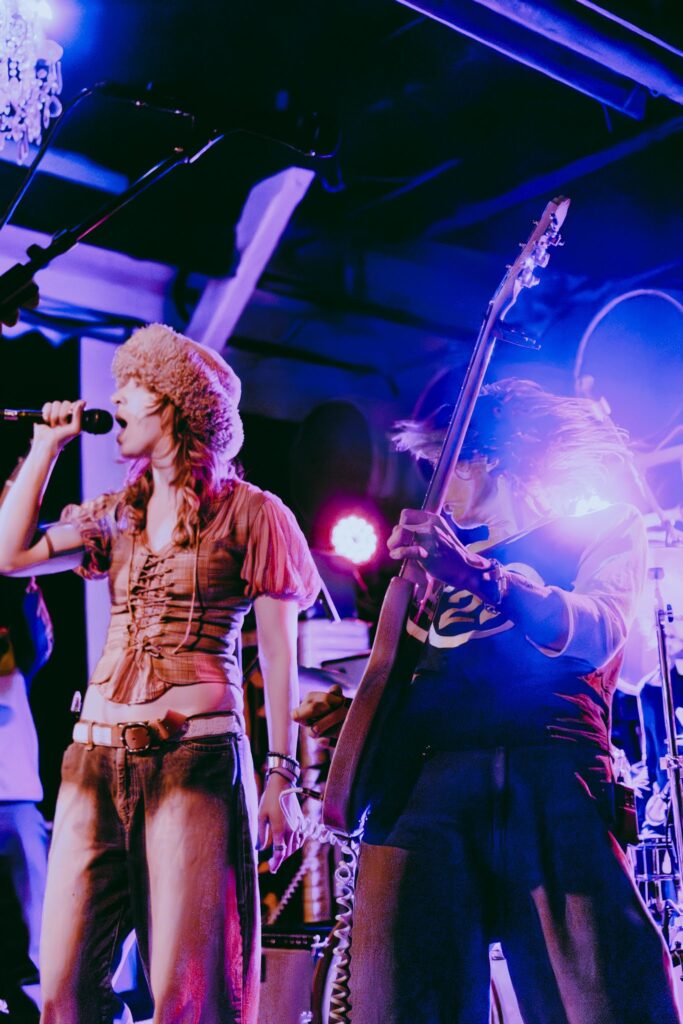
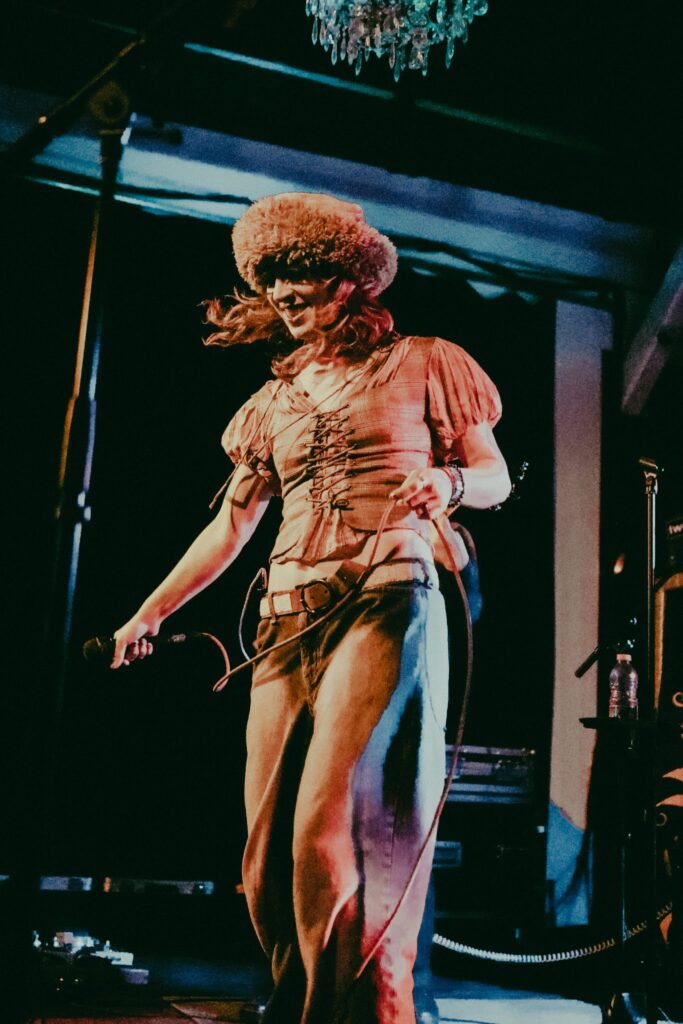
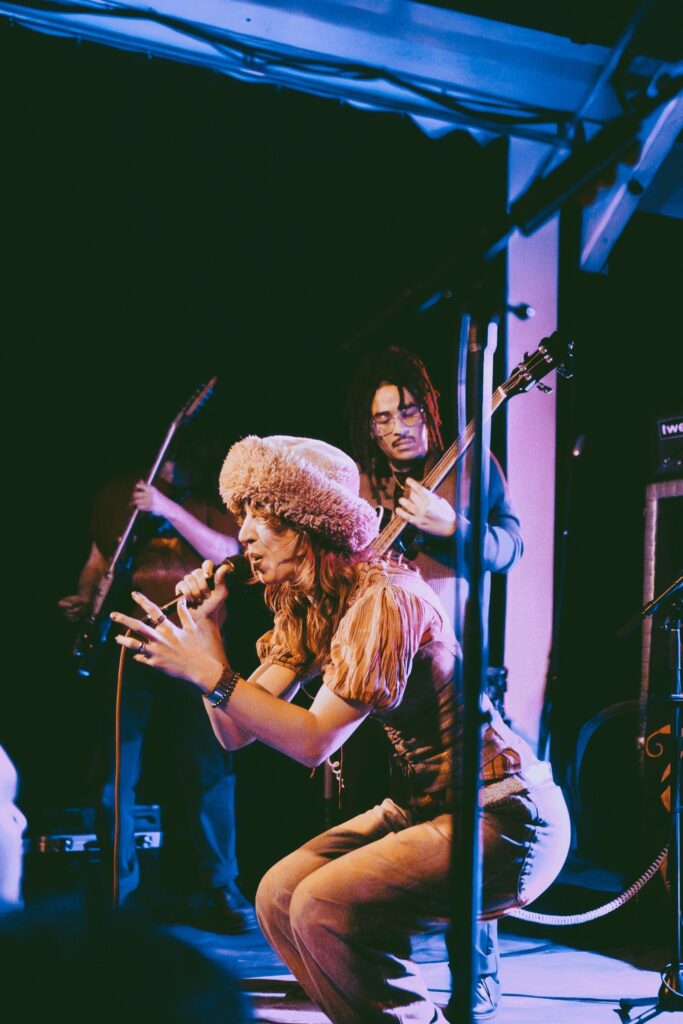
I've been leaning on my classic go-go dancer moves.
Weajue:
We'll describe it as pulling down strings.
Jane:
The microphone limits what I can do! You'll just have to come to the show.
Ian:
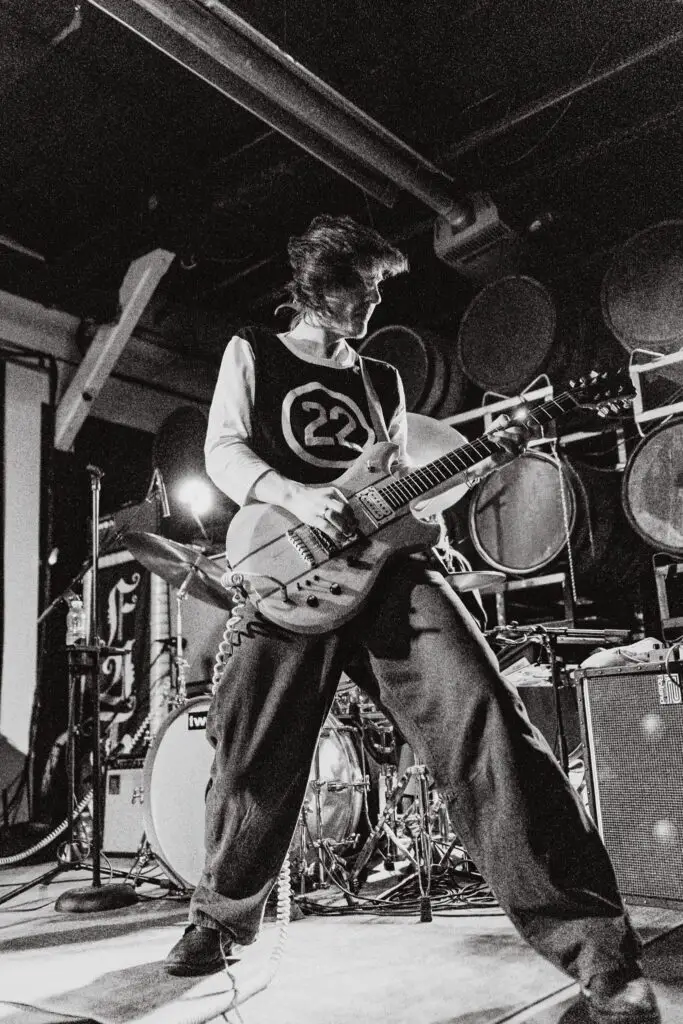
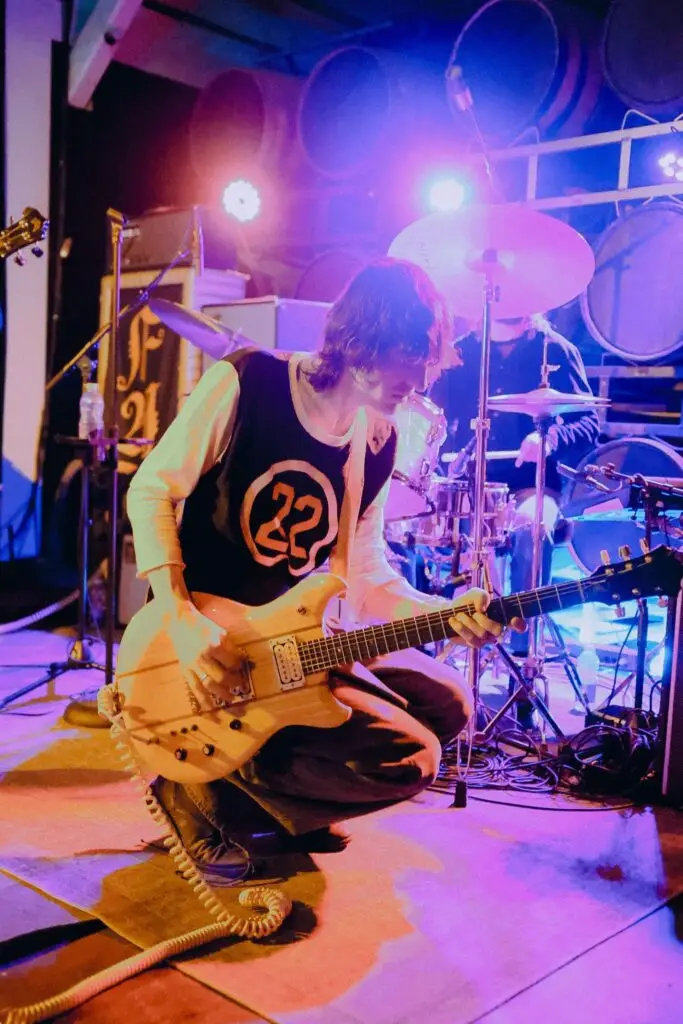
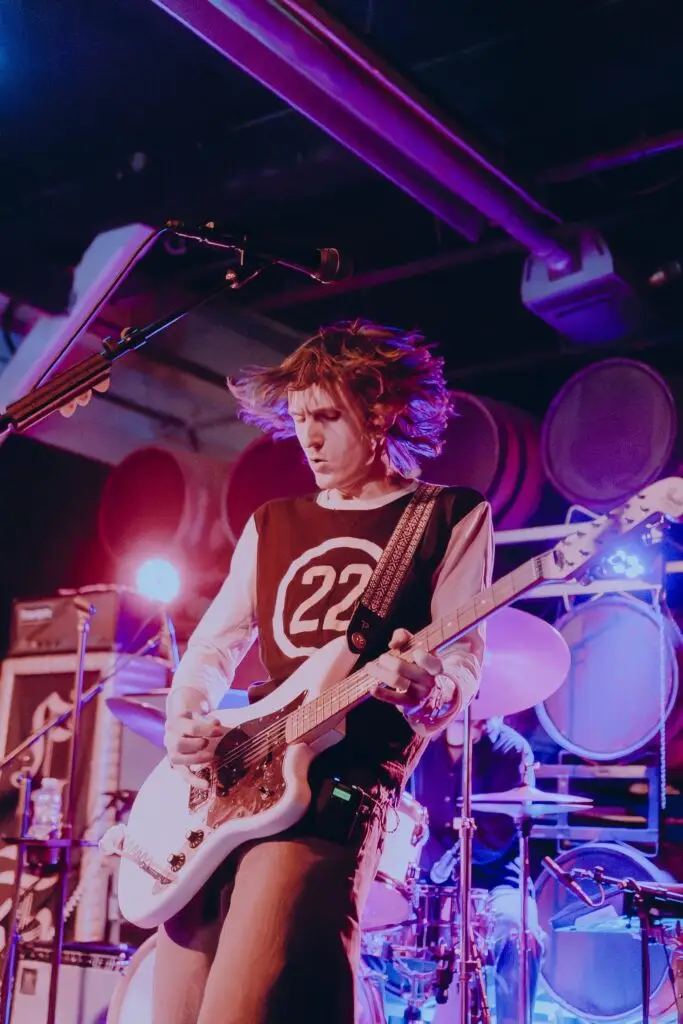
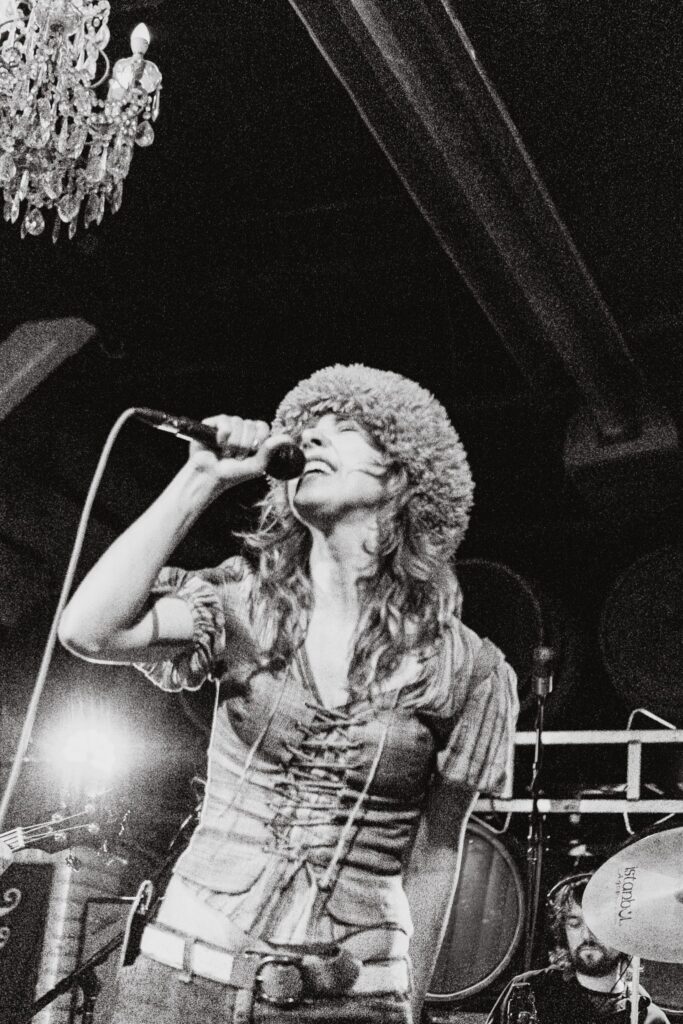
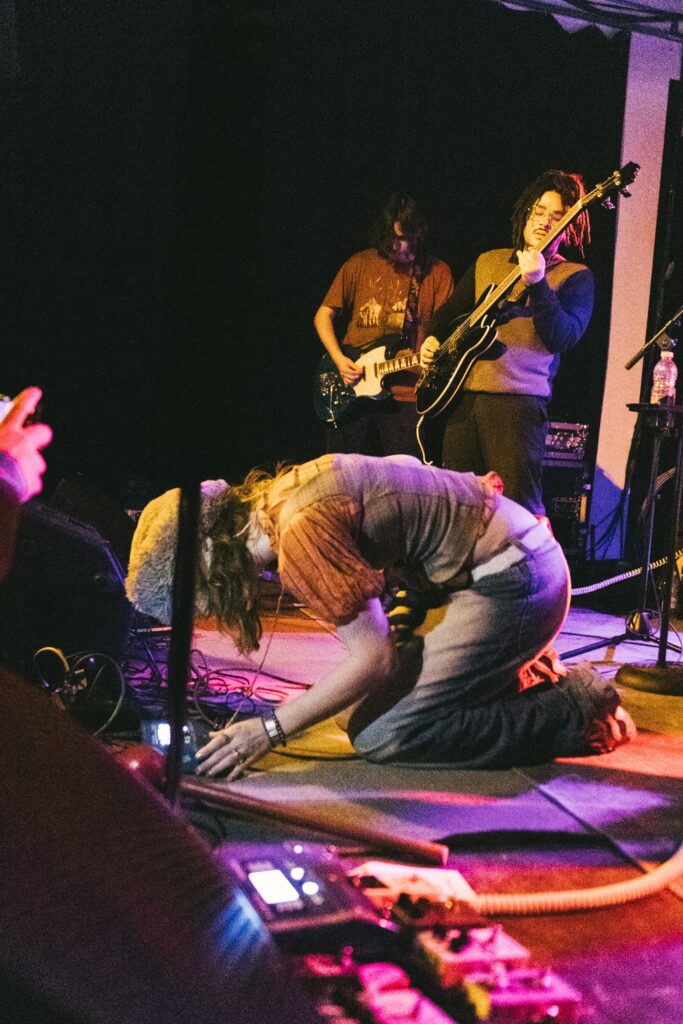
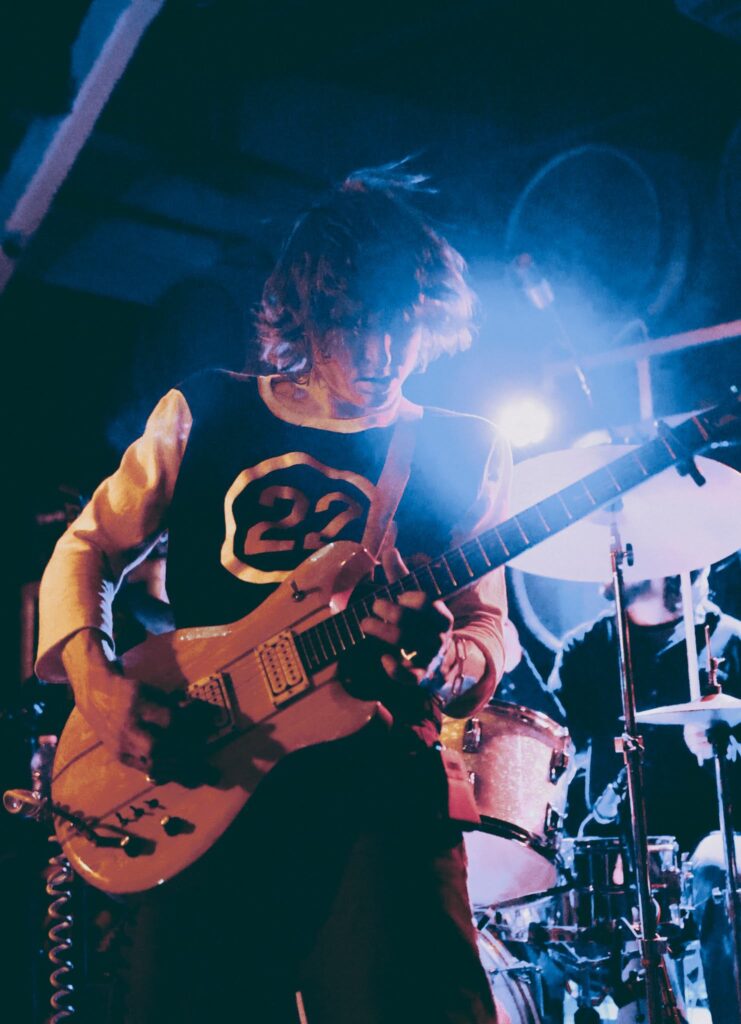
The longer tour goes, the more I get into flow state. The first show or two, I'm getting back into the swing of things. But after a while, the dance starts to happen on its own. Like when basketball players talk about flow — it's happening to you rather than you doing it. When I'm on stage playing guitar, stepping on pedals, adjusting the amp, singing — it becomes this whole dance on the left side of the stage, and I'm not conscious of any of it until I see it on video.
Jane:
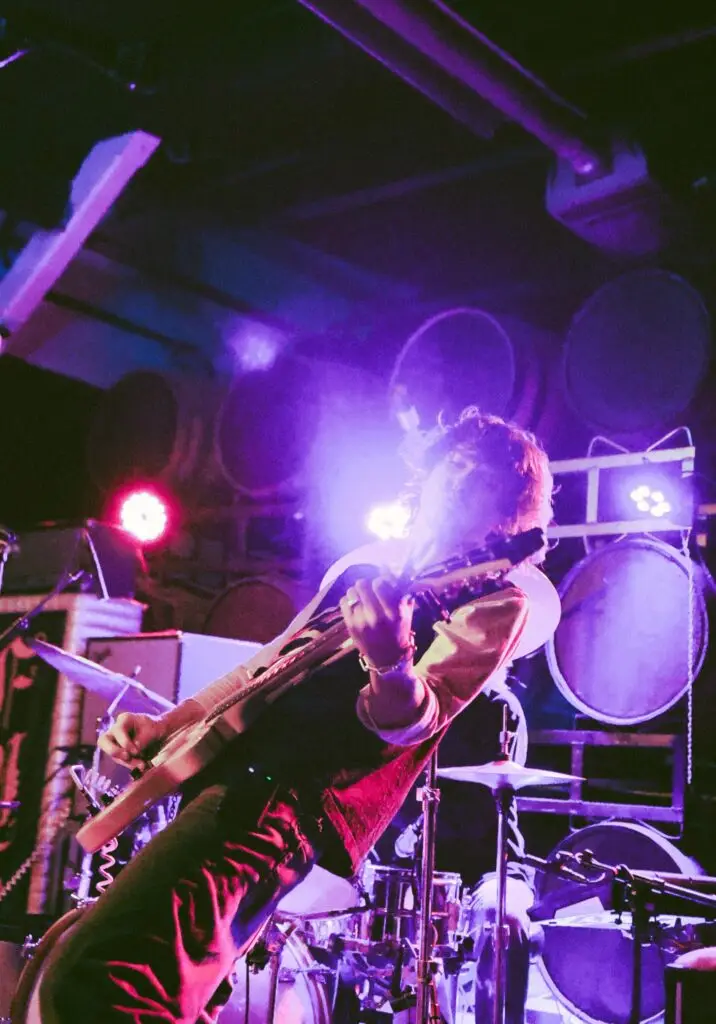
Our photographer April — toward the end of our last leg, fifteen shows in — she said: I've been trying to get this photo. Do you know when you kick? During 'Prelude to Waterloo'? And I was like: what? I've never consciously thought about kicking. I couldn't even tell her when it happens.
Weadee:
Something about that song just evokes it.
Jane:
I guess so.

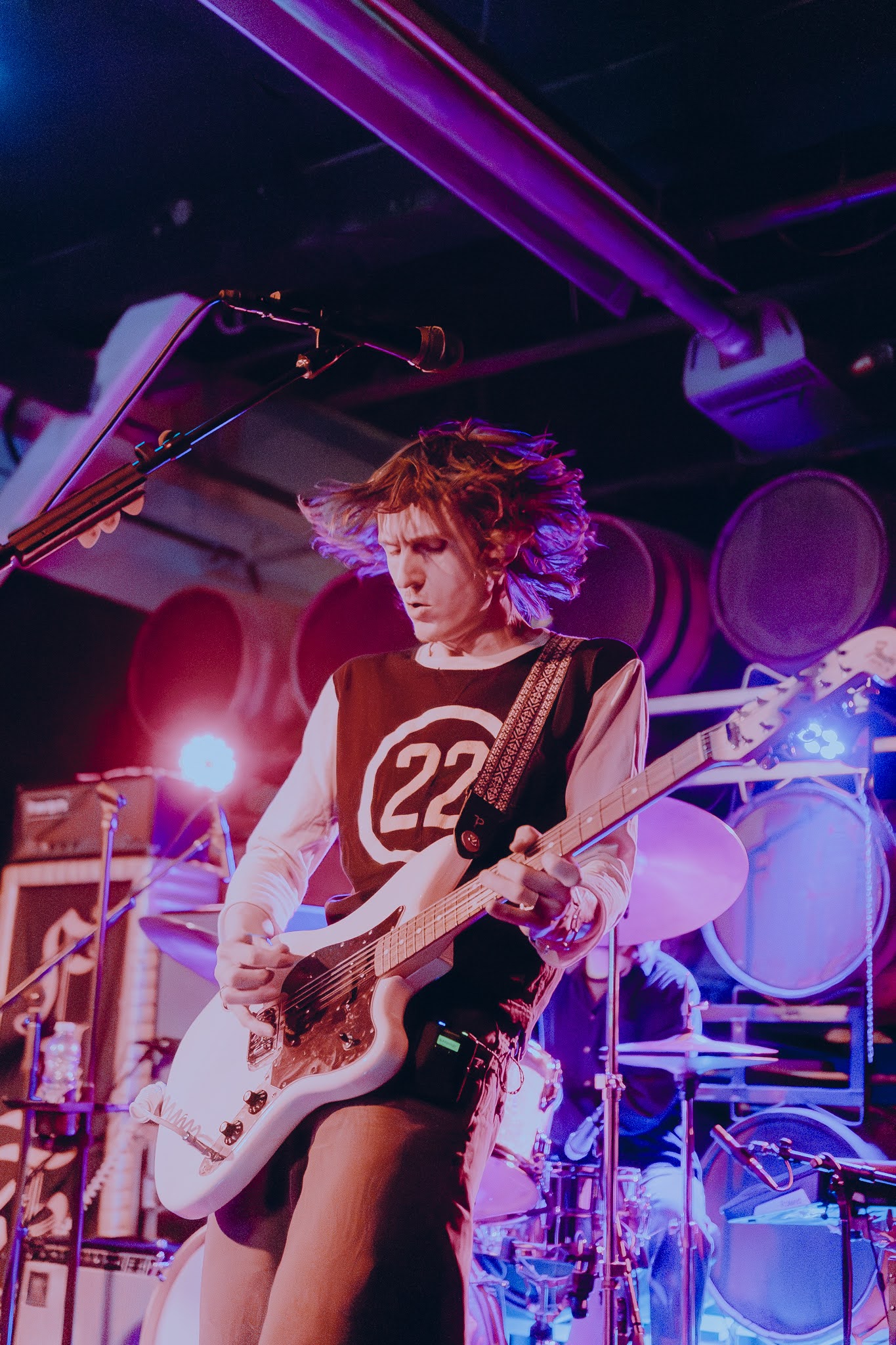 Photos by Weadee
