
 Photo credits: Morgan Kelley
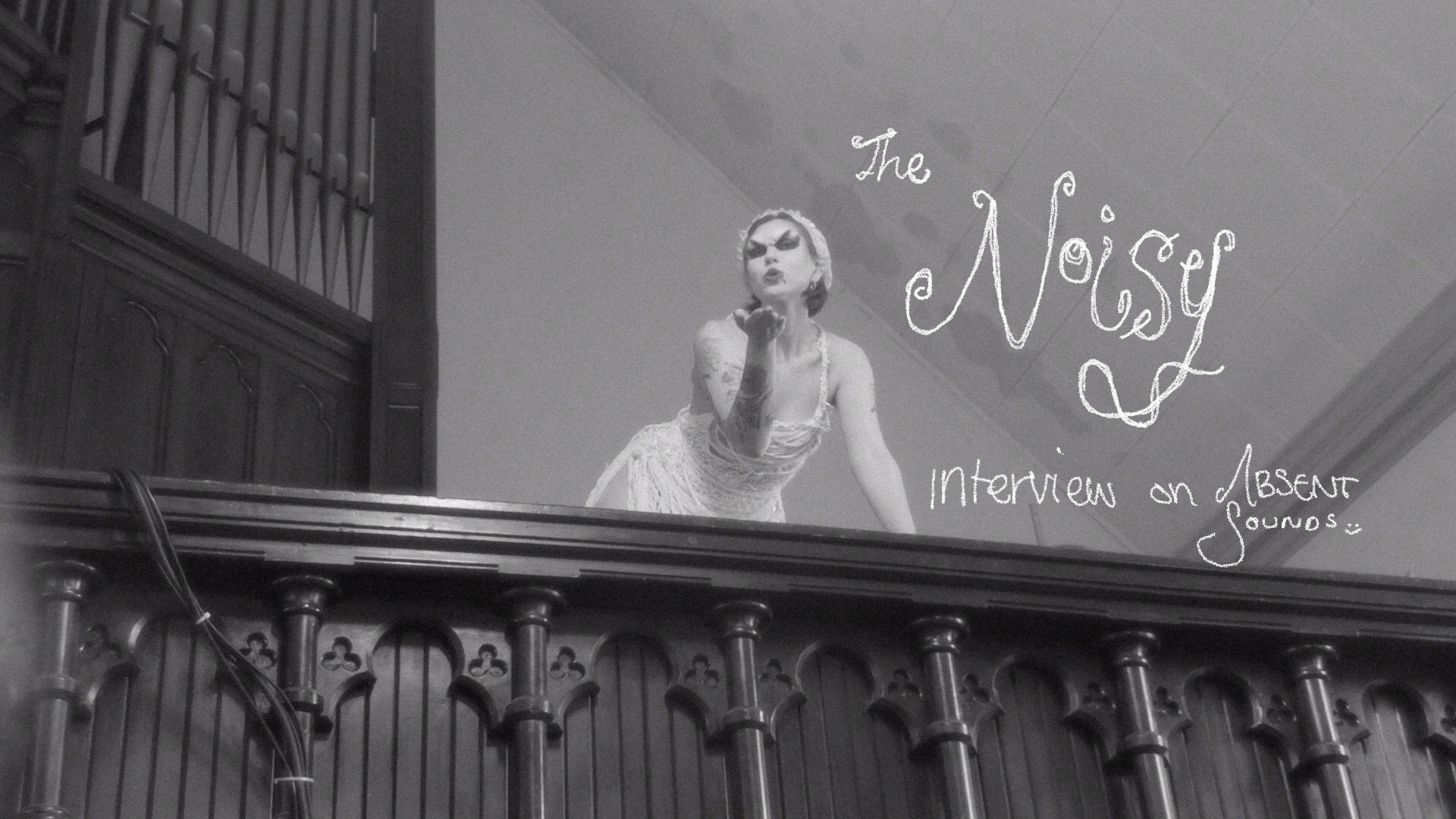
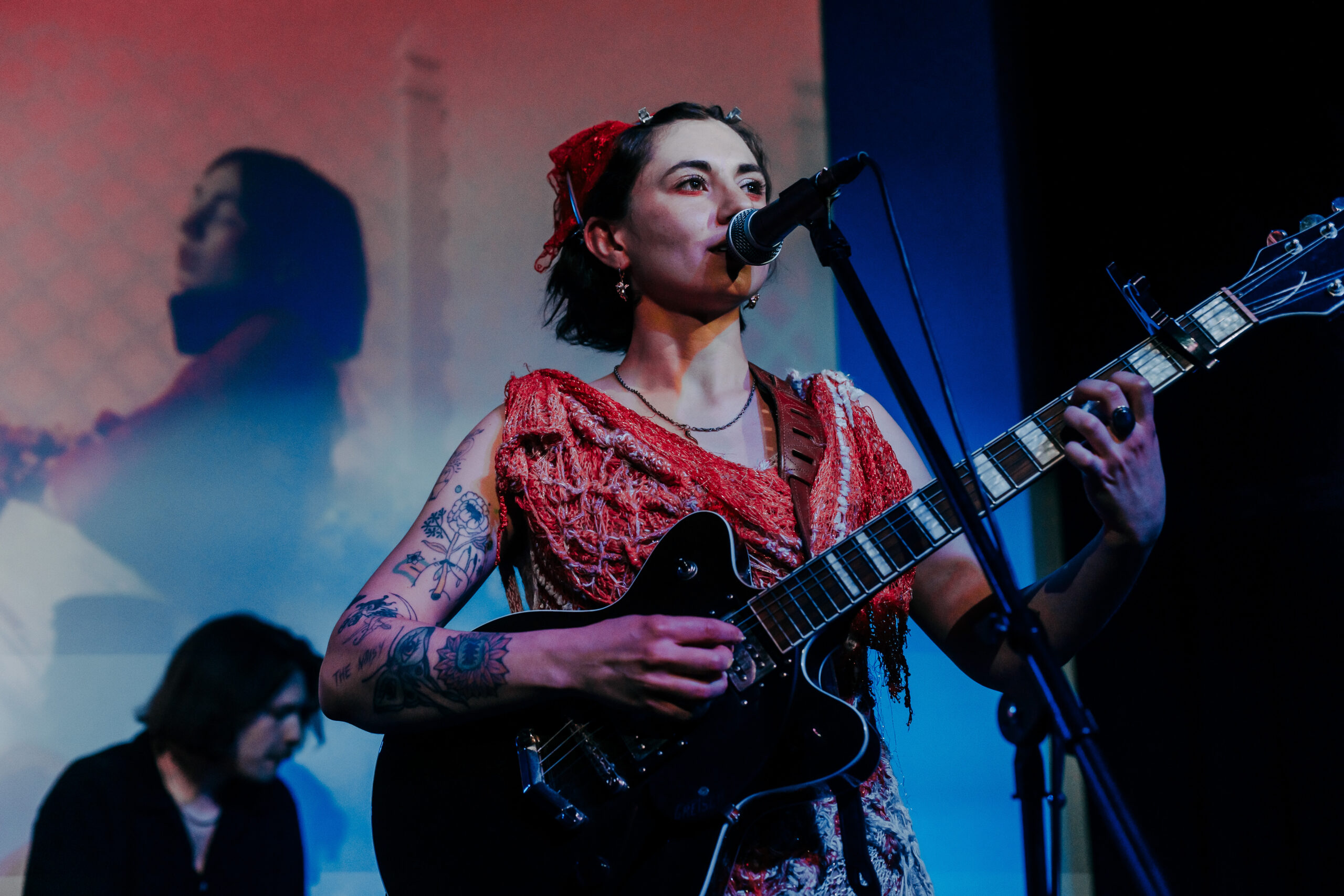
This week, Sara Mae joins Absent Sounds for a track-by-track dive into the deluxe edition of their debut album: The Secret Ingredient Is Even More Meat. Under The Noisy, Sara Mae Henke (they/them) makes music for closing chapters that also loudly opens a door. We talk about the pipeline between poetry and songwriting, from the volta, to queer wordplay and the love-soaked specificity of "Ballerino." Nothing feels haphazardly thrown. Above all else, the record is a beautiful capsule of love that finds new life after someone is "gone." Sara Mae is a poet, a chapbook-maker, and so much more in-between. Do yourself a favour and watch their music videos here! Follow The Noisy at @veryverynoisy on Instagram and subscribe to Sara Mae's newsletter here
Weajue: Hi everyone, you're listening to Absent Sounds here on CJAM 99.1 FM, reaching higher ground in Windsor and Detroit. Today I'm really excited because we got to talk to a special guest who just put out a deluxe edition — and that is none other than Sara Mae. They put out music that is incredibly difficult to look away from. It feels so honest, but intentional in a way that creates different perspectives. They create music under the creative force of The Noisy, and the body of work feels not only honest but also really tender. Today we're diving into the deluxe edition of The Secret Ingredient Is Even More Meat, going track by track as we do each week here on Absent Sounds — but also getting to talk about what it means to be honest, and how this music beckons us to look in different directions. So hi 😊
Sara Mae: Thank you for having me.
Weajue: My first question: when I found out that you write chapbooks and are basically a poetry grandmaster in my opinion, I felt so inspired — I've made one chapbook in my lifetime and I want to make more. I wanted to know how you see the intersection between poetry and songwriting, because even though lyrics can be poetry, I assume there's a dividing line and maybe they influence each other.
Sara Mae: Thank you — we should definitely trade chapbooks sometime! What I normally say when I get this question is that there's internal rhyme and rhythm on the page that can translate to writing lyrics and drive a melody. Ballerino is a really good example of that. The chords were written first, but then I had a driving rhythm to go off of, and that allowed me to be wordier because there was something very specific to work within. It reminds me of working within form in poetry — like a sonnet in iambic pentameter. You have a certain number of syllables, a certain kind of meter, and those constraints actually allow for more playfulness. They push your language and sometimes you end up using an image or a phrase you wouldn't have arrived at otherwise. I've recently been working really hard to approach music the way I approach poetry, because I feel much more comfortable with poetry — I've gone to school for it, I've had a serious artistic practice with it for longer. I'll get up before the sun, read a book of poems, create a prompt for myself based on what the writer's doing, and pull from that to write something. With music, I'd been expecting myself to just sit down and write a song. So recently I've been trying to be more of a student of other musicians — pulling apart songs for their forms, chord progressions, structures, production choices — and then using what I find.
Weajue: I'm always so intrigued by people's listening habits. Mine can funnel down into this weird almost-obsessive hole. Do you find it natural and comfortable to pull music apart technically like that?
Sara Mae: Honestly, no. I've been singing my whole life — school musicals, church, choir — so I had all this disparate training. They'd teach me a little bit of theory and then I wouldn't touch it for years. The ear training, the real sitting-down with a song — that's a newer practice. For a while it felt like a shortcoming, but now it actually feels a little freeing. I get to be a student, approach every song with wonder, and really take seriously all the choices a musician made.
Weajue: Bringing that to the confessional vulnerability that feels so apparent in your work — how do you approach being so open with the lyrics? I'm tempted to call it a contrast between the technical and the vulnerable, but I'm not sure it's really the other side of a coin.
Sara Mae: I think you're hitting on something true. I went to music because in grad school I was so caught up in craft and technicality and wordiness that I wasn't able to be honest in the same way. I took a songwriting class with Adrienne Lenker — more of a lecture than an actual conversation with her, which would have been incredible — and she did this exercise where she looked at a Lucinda Williams song and analyzed which lines were abstract and which were grounded and confessional. She was pointing out that every great song has a Volta, like in poetry — that moment of turn where everything becomes really clear and you realize something true about the undercurrent that's been there the whole time. The best writing, the best poetry, the best music has both: the abstract and spiritual, and the grounded confessional. I went to music because I was only in the abstract. Academia is cerebral and sometimes it misses the lived feeling. So I went to music for that — but that's also why More Meat is so confessional. I really needed to write songs that were open-nerve. I needed somewhere to actually process my shit. I was feeling pretty far away from myself and music brought me back.
Weajue: Where does this album fall on the timeline — of your artistic trajectory, or just your life?
Sara Mae: I was making a post about it the other day and I said: I grew up so much making this record, and then I grew up a little bit more making the deluxe. I'm 28 and I feel so old, which is silly, but I'm getting to the end of my twenties and I really feel like a chapter is closing. It feels freeing. This record was metabolizing so much hard stuff from my early twenties — so much discontent with myself and my circumstances and a lot of shame. Everyone says this: you spend your entire life writing your first record, and then you have to quickly turn around in two years and write the next thing. I pulled on experiences from my childhood and my early twenties, and now I really feel like I'm on the other side of so many of the things I was struggling with. Doing this taught me how to be a grown person.
Weajue: Let's start going track by track. First up: Little Grill. Tell me about this one.
Sara Mae: I wrote the first draft in one sitting, in my in-laws' attic. I loved the little riff it started with — one of the first songs I learned on guitar was "I Can Tell That We're Gonna Be Friends" by The White Stripes, and I was really enjoying doing a picking pattern like that. I was thinking about: how do you talk about a queer childhood? How do you talk about gender in a way that doesn't completely dismiss what you were raised as? It's like, how do you talk about your experience without completely distancing yourself from it — which can be so confusing when you're non-binary. I don't always know what to attach myself to. So this is a fun play on words — "I wasn't a little girl, I was a little grill" — and from there I was just having fun with images, and it led to this big moment at the end that opens up. There's real anger there: "telling me I'm pretty, telling me I'm pretty" — is that all I am? Is that all I was? Was that the only place my value lay?
Weajue: That was one of the things that really struck me. It feels so hypnotic. And the conceptualization of identity reminded me of this Toni Morrison radio interview where the interviewer asks her, "when are you going to stop writing about Black people?" — this idea that you should eventually take some other perspective. It feels like a similar pressure, like the main objective assigned to people raised as girls is just to be pretty. Do you still feel the anger of this song or have you shed a lot of it?
Sara Mae: I feel like it's the window through which I look at the world. I don't necessarily want to be talking about identity all the time, but I'm inextricable from my own perspective. This is my window into my socialization, into growing up.
Weajue: Track two: Ballerino. Such a tactile song. The lyrics feel so present. Tell me about this one.
Sara Mae: This one was so fun. I brought my friend Josh — who basically co-wrote this entire record with me — a Vundabar song and said I kind of want to write something like this. My tendency is to write songs with a lot of minor chords, barre chords, dissonance — dreamy, but without real drive. Josh was like, let's write something in drop tuning. We played around with that, and then I had this form to fit some wordplay into. I was also like, I'm always writing sad angry songs, I want to write a fun love song. So it's for my boyfriend Alex — we're legally married now, but at the time we were falling in love. I was trying to remember all the little details of that era. I'm really proud of the fact that the song could easily be very didactic — this is what we ate, this is what we drank — but I think it's a little more romantic and whimsical than that. There's a line: "I wanted to be dangerous before French-made costume, six-figure French doors." I love those lines because they're not only the everyday details — they're about grappling with this alternative version of myself, this Jekyll and Hyde I was struggling with: the kind of person I was scared to become. When we were falling in love, it was right after the COVID vaccine came out, and I'd spent a year walking around Baltimore by myself, looking at houses, thinking, I hope I have a life like that someday. I don't have the French doors, but I have this great love.
Weajue: Two's was actually a track I played on my Thanksgiving episode. Something stark about the titles on this record — the lyrics can be esoteric but the titles are often just very blunt. Tell me about the title first, and why shorter rather than a Fallout Boy-length title?
Sara Mae: I could definitely do a Fall Out Boy title — the poet in me could go there. But I love Two's. I was stewing on the concept for a long time. It's about infidelity, about always having someone on the back burner. So formally: I'll write it in couplets. And I love that it's almost like a countdown — one, two, three — lyrically falling over the end of a line into the next thing, like enjambment. I wrote it in the back of a copy of The Master Letters, which is about Emily Dickinson's kinky obsession with an unnamed lover — written by Lucie Brock-Broido. I can't believe I almost forgot her name; I'm a terrible poet. Her writing is so ornate, just delicious — words that feel like you're tasting them. I think those poems were in my brain. And if we're talking about Emily Dickinson having this kind of relationship — I think that probably gave me the courage to write something this explicit. There's not even innuendo. Baby, it's not innuendo, it's just in there.
Weajue: How do you write about sexual experience without moralizing it?
Sara Mae: When I wrote Two's, I hadn't fully metabolized that experience yet. I was writing from a place of shame. There's a line: "I used to think I was a different kind of girl" — gender, again, but also: I used to think I was perfect and good and didn't do horrible things. People love to moralize cheating, and like, it makes sense, it's not a great thing to do. But it's also a symptom of an unmet need, a symptom of something wrong in a relationship. I'd probably write the song differently now. I was writing a lot of these songs before I was able to gain compassion for myself. But then again — you gain that compassion by writing through it sometimes.
Weajue: Shame is probably the biggest barrier to self-compassion for a lot of people, including me. What's the next step beyond writing?
Sara Mae: Being able to take responsibility for your actions, and then learning to trust yourself as a dependable person — which takes years. It takes repeated acts of showing up for your friends, keeping promises to others, but also to yourself. I'm a really disciplined person, I have routines around my writing and artistic practice. Showing up to the page every morning helps me believe in myself as someone who can be counted on. Even if I don't write the best thing today, I showed up. And a lot of these songs are about a time when I was crashing on people's couches, relying on a lot of generosity. Being able, years later, to welcome those same friends into my home — cook for them, give them a place to sleep — that meant a lot to me. We can always change our self-limiting beliefs. We can always write new stories about ourselves. We're all deserving of change and of growing into the best version of ourselves. Not to be corny, but—
Weajue: That's not corny. Sometimes the corny things are where the truth lives.
Weajue: That's actually a great transition into Backlit, because it feels like there's this imagery of being watched, of performing — maybe not quite voyeurism, but just being observed. Tell me about this track.
Sara Mae: The song is about a friend I was in love with. So that's a fun tension.
Weajue: That is a terrible—
Sara Mae: Terrible, awful. But so a cute little queer crush. It's about how I felt when I was looked at by them. I'm really proud of how the music communicates the emotion — really proud of the harmonies at the end. It's so fun to sing. I used to almost pass out performing the ending live because it requires some real belting. And I love the music video for this one — make sure to check that out.
Weajue: I know you mentioned being a Chappell Roan fan and I always loved how she goes all out with the visuals, and I feel the same thing with you. Tell me about your favorite thing about the music videos.
Sara Mae: The most recent one was for the deluxe version of Tony Soprano, and I'm so proud of it — and it was a really stressful process. I've done music videos with my very best friend Sam Cush: Violet, Lozenge, Two's, Grenadine, and now the deluxe Tony Soprano, and we're scheming on another. For every single video we've fine-tuned our collaboration — how do we make this sustainable? Music videos are really expensive, but we have so many ideas. For Tony Soprano, we had to pivot at the last second because costs ended up being way more than we anticipated. So it was mostly just Sam shooting on iPhone, being incredible at editing. All our friends came together and it was so beautiful. I got to cook my grandma's pizzelles for it. The simple production of it made it feel really special — understated but interesting, and right for the tone of that song.
Weajue: You mentioned your grandma — I don't want to forget to ask: there's a little phone call from your grandma on one of the tracks. Which one?
Sara Mae: The original Tony Soprano.
Weajue: How did you choose which voicemail became the final version? And because it evolved from the original to the deluxe—
Sara Mae: I didn't write Tony Soprano until the week we were recording. I had a lot of downtime in the studio while Josh was tracking drums and other people were tracking bass and lead guitar parts, and it was driving me crazy — I'm overactive and need something to do. And it was my first time in a serious recording process; I was feeling a little low-confidence. I knew I wanted to pull Tony Soprano into the universe of the album because of the secret-ingredient-is-more-meat energy — during that era, I'd been watching The Sopranos a lot. There's so much grief in that show. For all the fun and gags and ridiculousness, there's a lot of sadness. One day during the process I went for a run and was just thinking about my grandma — I'd lost her relatively recently. I wrote down the lyrics and those are the ones that made it into the song. Pretty simple chords, simple chord progression. I showed it to the producer maybe on our second to last day of recording. I have all these voicemails from my grandma, but that one just feels particularly special.
Weajue: Today is actually the 44th anniversary of my grandfather passing — a weird thing because I never got to meet him. My mom has been grieving for all those years and still cares; it never really goes away. I'm curious about your relationship with your grandma and how that's shifted while also holding grief — what does that look like today?
Sara Mae: I keep a photo of her on my altar — her and my grandpa — and I make them black coffee every morning. Last night I made pasta from scratch and I put out a little ancestor plate for her. I talk to them when I need some extra love. My grandma was super Catholic, so even though I'm not, I still sometimes say: Grandma, can you put in a good word? When she was alive, we'd say: ask grandma if you need extra luck, because she's got the closest line to God. Now I feel like, if I'm really worried or confused, I'll ask them for a sign. I get my aura photo taken every year and I always have these two little dots up in the corner that are my grandma and grandpa watching over me. Towards the end of her life we got really close, and it was a time when I really needed someone who just relentlessly showed me love — unconditional grandmother love. To know that that existed — now that's like inside me. So if I'm really struggling, I channel her, and I can feel that feeling again.
Weajue: She's not anywhere further than yourself. I find it difficult sometimes to hold grief collectively — even though I can hold it within myself. What's helped you hold it outside of yourself, with other people, in your music?
Sara Mae: As I've gone through this process, I keep coming back to: everyone has grief. There's this Japanese Breakfast lyric — I'm going to drive myself crazy trying to remember it exactly — but it's something about how the world is divided in two: people who have felt pain, and people who have yet to. She's my biggest inspiration in literally everything I do. Her experience is different from mine — her connection to her Korean heritage through her mother is a different kind of loss — but I think I feel a little less jaded for having gone through this. I feel more connected to people because I can see that everyone shares this kind of immense loss. The way my grandma died was sudden. My dad, eulogizing her, said she had a lot of gas left in the tank. There's real sadness in that, and real anger that I felt at first. And it is super weird when you lose someone and then you're walking around in everyday life and people are talking about things you simply don't care about. That was a kind of isolation I had to go through. But as time passed, I've seen other friends go through something similar. I've connected with people talking about the album, hearing about their losses — it's been a thing you can share with people. Where I'm at in my grief right now: I'm pretty hung up on the first line of the Tony Soprano song, which is that my grandma isn't going to be at the cookie table at my wedding. I got legally married this summer, and my partner and I are going to throw a big party at some point, and I'll miss her for that. But in general — grief is just love. The fact that I feel it so immensely is a good thing. I miss her, but it's evidence of how big an impact she had on me, and she is still a source of love I can turn to.
Weajue: I've been sitting with a lot of this lately. I read Joan Didion's The Year of Magical Thinking — she talks about how it's not just the grieving process, it's the rest of you dealing with the aftermath of life without them. Thanks for going there with me.
Sara Mae: That's such a good recommendation — I've been wanting to get into Didion more. I've read pieces of Slouching Towards Bethlehem, but this was the nudge I needed.
Weajue: I want to make sure we talk about a track you mentioned before we wrapped — Nightshade. Tell me what I should know about it.
Sara Mae: I am so proud of that song. I feel like it shows an evolution from the original album to this intermediary deluxe era before LP2. I'm really proud of the storytelling. I'm proud of all the little touches. My producer for the deluxe tracks, my friend Daniel, had the idea to do a formant shift on my voice, so the backing part — "if I'm not wanted, if I'm not wanted" — is my voice scaled down and distorted. I love that. I love some of the piano bits at the end that came from me and Daniel just playing around on a keyboard. Structurally it feels really true to my writing style — it's not just verse-chorus-verse-chorus-bridge. It's all over the place, which I love. It's so much fun live. Our friend Max Glazer is on the drums for that, and they turned out so great. I'm just really happy with it.
Weajue: It's a beautiful track. You mentioned in texts before that this feels like the last of its kind, the end of an era closing out. But to me it almost feels like the opening into the next — which I guess every good closer can hold both places. What are you carrying from this deluxe edition into the next chapter?
Sara Mae: Something I don't want to let go of is the fierceness of this first album. I let myself be really mad and really upset and really pissed off. There's a part of me that wants to be composed and graceful and intellectual — that's the trap I fell into with poetry in grad school, getting so cerebral about it. I don't want to let go of that emotional pulse, that open-wound thing. I don't think the next record will be quite as raw, but I want to keep the spirit of young Sara Mae, fighting for themself.
Weajue: Absolutely. Who else will do it if not Sara Mae? I'm so excited to keep up with your work and see where the next path leads. Is there anything you want to plug before we wrap?
Sara Mae: You can follow me on Instagram and TikTok at veryverynoisy. You can subscribe to my newsletter — I love it so much — at scarymae.substack.com. And subscribe to our YouTube channel to see all the music videos we keep talking about. I'm pretty proud of what we've got going there.
Weajue: I second all of that. You have such cohesion of really interesting and beautiful visuals across everything. Please go check out The Noisy. Thanks so much for being here.
