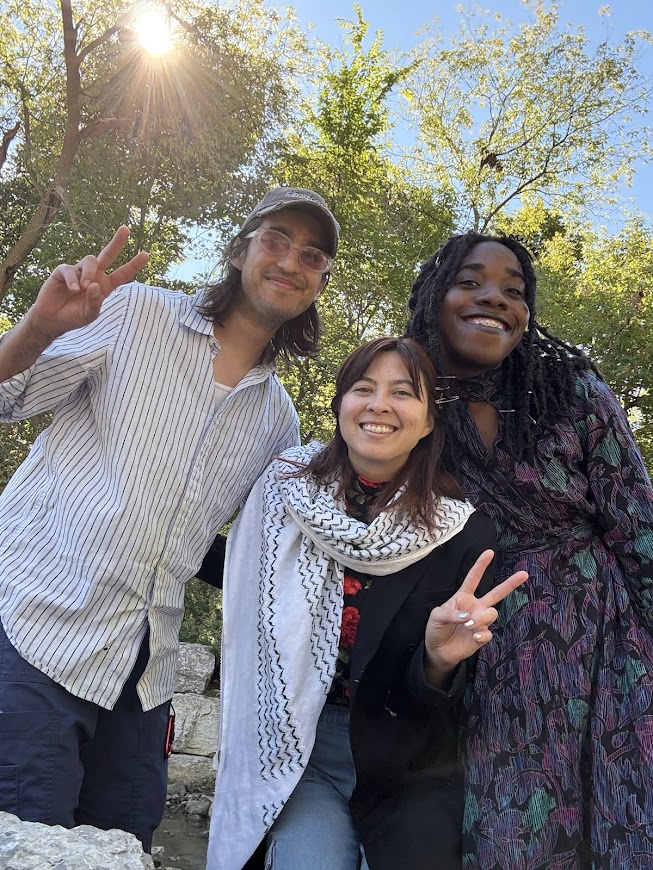
[Transcript is the direct interview with Char and Meredith, not the episode script. I will edit it when I'm not sleepy!]
Charlie Crowley:
In the context of being vulnerable just those like first introductory like sitting down and chatting with each other and like working through songs. I kinda remember a very specific moment I gave Meredith the lyrics that I wrote for one of our songs called Hold You In the Warm Off of Heaven, inches Away.
And I just gave her all the lyrics and said like, do what you want with them. And then she. Edited them and like worked with them in a way that was so careful and thoughtful. And after that I was able to kind of be like, oh, I can just trust you with anything. And you're going to be thoughtful and yeah.
You're gonna, you're gonna care about what we do together in a meaningful way.
Meredith Ramond:
Yeah. Yeah. Yeah. I think it honestly felt like, . Kind of an honor to be able to work with your lyrics because they are so vulnerable. And , to be given them to kind of work through was like really a privilege for me.
Absent Sounds:
Yeah, sorry. I'm like really, I guess impressed because I think there's a, a big part of myself that related to a lot of what you put on the record because there is a lot of vulnerability, but also it just feels so devastating and kind of like, really? Yeah. It's hard to explain. I, I think I did wanna know a little bit about.
More about where you guys were at when you, when you came to this record I don't have to ask that right now if you want, but if you have anything you wanna say about that too, you can.
Meredith Ramond:
Um, for this record specifically. Hmm I think for this one specifically we were, well, I think I was given more of an opportunity to be more.
Vulnerable about the way I've been viewing the world and I think we've always kind of skirted around or haven't really necessarily specifically named things until this record where Char was like, oh, came up with the name of the record from. The lyrics of another song soon be. Mm-hmm just kind of really naming like capitalism and things that are devastating us right now.
Yeah so yeah, we kind of we're able to open up a lot more about. The things that are really important to me and us in that way.
Absent Sounds:
Yeah. I also think it's really interesting that it's, this is your third, I guess, full length that you put out and it it, I wanna know what part of the story of Soft Blue Shimmer you think this falls into.
It doesn't have to be like a beginning, middle end. It could be kind of like a, a climax of the book, of the plot for you guys. I don't know. Hmm.
Charlie Crowley:
Yeah. This album , I think marks a moment of a lot of change, if you like, were to look at it in terms of a narrative. It's probably like the point where like one of the protagonists suddenly realizes their whole life has to change .
In order for like, the rest of the book to happen. Yeah we obviously had like lineup changes This is the last record we're putting out with other people records and then, yeah, the subject matter and the focus of the band
really, really changed the way we felt about going about the future of the band and how we currently feel about going about the future of the band where. We were writing a lot about feelings and a lot, a lot of like really heavy stuff and love lives in the body, like ideations and mm-hmm struggling with loss, struggling with depression and loneliness.
, but then I think Meredith really taking. The lead on writing lyrics here and really focusing on the anti-capitalist sentiments that she's been focusing on in her real life practices. Uh, bringing them to the forefront here allowed me to really say like, oh, we've been writing about all these things that are systemic, and it's been so close that we haven't been able to see past those.
Bodily feelings but now we've stepped a little bit further away and we are able to see past the bodily feelings that we were writing about and realize that, oh, all of these things we're suffering from
Meredith Ramond:
mm-hmm
Charlie Crowley:
we are suffering from because of capitalism.And a ruling class and these systems that are bent against us.
So
Meredith Ramond:
yeah.
Charlie Crowley:
So being able to really focus that way, I think. Marks a moment of a lot of change. So if this is a point, LP three is the point that the band is like, we're different yeah. Where we still care about the things we were talking about, but the scope has widened and, uh. If we are going to continue playing music, we can't just be writing about our feelings anymore.
We have been given the unique position to write just beyond those things, so, yeah.
Absent Sounds:
Yeah, yeah. I I, I really do resonate with what you're saying 'cause I have been thinking a lot about how a lot of the feelings that, or the things I'm carrying within myself are more just. I guess not only like echoes or of ripples of whatever is going on outside of myself as well.
, but it does start to carry like you're carrying the embodied grief of like the society around you, the society, the people who were not able to grieve themselves or, I don't know. It's just there's a lot that you I guess it THPs into it and so it is cool seeing that come out in your work as well.
, that kind of brings me to the first track, which is frequency hammer. And this one, I, I think. Some of the things that I had pulled out from this track were more related to the bodily aspect. Uh, I think the line that really stuck out with me was I always break in your hands and I think just the idea of kind of more of a definitive nature, like I always, rather than I might break in your hands or, and kind of wondering what that looks like to break in somebody's hands or.
Dealing with that fragility do you wanna tell us a little bit about that track first before I get into it?
Charlie Crowley:
Sure. Yeah that track is kind of funny. I was focusing when writing the lyrics, I was focusing more on translating, like, again, bodily feelings into like physical things. So the Crush Me,
Absent Sounds:
yeah.
Charlie Crowley:
Devastate all of these. I wanted them to feel like, like a big thesis statement almost.Being like, this is what this album is about. It is about like the breaking of your body. Because of these other things.But I also really, really like tying big feelings into relational feelings.
Charlie Crowley:
So making the song feel as though it could be about something really close, like a relationship or something I think it makes it easier sometimes for listeners to digest those kinds of feelings and then think about it longer and be like, oh, I always break in your hands. Oh, this system will always destroy me.
If I let it stay here with me and continuously press me and break me, and press me and break me, I will. If I stay here, I will be broken by it.
Absent Sounds:
Yeah.
Charlie Crowley:
Yeah.
Absent Sounds:
There is a, it's, this opening does give a real, really strong, visceral reaction. Also, I think one of the questions I had was a little bit more to the literal title of it.
Why is it all in capitals compared to the other tracks?
Charlie Crowley:
Oh. It's, I just kinda like it. Yeah. No real reason. Yeah. The words like, I don't know. I feel like sometimes when you're writing the words they beg you to do something in the same way that when you're writing lyrics or writing a story or something, it feels like, oh, I may not have written this the way I did, but the story is telling me to go this way.
Yeah the lyrics are telling me it has to be this way. Looking at the phrase frequency hammer, I couldn't see it in anything but capital letters.
Absent Sounds:
Yeah.
Charlie Crowley:
So, yeah, it's just like, it is that, yeah. It's coming at you. It's,
Meredith Ramond:
it's pounding. Yeah,
Absent Sounds:
it does. Yeah. It feels like this really yeah, A strong, almost like psychological warfare going on during this track.
And to bring that into the next, which is track number two, super metal dream this one. I think brings it a little bit more into the spatial area tell us about that, about that one right now too.
Charlie Crowley:
I guess the first, the first part of the album is like a lot of stuff that I wrote. Oh
Absent Sounds:
yeah.
Charlie Crowley:
Um, super Metal Dream. That started as like just a fun demo. Uh, on my computer I was listening to like. A lot of Sonic the Hedgehog soundtracks. Really? And so I was like, I want something that is propulsive and fun.
Absent Sounds:
Yeah.
Charlie Crowley:
And something, and then as I started writing it more and more, I was like, I want this to feel a little nonsensical.
So the song, a lot of the parts don't line up neatly.Uh, the guitar parts don't listen to each other. The bass part doesn't listen to them. The only things that follow each other really are like the vocals of the bass. Yeah. I didn't wanna make her job too hard 'cause she has the hardest job. But I was like, everyone else can struggle.
Yeah, she has to be okay. But that song is so much about having everything you want, which is for us, like we're touring, we're musicians. We get to do this dream that I've had since I was a child and it's right here. But then sometimes even though I'm holding it and doing it. It feels so far away. Yeah.
And it feels like this dream that's impossible still, even though I'm literally doing it.So that song is very much super metal Dream is this idea that it's like, it's this dream that is unstoppable and it's here and it's, it's metal, it's there and physical and I can touch it. Mm-hmm but it's also not there because of who I am.
Yeah. And I won't let myself hold it.
Absent Sounds:
Yeah.
Charlie Crowley:
Yeah.
Absent Sounds:
Yeah, I, I think that kind of also embodies a lot of what I was feeling when I was listening to this track for the first time because the same dissonance of, well, for me, the, I remember my first impression was kind of like, you know, when you're half in a dream and you feel like you're falling and you catch yourself, or maybe like you miss a step.
And it's happened a lot frequently, recently. I think it's just 'cause I'm half. Sleep deprived all the time. But yeah, there's just this weird dissonance of, I don't know, not being able, it's, it's terrifying a little bit too but specifically with what you said about the thing being right in front of you related back to relationships, I think a lot of this record feels very, when I say disjointed, I don't mean like that.
The music sounds disjointed, but it feels like it's struggling with, it's a, it feels like a struggle. There's real, real tension that you guys are pulling within here.
Charlie Crowley:
Yeah,
Absent Sounds:
I
Charlie Crowley:
think there is. Yeah. Yeah.
Absent Sounds:
Yeah do you ever feel that as well within, I guess relationships too, the, that when someone's right there, but you can't fully feel their presence with you?
Charlie Crowley:
Luckily, not really, because I get to be, be with my partner all the time. Yeah and we luckily have this like extra place to kind of like, I think explore. Those things . In songs. Uh, but in terms of like other relationships, because obviously we are not, we're not just discussing romantic relationships.
But yeah, I mean, I focus a lot on like friendship relationships and like those deep communal relationships that often feel absent in this time, in this like digital burgeoning on AI era of living it does sometimes feel like. I have, I just switched phones and I had over 700 contacts in my phone.
Absent Sounds:
Oh my gosh.
Charlie Crowley:
And I was scrolling through it trying to decide whose names to put in the new phone.
Absent Sounds:
Yeah.
Charlie Crowley:
And I was just looking at names of people whose faces were so vivid in my mind, and I had distinct memories of doing things with them. And lovely memories, heartbreaking memories, and. They're just not there.
Absent Sounds:
.
Charlie Crowley:
And, but they're there in my hand.
Absent Sounds:
Yeah. Yeah.
Charlie Crowley:
And so maybe that's not like directly an answer to the question, but I do feel that tension, I guess a lot in my life where I look at things and I'm like, oh, it is right here.But it's also not it. I can't grab it at all.
Meredith Ramond:
Yeah.I think I've really been evaluating the relationships I have as well.
. Yeah, over the past years similarly, like what kind of communities do I wanna have and what kind of people I want in my life? And yeah, I've. I've been making a lot of new friends with mutual aid groups and maybe friends that I've had in the past we're drifting away 'cause we have different, I guess values.
And I think that's okay to like let go of if you know, you don't super.
Absent Sounds:
Yeah.
Meredith Ramond:
Align anymore. I don't know if that was really any part of this question, but
Absent Sounds:
it does. I think letting go, well, letting go is obviously always kind of the hardest part. Yeah. Or knowing when to let go and when's the right time.
Meredith Ramond:
.
Absent Sounds:
But yeah, sometimes you don't even get to make that choice, which sucks.
Meredith Ramond:
Yeah.
Absent Sounds:
, that was kind of the one thing I think. Yeah, the, the one thing I guess that I also wanted to add onto that was more asking about the I guess the song, sometimes it feels also like you're talking a little bit about giving, like giving so much of yourself till there's nothing.
I think this is also kind of something I was thinking about a lot of the record, like how depleting yourself, . At this point, do you guys feel like, what's, what's your relationship with being able to continually give? I feel like music is kind of, or like artistic endeavors are kind of hard 'cause you give a lot of yourself to it.
,
Meredith Ramond:
yeah relationship to giving, I will always wanna give even if I don't have things to give in, in kind of a, I'm still dealing with is it bad or good? . But that's where I'm at. Did you have any
Charlie Crowley:
Yeah. In the context of writing music and giving in like an artistic way, I guess I don't necessarily feel depleted.
, I always take time to rest a little bit after writing.A big thing, like they will leave us with nothing I think it comes in like shorter windows now, but yeah, I have, I. Huh? You're making me like think about it. Like maybe I am deplete. 'cause I was about to say, I feel like I have to reach further down inside myself to dredge it up a little bit.
Yeah. To the Dred, it's, oh, is that because I've depleted the, well, no. Maybe, who knows? Uh. Let me think about that for a year. So I'll give back to you.
Absent Sounds:
Yes, I would love to hear where it comes out in the next stuff you guys put up too I think this was kind of a question that was coming up for me because of the next track, which is track four or no track.
Did I already ask? Hold on did I do perfect thing? I don't think I did, no. Okay. Because there's a part of perfect thing where I started wondering about the, like where does it balance out, where there's a equation of comfort? And discomfort and having them coexist, but sometimes it feels like the math isn't adding up and you know, something's gotta give.
What does that look like? Like how do you, what, what are you keeping track of and or how do you tally that?
Charlie Crowley:
Yeah, you're, you're asking the better question, I think, than what Perfect thing asked I guess when I was writing that, I was thinking very much of that, like sitting in discomfort and in comfort and being.
With people and like with someone that you love and it's like, good.But then everything else sucks. But being here with you is okay.
Absent Sounds:
Yeah.
Charlie Crowley:
Is I guess the sentiment, and I just kind of stopped there because Yeah. No, I, maybe that's the
Absent Sounds:
best place to just stop, don't go further, because you'll end up in a little labyrinth forever.
Charlie Crowley:
Yeah. But yeah, I guess my, my relationship with comfort has been very, . Fraught as of late, I have had a very I think it's hard for me to seek comfort, and I think that if I get a little too comfortable, I will make myself do stuff. And I'm like, oh, I need to be doing something. Uh, I can't, I can't do this.
, which. Is maybe an overcorrection because I do think that comfort is kind of the killer of motivation, especially in terms of enacting change in any meaningful way. I feel like if someone is very, very comfortable, they may not be pushed to change things.
Meredith Ramond:
.
Charlie Crowley:
, I say this from like experience of maybe being like physically bodily comfortable, but wanting to change a component of myself or an aspect of myself and that would cause me.
Discomfort, whether that is taking all the social media off my phone, which is something I did recently. Yeah and missing out on the comfort of scrolling and feeling connected and feeling like up to date. And now I have this itching feeling in the back of my head that I'm like, I'm missing something.
Yeah. I'm missing something. And. I know that'll, that'll go away. But for right now, it's like, oh, I'm just like constantly in this space where I'm like, oh, what if I could scroll right now or, but I'm just sitting again like I did when I was five years old, counting the tiles in the hospital room. You know, it's like I'm just sitting again looking at rocks and like looking at trees and I'm like, oh, this is actually really nice.
Absent Sounds:
.
Charlie Crowley:
But then the gnawing feeling comes and it says, but what if you could be scrolling?
Absent Sounds:
Yeah.
Charlie Crowley:
And I think it's that my body's lure to comfort. It's trying to draw me back to something that felt good. And uh, yeah, sitting in discomfort is also good, especially if there are people you can sit in it with who support you.
So I think, yeah.
Absent Sounds:
.
I think that, yeah, there's like a. Man there. I, I don't know. 'cause I, I have done a lot of the things where I like, would delete all the apps off my phone or I won't talk to people 'cause well maybe not talk to, but I like not as, I don't feel as like I have to be present 24 7 but it does, yeah, it does kind of leave you wanting sometimes for you guys.
When you're in a creative space, let's say, I don't know when you put this out back or how, what, what was the time period that you guys were working on this record for? I should have asked this too.
Charlie Crowley:
I started writing, I started writing some of the songs pretty much right after Love Lives In The Body came out.
Absent Sounds:
.
Charlie Crowley:
So I was working on Conti and Perfect thing. Well, Conti is not on the record anymore, but .
Absent Sounds:
Yeah,
Charlie Crowley:
I was working on those like in the months after and then we were writing it all up until January of 2024.And then we recorded it in March, 2024, and then worked on like the visual aspects of it.
Until the fall of that year and then put it out in February.So it was, it was cooking for quite some time. Yeah.
Absent Sounds:
Yeah. Okay. Yeah. 'cause I was wondering like, how much do you feel like your sense of temporal, oh no. Like you're I don't know when, when you remove yourself from that like urge of I have to like check my phone or do stuff, do you feel like that shifts as well too?
Or, I don't know how long you've been actively, like, focusing on removing that from your life too
Meredith Ramond:
Uh, I would say for me, time is very nebulous. So like right now, just like coming up with the timeline, I'm like, yeah. But to me, in my head it doesn't super, it's not concrete.
Absent Sounds:
Yeah.
Meredith Ramond:
Do you have a.
Charlie Crowley:
Yeah, I feel, I feel far more like tethered to a calendar and a clock.
Meredith Ramond:
Yeah.
Charlie Crowley:
, sometimes I slip, I definitely slip and like I will feel like, oh, my being able to tell how much time has passed will, that skill will disappear. And I will think I had just seen someone when really it's been six months since I've seen them.
, but in terms of writing and like the creative cycle. There is like, I think a period of we write the record and I am actively like, consing media while I'm writing and whatnot.
Meredith Ramond:
.
Charlie Crowley:
, but then if I allow myself the space after writing to kind of put down the pens and PA paper and just read and do things.
Absent Sounds:
Yeah.
Charlie Crowley:
, that period of time. Is really helpful to not focus on being creative. Just consing
Absent Sounds:
Yeah.
Charlie Crowley:
And allowing my brain to be affected by like, new things so that when I go to write again, it's like, oh, all these new pathways have been opened up and all these new connections have been made. I now am able to write something different Yeah.
Than before. Hopefully.
Absent Sounds:
That is really cool to use in a practice of, of whatever art you're doing. I. I've tried that as well, like putting things down since we are in a little bit more of a temporal or I guess physical aspect right now, that kind of is a great way to lean into a sic door sorry, not SI.
This is the, what do you call it when it's like you continue? I've never read this correctly actually until this moment. I kept, oh my gosh. Sapphire. Sapphire, wow. Sapphire door. That changes a lot in my head but yeah, I wanted to know, tell us a little bit about the store. Is it a place, a person, a memory,
Meredith Ramond:
, Sapphire door, the words.
, kind of came out as a placeholder it was the first song that Charlie was writing for the new record. And we have a song on heaven, inches away called Emerald Bells. And so the placeholder was Sapphire Door, and then I think we were just like, whoa. That's kind of a cool con yeah, con concept, I guess.
So that's,
Charlie Crowley:
yeah,
Meredith Ramond:
what that was,
Charlie Crowley:
it's a, it's a little bit of a nebulous title. It almost like it evokes more, I think titles are interesting because sometimes they are useful in that they provide context for a song like Frequency Hammer or Perfect Thing or Super Metal Dream. And then sometimes I think that they are evocative in terms of.
Like just feeling and like what are the phonemes making your mouth do? . And what do those sounds make your brain do as you listen to the song kind of soon be in Phi Adora? Very much I think those kinds of titles.
Absent Sounds:
Yeah. Yeah, yeah. I think you guys are. I really, I appreciate how you guys bring different aspects of previous, whether it's like albs or lines back into, back into play.
, and that's kind of something that, like when you said soon be, I had one thing I wanted to ask about was, was even just like the well actually I'm not gonna ask, I'll come back, I'll come back to that later. But specifically with Sapphire Door, actually I'll, I'll keep, I'll stay here. Where you mentioned being disarmed by the light, that line was something that kind of struck me, not only because of the eerie nature of there being two shadows right now but what were you disarmed from?
Like what were you, I guess, armed by in the room that had to be disarmed after?
Charlie Crowley:
Yeah I guess like a little bit of like a, maybe a content warning
Absent Sounds:
Yeah.
Charlie Crowley:
For this song, but it, it is more or less about, . How do, how do you say, how would you say,
Meredith Ramond:
salt,
Charlie Crowley:
I guess. Yeah. I guess it feels like such an intense word to use, but I, I guess it is kind of about assault.
.It's,
Absent Sounds:
it did feel intense.
Charlie Crowley:
Yeah. Yeah, it is it is like an emotionally very intense song for both of us Which again, very grateful that I'm able to hand something so vulnerable to Meredith, and then she was able to tie her own experiences in it as well but yeah, that, that line disarmed by the light two shadows.
Yours and mine again, like, I, I like it when lyrics kind of convey multiple things at the same time.Physically, it's meant to convey a time I was like, pinned by someone.
Meredith Ramond:
.
Charlie Crowley:
And. All I could focus on was the light behind them. And then my, like, the idea is that you're like leaving your body kind of Yeah.
That feeling and seeing their shadow over you and then your shadow behind you and you're just above it watching so that, that's what the disarming of the light is. Yeah.
Absent Sounds:
There's a lot. I, I appreciate you for sharing that too. Uh, there's so much that even listening I started I felt like it was, I not a bit of, it's like not being callous with a lot of these lyrics.
I feel like you are really intentional in the way you guys I guess layer them. Like I said before, there's just so much density, so I appreciate you guys like talking about this too. 'cause it, I, there was, yeah, it, it picked a lot of my. Brain matter while going through it that also brings us to the fu to a future that never ends.
, this one I think is, this is the first track that you start, that your vocals are on for this record maybe not I, or maybe like more prominent, at least
Charlie Crowley:
in a, in a prominent way. Yeah. Yeah. I, my vocals are like. Kind of throughout almost the entire alb. Okay. But they're usually doubling her vocals.
Absent Sounds:
Okay.
Charlie Crowley:
, yeah, this is the first track that I'm singing, like a lead part on the alb. Yeah.
Absent Sounds:
The, the question that I had here was kind of the way that it feels like this is almost like a, a failure report, not like a I, I mean in like loss for example, where, you know, when, I don't know if you guys have seen loss.
Hmm. Yeah, but we're the guy I don't remember his name, but like when he is in the, this is a spoiler for anyone who's listen, listening. It's like he, he's, he's a,
Meredith Ramond:
it's an old
Absent Sounds:
show. I know you had spoiled like 20 years to catch out where the first time that the button, the button was I pressed and like the rest of the world has ended because of that.
, and it feels like for me, for this track where the options here are like. Maybe it's like there is, there is no other option, rather than just like accepting and letting things just happen the way that they happen could you just tell me a little bit about this track before I go further too?
Meredith Ramond:
Yeah, yeah.
Charlie Crowley:
I started singing it, but she wrote all the lyrics for this one.
Meredith Ramond:
Yeah. Let me, let me think about it a sec. Pause.
, all right. Yeah, so this song is I guess a lot about insecurities not feeling like you have enough to bring into a relationship and then that kind of like manifesting in ways and negative ways and hoping that. S that will go away. Mm-hmm and that you can be you know, uh
Okay. In the relationship.
Absent Sounds:
Yeah. Yeah. So is at the end of it for the track, is that like a, I I didn't wanna read it in like a, this is a, you know, whatever. I'll let the mask dissolve and then I'll just be, accept my fate. Is it more of a, I guess an accepting or allowing that to happen is, is that finding freedom in it?
Meredith Ramond:
, I
yeah yeah, I think, uh. That mask, I guess is like kind of the thing, the barrier between you and this person and hoping that it will go away.So that you'll have a good relationship again. Yeah,
Absent Sounds:
well, I think a lot of the thieves of the, I I'm realizing now, well, maybe not realizing now, but I should have maybe given like a warning to anybody who feels already somber.
This is kind of a, a little bit of heavy record to go through in track nber seven. I feel like it's kind of at the start when you're mentioning. I guess being outside of yourself and your body and also into the society and the things that are happening outside, it feels like all I'm left with is aching is kind of the one that feels like the most outside to me.
, or maybe it's more like about Yeah. Yeah. The, what I really wanted to, I guess, touch on here was kind of like the decision. Where you're like sacrificing and then you're trying to decide, or maybe not even decide, but how do you decide if what's worth at the end? What's what? It's, what's, what's at the end is worth sacrificing yourself for?
Hmm.
Or I guess, walk me through the decisions or the process of thinking that you'd have here.
Charlie Crowley:
Yeah, I guess just to. Yeah, touch on that. I guess you don't know until you get to the end and then you can look back and think, was it worth it? , but yeah, all I'm left at the Za King this, this song for me is like probably one of the most intense songs on the record.
. I think I definitely, definitely cried a bit when we were recording it.
Absent Sounds:
Yeah.
Charlie Crowley:
. This is one of the songs that put the album into perspective for me. It was when Meredith wrote the lyrics to Sun Be and wrote the lyrics to this, I finally was like, oh, I, I know what this record's about.Right.
We had, we had Perfect thing, we had Sapphire Door, we had some other stuff that was like kind of cooking and it was like a little relational still pointing towards this. And this was the, the song where I was like, oh, no one has. Anything. We don't have anything. And all we're left with is the burning and aching of our bodies.
Absent Sounds:
Yeah. Yeah.
Charlie Crowley:
, and I think soon be, starts this sentiment in a very serious way, and then this song resonates on it. And Meredith does a really good job of conveying that message through her lyrics Yeah sorry, circling back to your question,
Absent Sounds:
I was honestly just, yeah, wondering what the mental process would be before you get to the end of the line and where you decide it's worth it or not to.
, but you answered it pretty much.
Charlie Crowley:
Mm.
Absent Sounds:
I I, I think I also wanted to know a little bit more about the sounds that you guys have. 'cause I think there's some sampling here. That, or, and like also the spoken word that is probably my favorite piece that you included in the record too. yeah, I'm curious about the, those decisions.
Meredith Ramond:
Ooh, do you
Charlie Crowley:
wanna talk
Meredith Ramond:
about the spoken word? The spoken word? Sure the spoken word we had wanted to do a spoken word in this song and I had kind of written something else, and so we had this piece and we brought it to the studio. And I guess maybe like a day or two before we were gonna record it, we watched Fully Cooley two.
Charlie Crowley:
Yeah, it's
Meredith Ramond:
like the remake,
Charlie Crowley:
they're fully cool isn't for anyone who doesn't know is an anime and I, I grew up liking it a lot. Nothing happens here, references it Conti is obviously a reference from it. And then we started watching like a new season of Fully Cool that had come out in the last few years.
I think it was fully cool, progressive.
Meredith Ramond:
.
Charlie Crowley:
, but it's about these girls who. More or less like fight an alien thing. Yeah go ahead.
Meredith Ramond:
, but yeah, so there was like a very poetic, I guess, voiceover. So the thing I had written before was more, I don't know, like concrete, how would you describe it?
Charlie Crowley:
Uh, it was more of like a call to action. Yeah.
Meredith Ramond:
, but then watching the Fully Cooley and hearing their narration, it. Made me want to change it to a little bit more poetic and char and I kind of like workshopped it and came up with what it is and I really love it. Yeah but yeah, just kind of describing like how we're living and that we need to change it.
Absent Sounds:
Yeah.
Meredith Ramond:
Yeah,
Absent Sounds:
the winds of change will come. Hopefully. Uh, I think that brings us kind of nicely into the next track, which is Sun Soft. Sorry, I'm making sure I'm not making, 'cause sometimes I'll mess up. Sun Soft. Yes this one I think is one of the most lyrically sparse and a little bit also instrentally.
. I really love how that kind of, that you guys have this tension as well throughout the lyrics or the album going between heavy and soft as well. Could you tell us a little bit about that one?
Meredith Ramond:
Yeah so that one, that one's kind of like about isolation, self-isolation, and even having people around you offering support or comfort.
. You aren't taking it for whatever reason and you stay isolated and you stay unwell and
yeah, I guess that's that kind of wrap. That kind of wraps that up.
Absent Sounds:
Yeah. Yeah. I think there was the line that really. I guess made me question a lot was when you mentioned about the concrete blocks I think you say without knowing it's happening and, and I was wondering like, what is the, it, is there a lot of, I mean, the record doesn't even necessarily put edges on this form that you're describing all the time, so you don't have to if you don't want to, but I'm
Meredith Ramond:
curious.
Oh, no. Yeah I guess, yeah, but in, in the isolating and kind of getting back into like a depressive state, you kind of. Fall into it not really realizing that you've built these walls around yourself and Yeah, we really, we really need people and we really need connection. So isolating is really detrimental to us.
Yes, absolutely.
Absent Sounds:
Uh, speaking to the, to the preacher, to the choir uh, this brings us to the final track off of the record, which is Body Knot. And this part of the whatever plot or storyline that the record has been following feels like it doesn't come to a nice resolution, which I appreciate. I really do.
Yeah, yeah, yeah. It really doesn't. Exactly, exactly but there is. Kind of the shift that comes between, like, I think near the beginning when you were saying, I can't be away from you to, can I be away from you? , could you just tell me about like, everything that is in the process between those two, I guess sentiments?
Yeah.
Meredith Ramond:
Mm-hmm so this one, I guess is similarly to what Char was bringing up about, . Having kind of like our dream in our hand of, you know, writing music, being able to tour and everything but that kind of being unsustainable for us.
.
, in a way where we have to like really cut corners to be able to afford it.
, and so it makes it really difficult sometimes and I guess it makes me question like, can I do this? Can I have this and like questioning or can I not? , but I think the end kind of like brings it back to you have to like, . And really take it back to its pieces and figure out why you love it in the first place.
Yeah. And why you're doing it in the first place without all the external pressures even though we do have to consider those but yeah.
Absent Sounds:
Yeah. I, I I think that's kind of a, there's the part that. Makes me feel almost a little scared of like, not, maybe not scared of what you're saying, but I think scared of the entire idea of, I guess, reconfiguring that in people's lives is 'cause sometimes I feel like the only way that you can fully appreciate something is when it's fully gone or when it's like falling apart or, you know, completely broken.
, how much do you guys feel that's necessary for even right now? Like, do you feel like you have to get to that place to be able to.
Charlie Crowley:
Yeah, that's a big one possibly yeah, I don't, I don't know it's, it's hard to fully appreciate a thing, I think when it's happening.
Meredith Ramond:
.
Charlie Crowley:
, yeah. Maybe in like 20 years I'll look back and be like, yeah, be able to like really, really be like, wow. The suffering is outweighed by everything else we did.
, yeah,
Absent Sounds:
yeah. No, I love that.
Charlie Crowley:
We're talking a lot about suffering. Sorry.
Absent Sounds:
Well, I think that is, I, I feel like it would be remiss to live in a world like now be alive and over. I guess neglect the suffering aspect of it too. So, and I appreciate when there's music that really does kind of. Yeah,
Charlie Crowley:
I think I just wanna point Meredith's lyrics in this song.
, I think they also point to that as well fuck, what do you say? You say holding the glow tight in my palm. What's the next line? Seeping through the cracks. Like sludge? Yeah, the cracks, like sludge can't hold it together. The pools I trudge through that. That part always gets me.
Meredith Ramond:
Yeah.
Charlie Crowley:
The pools I trudge through God.
. Yeah. I think it's important to, like, it's important to really, like if you're doing something and it's good, I think we're taught to just kind of be like, and I embody this a lot. This is what I have to go through to do what I want to do.
Meredith Ramond:
.
Charlie Crowley:
, but it is also important to hold a place for suffering.
To hold a place for the way that your body is breaking.
Meredith Ramond:
Yeah.
Charlie Crowley:
And your mind is breaking.
Meredith Ramond:
Yeah.
Charlie Crowley:
Because if you just keep pushing. You will eventually completely break down. Yeah and not to like wallow in those things and let those things overwhelm you. Which is something else that this record really like, is talking about.
I think in, we, we are trying to hold a place for all of these things, these romantic faults, people hurting each other society hurting us, the system hurting us. Us reaching and failing and reaching and failing and we will continue to reach and fail and continue to, as Meredith mentions a lot when she talks about soon be, pass the same $20 back and forth between each other, but we will continue.
And I think that's ultimately like what they will leave us with. Nothing is trying to say. It's like, Hey, you need to acknowledge. And recognize that you have nothing and they're going to, they will leave you with nothing.The system will leave you behind and leave you with nothing. But also, if you sit there and say, oh, it's gonna leave me with nothing, then you will ultimately be completely left behind.
But if you look to your neighbors and look to your loved ones and say, Hey, we're gonna get left behind. Yeah. They're gonna leave us with nothing, and you hold each other up and hold each other accountable and keep each other warm.Then. Yeah, you'll have something. It'll be the same, something you pass back and forth in the next 30 years.
Yeah. But you will have something and that's important.
Absent Sounds:
Yeah.
Meredith Ramond:
I think there's also things created when you have nothing. So that is also something Yeah.
Absent Sounds:
No, absolutely. It is a resounding something when you Yeah. Continue to nurture that the, I guess my last sentiment. Is that when, I guess even, I think one thing I love about, I don't love catastrophe, but I feel like one thing I love about this I guess when there is desolation and when there is, I think it kind of like allows the yeah, I guess the things that.
Wait more in life kind of to come through. So maybe that's community, maybe that's people that you love and maybe that's creating something cool. Which is this album and I'm so glad that you guys got, went through it with me 'cause I yeah, I've been sitting with it a lot and I really appreciate just the, the workmanship and the craft that you guys put into it.
So
Meredith Ramond:
yeah. Thank you so much for having us.
Absent Sounds:
Thank
Meredith Ramond:
you. I think
Charlie Crowley:
sincerely. Thank you.
Meredith Ramond:
There's one, one last thing I really wanna bring up.
Absent Sounds:
Yeah.
Meredith Ramond:
The, . The part in All I'm left with is aching, the VHS part.
Charlie Crowley:
Uh,
Meredith Ramond:
do you wanna talk about that?
Charlie Crowley:
Yeah, I can talk about that. Absolutely. If we wanna circle back. Yeah yeah, I guess we'd be remiss to leave that out.
That is kind of yeah. One of like the keytones of the album that VHS section is me as a child.Uh, talking to the camera, my dad is filming me playing in the backyard. I think I'm like. Two and a half, three years old, and my mom was at work and he was filming me so that my mom could have something to watch when she came home.
My dad worked nights so that he could be with me during the day.
Meredith Ramond:
Yeah.
Charlie Crowley:
And then my mom was going to nursing school and then worked as an ER nurse in San Dimas hospital at that time and so she was at work where she was tired, you know? Yeah. And he was tired all the time. But, . Later on in my life, we would watch home videos.
And whenever that video tape, which also has it's, it's the same cartridge that has, like my sister's birth on it.
Meredith Ramond:
Wow.
Charlie Crowley:
the early days of her being a baby. So it, of course you're gonna watch that tape, but then it cuts to that part of me talking to the camera, asking my mom, if she's inside the camera, where is she?
And she would cry. When we would watch it and she would usually leave the room or cry. And it was, it was really hard to get through that part and so when Meredith wrote the lyrics, I thought if I can get that and put a real part of my life that is a testament to what this song is about, I think that that would be meaningful and.
Uh, our producer Corey, like rigged the whole thing together to be able to play it . And record it live. And he edited it so lovingly into that part of the song and matched it with Meredith's vocals and did, like, if you listen closely, there's this like, mixing thing he did where the VHS and her voice are ebbing in and out of focus so that neither one holds the entire focus the entire time and is not at the center, but they're constantly pushing back and forth and speaking to each other.
. Yeah. And it was a privilege to be able to put that in, I think for me.
Meredith Ramond:
me too.
Absent Sounds:
I love that. Thank you so much for adding that part in. And that's, that's a beautiful memory. This is a, like a side note, but my, my parents did a similar thing with, 'cause my twin sister and I we were born in Israel and so they would do, my, my parents were working in this like hotel.
Meredith Ramond:
Yeah. Thank you so much.