
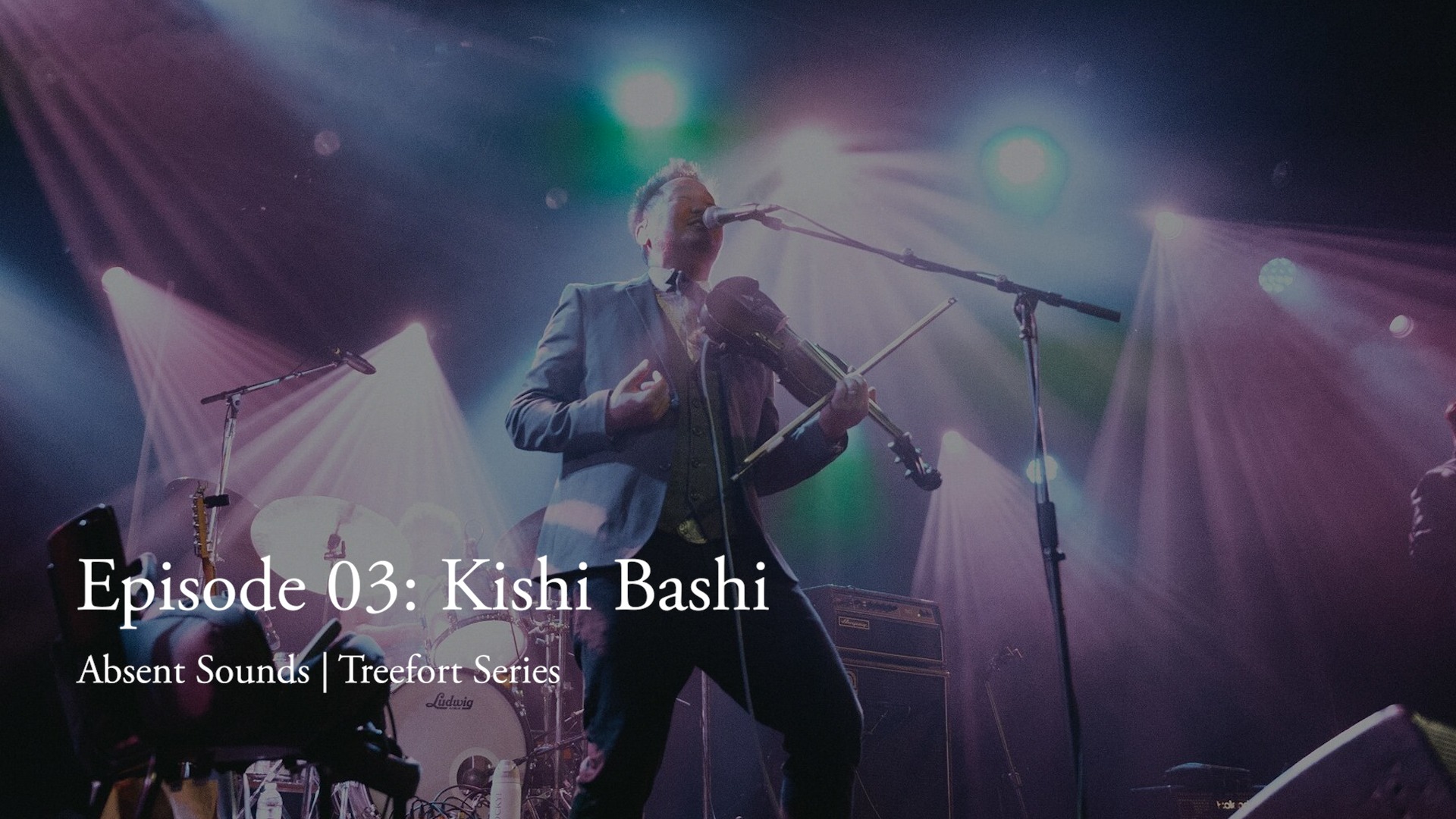
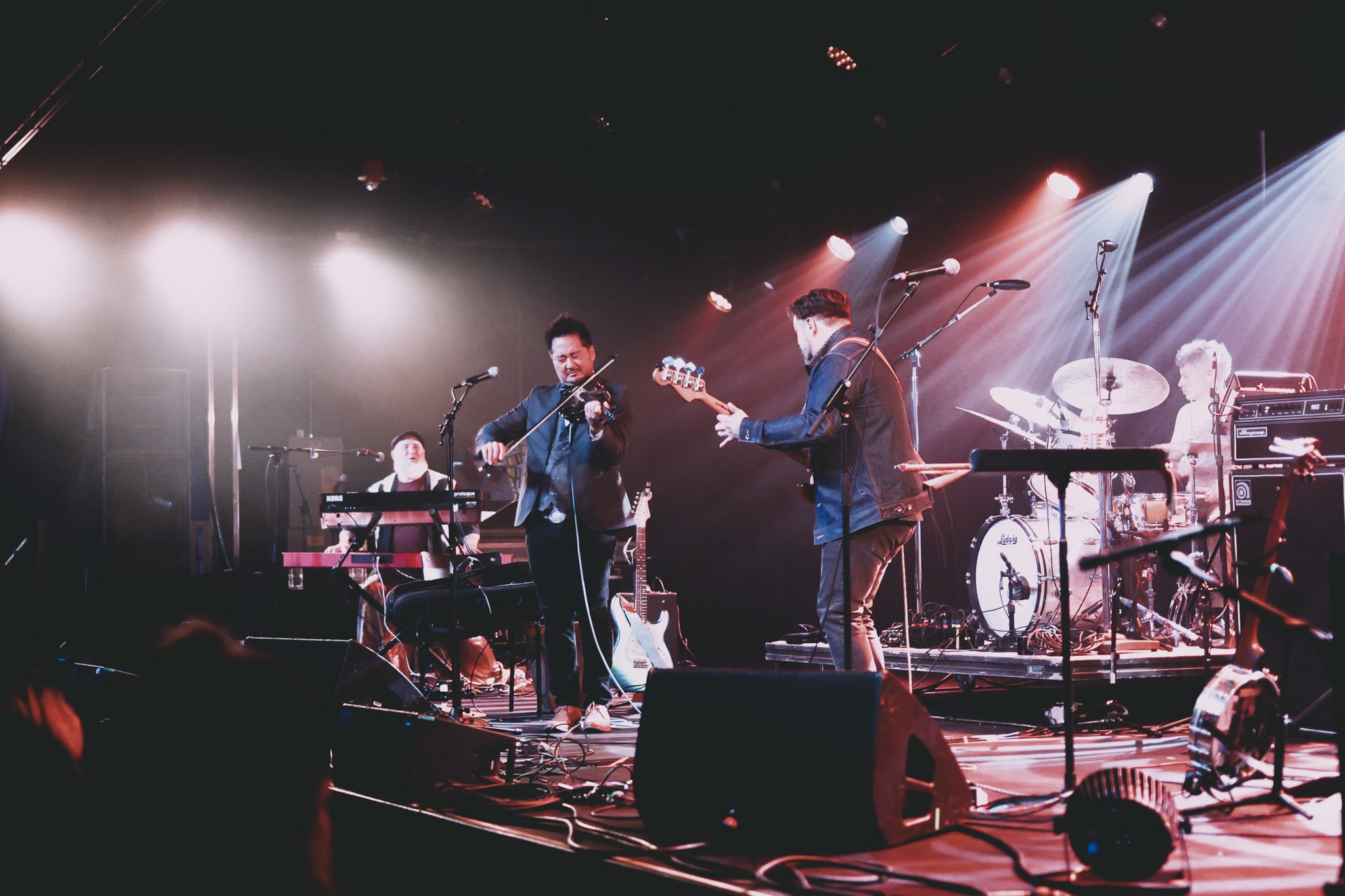
Kishi Bashi at Treefort Music Fest 2026
K Ishibashi, who performs as Kishi Bashi, has long cemented himself as a forerunner of creating music that is both mystical and light. But behind fifteen years of violin loops and energetic bursts of sound is a thread of sensitivity that can only be attributed to Ishibashi himself. Communicating joy in human expression comes from being vulnerable, something he hadn't allowed himself before. We look at how he does that now.
He talks about what it felt like to burn through the last of his creative energy making Sonderlust. About multi-generational families in the crowd, and why that's the reason he keeps doing it. About turning fifty and doing the math on what's left. And about still not knowing, thematically, what comes next.
This is episode three of our Treefort Music Fest 2026 docuseries.
Kishi Bashi: My name is Kishi Bashi. I'm originally from Athens, Georgia, now living in California. I try to focus on the positive. How excited we are to have the opportunity to play music and communicate and share and commune.
Absent Sounds: When people find your work, what do you hope they take from it?
Kishi Bashi: I want to communicate what's possible with human artistic expression. Playing the violin or singing or even cracking a bad joke is a reminder of how vulnerable we are. How precious that vulnerability is. By putting myself out there, I'm hoping to inspire other people to do the same. To celebrate that human expression.
Absent Sounds: At what point in your musical journey did you allow yourself to break free from what the violin was supposed to be?
Kishi Bashi: I started learning classical music, the Suzuki method. But I fell in love with it because it's such an expressive instrument. It's very close to the human voice. One of the most dominant emotional instruments of the past several centuries. When people hear it, they're not thinking, oh, I love classical music. They just love the sound. So for me it's a natural way to express myself.
Absent Sounds: With Omoiyari, how do you decide between an album and a documentary? When does something feel like it can't be communicated through music alone?
Kishi Bashi: Omoiyari was a multimedia artistic statement. An album and a documentary. With the album you can drive a lot of emotion through the lyrics. But I felt there was so much I wanted to say, so much history I wanted to expose my listeners to, that I needed to also make a documentary film. I wanted to blend music and filmmaking and history together.
Absent Sounds: The compassion you put out through your work — does it return to you?
Kishi Bashi: When I made Omoiyari, people connected to Japanese American incarceration really came out. They'd come up and say thank you. I brought my grandmother and we brought families together. That was extremely meaningful. And playing live, I see multi-generational audience members. Couples. They bring so much love to the venue. That's kind of why I keep doing it.
Absent Sounds: Sonderlust, ten years. Is there something the album meant to you back then that's changed now?
Kishi Bashi: Back then it was a frenetic time. I was burning through the last of my creative energy. It was cathartic, but exhausting. Looking back, I was touring so hard. And a lot of my family suffered because I was away so much. There's a mixture of regret, but also helplessness. Now I feel more mature. Making amends with my kid. My ex-wife and I got divorced.
Absent Sounds: It often feels like at the end of periods of time there's either a period, a question mark, a comma. Do you feel like the ten years that have passed have brought it to a full close, or are you still discovering what's left in between?
Kishi Bashi: I'm always trying to push myself to be inspired by new things. That was then. Now I do this tour because the album is probably one of my most popular. And revisiting these songs is really cool because I've never played the album in full. There are songs I've never performed before.
Absent Sounds: What does improvisation in live performance give you that recording doesn't?
Kishi Bashi: Live performance is always going to be humanistic. It's flawed. It will never be the same twice. My first album was called 151a, which is ichi-go ichi-e, meaning one unique moment. Every single thing, as perfect or imperfect as it is, will never happen again. So cherish each moment as a stamp of memory, a scene in your life. That's how I treat every concert.
Absent Sounds: Is there a ritual that helps you stay present?
Kishi Bashi: I try to put photos on Instagram. That kind of helps. I do a lot of traveling and things go by. When I'm on tour I try to explore more. I have a fold-up bike on the bus. So instead of being a prisoner of the venue, I go ride around for thirty minutes. You might end up somewhere interesting.
Absent Sounds: Your experience in Toronto?
Kishi Bashi: The last concert was amazing. Mazzoleni Hall at the Royal Conservatory. But I like the club shows too. Toronto's always cool. The venues are nice. The food is great. Honestly I think I have the most Asian people at my shows in Vancouver, and then maybe Toronto, even more than the Bay Area.
Absent Sounds: Is there something your music is working through right now that you don't have words for yet?
Kishi Bashi: With new music, I'm trying to figure out what kind of musician I want to be in the next ten years. I just turned fifty, so I have maybe ten or twenty more years. I want to be a better producer. I produce all my own albums and I see deficiencies, sonically. Things I want to improve on. Thematically, I'm leaving that up to whatever inspiration strikes.
