
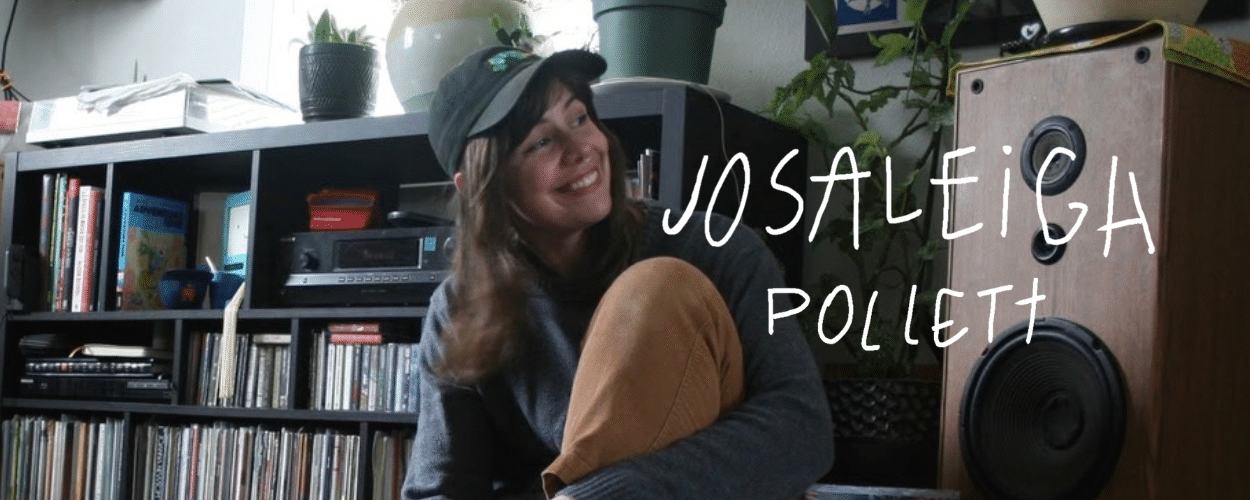
Josaleigh Pollett
We are hours away from the last day of summer. Outside, the cicadas are dying, but they seem to have taken up a new home racketing around inside my brain. Dealing with clogged ear canals and a surge of internal tinnitus has made me feel that my universe will never truly be quiet.
On this episode of Absent Sounds, we explore how Josaleigh manages to capture that external noise, machines, and physical distance to speak with a deep vulnerability. Together, we go track-by-track through If I Let It Quiet by the Salt Lake City native. The record is a testament to collaborating across massive distance after their production partner, Jordan Watko (Crowd Shy), relocated to Japan. We talk creating otherworldly “third spaces,” reimagining friendship, and studio accidents that morph into core meanings across the album.
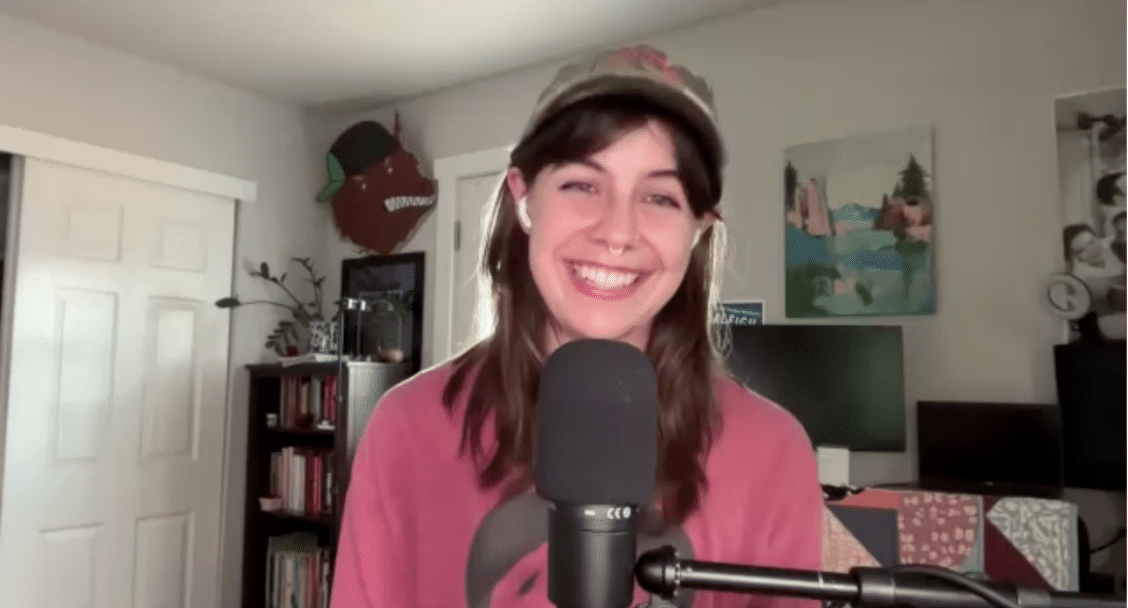
Absent Sounds: Hi, I’m Weadee. And I’m Weajue. And you’re listening to an episode of Absent Sounds here on CJAM and Met Radio, 1280 AM in Toronto. Today we have none other than Josaleigh Pollett, who will take us through their latest 2026 record, which has been such a beautiful little — more than just a little, a really huge — earworm for us this past month. It just came out, so... two months, I guess? I think two months.
Josaleigh Pollett: Exactly a month today, actually.
Absent Sounds: Oh, wow. Exactly a month. Which is exciting.
Josaleigh Pollett: Yeah.
Absent Sounds: Yes. And it is called If I Let It Quiet. So we’ll jump right into chatting about it. But first, we wanted to talk a bit about the fact that this is your fourth album. That’s more than most people will ever make in their lifetime. So congratulations.
Josaleigh Pollett: Thank you so much. That’s a really good perspective.
Absent Sounds: We’re curious about this album versus the other ones — whether you’ve been approaching writing or creating music differently since you first began this journey.
Josaleigh Pollett: Yeah, I love that question. And thank you so much for having me. I’m so excited to be here. I think I approached making this record in a sort of natural trajectory. It being my fourth was also the third record I made with my best friend, Jordan Watko, AKA Crowd Shy. We spent our last three records basically learning how to speak to each other, learning how to create together, and really understanding what each of us wanted in a creative partnership and what sort of music we wanted to create.
I feel like this newest record is the first time we were really speaking each other’s language more completely. We spent a lot of time, in our creative partnership and friendship, trying not to step on each other’s toes and learning what the other wanted to do, and this newest record feels like both of us not being afraid of that, because we understand where the other sits in our creative work. That’s what I feel the most proud of. When I listen back to it, I think, “Oh, we sound like we understand each other, and we really figured out how to do this together.” So I feel like we’re on a really good trajectory of where we’ve been and where we are now with this album.
Absent Sounds: I love the partnership — from the outside looking in, I’ve gotten to voyeuristically experience the both of you. I also find it really interesting that the distance has played such a crucial role in the creation of this record, starting with track number one, “Shed Piano, Birds.” I love that opening bit where you can hear the birds. It feels like it’s amongst the idea of learning to be apart from a partner in any capacity, and it’s a hard process. So tell us a little bit about what you learned through that side as well.
Josaleigh Pollett: Yeah, absolutely. I love that you called out that song specifically, because when we started making this record, it was because Jordan had moved to Japan. We used to live in the same place, but now we were collaborating over a great distance, and so much of our friendship had been built on being in the same room together and giving ourselves time and space to create, knowing we had endless hours to work on things. Then suddenly we were faced with, “All right, we’ve got a one- or two-hour FaceTime once a week, so how do we capture the sounds of each other’s environments?” We tried to make a lot of space for that on this record.
Jordan specifically was really interested in getting field recordings of both my physical environment and his own, so we could add those to the record. That’s what the intro track is: so many of the sounds in my backyard, voice memos I was getting from friends, just the things that made up the sound of my world that he was no longer a part of in person, and vice versa. There are a lot of little recordings from his adventures in Japan, and street festivals that were happening outside his apartment, that he placed into the feeling of the record, to make the record itself our little temporary friendship home. We were going to put a bunch of ourselves and also our environments into this, so that while we were working on it, we could feel more connected in spite of the distance between us.
Absent Sounds: You know what that reminds me of, even the idea of creating this little home together? It’s something I mention a lot when I talk about Weajue and me — this identity thing of “this is you, this is me, and then this is the third person,” the unknown entity that is both of us, which is who people refer to when they don’t know who we are. So I was thinking about this third space you create where you both live, which might not literally exist in this world. If there are things that only exist in that space you both inhabit together, what kind of sounds do you think would be in there?
Josaleigh Pollett: Ooh, I really love that question. And I love that comparison — this otherworldly thing that exists just because of the perception of it, not necessarily because it physically exists. I think so much of the worlds Jordan and I try to build sonically together, we’re always trying to find real sounds in the organic world and then build them into an electronic space, or distort them, or make them malfunction in a way that creates something a little unsettling or a little anxiety-fueled, because we’re both very anxious people and we both express that a lot through our art.
But it also feels very important to us to originate a lot of those sounds within the organic world — to find real sounds that we can then make into these more unique, more electronic voicings. So maybe that’s what that weird third place is that we’ve created: the organic that turns into the electronic, but is ultimately of this world and, at the same time, not of this world.
Absent Sounds: Yeah. I immediately started thinking about the album cover, because it looks like a distorted, fractured version of everything. Could you tell us a little about that real quick? We’d love to know.
Josaleigh Pollett: Yeah. I’m so glad that comes across through it.
Absent Sounds: It really does.
Josaleigh Pollett: When we were trying to decide how to capture the feelings of this record, we were so at a loss. We were like, “I don’t think there’s any one thing that feels accurate,” and we were talking to a few different artist friends. What was most important to us was the process by which the artist was getting to their art. The subject matter didn’t matter all that much. We wanted visual artists who, similar to the way we create music with this organic and electronic element, start very much in the physical real world and then take it into a digital space, maybe an animator or a graphic designer.
My friend Lonnie Starsky did the photograph that ended up being the cover. It’s from an old VHS recording of the Summer Olympics that was played on television. Their family had recorded it on VHS when they were a kid, and then they took the recording from the VHS, projected it onto a screen, and photographed the projection. When I heard about this process, I was like, “This is so perfect. This is exactly what we’re trying to do with our music” — projecting a real thing, making it digital, and then taking it back to organic. We’re always like, “Oh, I recorded that guitar, but then I recorded it through a phone microphone, and then I put it on a tape, and then I played that through my amp,” trying to create all these weird things.
So when we heard that that was Lonnie’s process for these pieces, we were like, “Oh, perfect.” Somehow we’re putting this Olympic volleyball player on the cover of our album, without knowing anything about the Olympics or being very sporty people whatsoever. But we were really happy it ended up being that, because process-wise, it fit so beautifully with what we were trying to do.
Absent Sounds: The fact that it’s an Olympian on the cover makes me think about how many elementary school photos, or random photos, people might have of you in places you’re not aware of. It’s like on their fridge — they just have this photo from kindergarten, and you’re just there, but you don’t even know. And someone’s on the album cover.
Josaleigh Pollett: There are so many ways you can exist in other people’s worlds. I recently had a coworker who saw her mom on the cover of a Newsweek magazine, just as a member of a crowd. She wasn’t the subject or anything, and it was from 20 years ago, but she was like, “That’s my mom.” She framed it and put it on her wall, which I think is beautiful, but it’s very much that you have no idea all the places you exist.
Absent Sounds: Yeah. Like The Secret Life of Walter Mitty, in that end frame with the photo.
Josaleigh Pollett: Exactly.
Absent Sounds: But I do want to jump into “Cherry,” because even that idea of the places you exist, or the ways you exist for other people, makes me think about memories, and the way you have a relationship with the people in your life. I know you mentioned the song was about wanting to feel close to your brother, and the men in your life in general, as they are written down. I’m curious about any ordinary memories that make you feel particularly close to your brother, or to people in your family.
Josaleigh Pollett: I think it fits so well with this song in particular, because there’s a line in the song where I talk about how the two of us are laid to rest in the ’90s in the backseat of a van. That’s very much a call to one of the few and last really happy, safe memories I have with this person, where we had a very ordinary-feeling childhood for a while together. Our parents drove this old Volkswagen van, and we would be dragged around the country camping in it, eating ramen noodles in the backseat. That felt so good and comfortable and happy, and those memories exist in such a beautiful way in my brain.
So when I was writing this song about the difficulties of adult sibling relationships, I was thinking a lot about what if this was the only thing that existed — this very young, very innocent world we used to have together, not colored by all of these difficult, real, adult, terrible memories and complications. That lives at the center of this song: what if that was the only thing that happened? What if we actually died in that scenario, but death more as a capturing of a memory, with time kind of stopping there? That’s what I was exploring in that song, for sure.
Absent Sounds: Even in my life — I wouldn’t say I have a similar thing with my brother, because he’s still a very active part of my life and we still make constant memories. But I was thinking about my mom, or my parents. This is going to sound kind of crazy, but maybe I’d have a less complicated relationship with them if it had ended when I was 10 or 15 and not 25. And life continues to distort things in weird ways. So yeah, I relate to that a lot.
Josaleigh Pollett: Absolutely. There’s a lot of expectation that your relationship with your parents should be just about when you’re a kid and needing a parent, and you don’t get a lot of information about how to be an adult child of your parents. There’s so much I think about in those family dynamics, a lot of it in my songwriting, because I’m always thinking, “I was not prepared for any of this.” It will just continue to change and grow and need new things forever, apparently.
Absent Sounds: Our mom has always struggled with illness, and two weeks ago — last week, I don’t remember — I was getting so frustrated. It’s the adult-child thing, where it’s hard for her not to take care of us when we’re in the same space, even if she’s very unwell. She was doing something, and I literally started screaming. I was so mad. And I don’t yell, I don’t scream for anything. But I just started screaming, and it was a very big, cathartic belt. And in “The Witness,” you were going to channel your inner Chappell Roan with a belt, even if it didn’t really... Did it get included in there?
Josaleigh Pollett: No.
Absent Sounds: Really?
Josaleigh Pollett: Yeah, no.
Absent Sounds: But yeah, I’m curious. That’s my little segue.
Josaleigh Pollett: That was such a good transition. That’s exactly my kind of transition — from family dynamic difficulties into talking about the songwriting. So when Jordan and I originally started working on the production of that song, we tried so many different directions, and we kept ending up with these really big sonic moments that felt so big, but every time I’d try to record vocals, something wasn’t fitting. My delivery felt so soft in comparison to this big wall of sound we were creating. So we went down this path where I was fully belting every single line of the chorus — having to lose my mind and hit notes I’d never hit on anything else before.
I was really proud of that delivery, but then we’d listen back and think, “It’s still not right.” Something felt so weird about it. We finally got the delivery that felt correct, but we kept thinking about how weird and unfair it was that I did these crazy big notes and now we weren’t going to use them, because they didn’t quite fit. But there’s a part in the last chorus — you can’t hear it super clearly — where it comes a little bit to the foreground and then falls away. It’s me doing one of those really big notes, falling behind the main vocal.
I really loved that we did that. It was Andrew Goldring, who mixed with us, whose idea it kind of was, and he and Jordan decided to go with it. I thought, okay, this song that’s about alternate timelines and different choices and all the different ways you can be has this little snippet of a way the song almost was. I love that. I love little moments like that, where something fits into the story of the song by way of the production. I’m always delighted when that happens.
Absent Sounds: That’s such a lovely little note. It almost feels like “if a tree falls in the forest” — if nobody’s there to see it, did it fall? If you belt the note out and it sounds really great, but nobody’s there to witness it, did it happen? But it’s like a little whisper in the background, too.
Josaleigh Pollett: 100%. It’s just a secret for me. I know I did that big thing that day, and it’s okay that it didn’t make it onto the record.
Absent Sounds: Totally. Are you good at being a witness for yourself, or for other moments in your life?
Josaleigh Pollett: Oh, wow. I feel like I’m always trying to be a better one. Especially at times in my life like now, with an album release and work and tour and all sorts of crazy things, it’s really easy for me to put my own stuff — witnessing myself, what I need, how to take care of myself — on the back burner. So it’s a constant practice of, “Okay, how do I feel today? What do I need today? Of course I’ve got this to-do list, but let’s bring back up what I’m actually feeling, and maybe try to understand why I’m being the way I’m being a little bit better.” A constant practice. I can be really good at it, and I can also be not good at it.
Absent Sounds: Yeah. I really love the idea of being the witness, because it reminded me of this thing — I don’t know if it’s necessarily meditation — of taking the seat of the witness and that changing your perspective on the world around you. And I love how that comes back into the wider theme of the record and the title itself, If I Let It Quiet, because finding ways to be quiet is an almost unbearably impossible thing for so many people. But the next track is “Bed of Quiet.” I love the play with all the quiet pieces.
Josaleigh Pollett: Oh, thank you.
Absent Sounds: Give us first a little talk about what the quiet means for you, and then we’ll go from there.
Josaleigh Pollett: Yeah. I’m so glad you brought it up, coming off “The Witness” and talking a bit about meditative practices, because that was such an influence on a lot of this writing. I was going through a very stressful, anxious time of, “If I just meditate enough, everything will be fine.” And like you said, it’s a very hard thing to do. It’s really hard, when you’re anxious and overthinking, to make things quiet, and then there’s this meta thing of, “If I’m making myself be quiet, what am I not listening to?” It was very complicated, and then meditation was just another thing on my to-do list that I wasn’t getting to. I’m so glad you mentioned all of those themes, because they’re so intrinsic to what I was writing about for this whole record.
“Bed of Quiet” is very much on that same level. It’s time for me to sleep, and I should not be replaying or overthinking every single thing I’ve said in the last six months, but I can’t help it. And maybe if I just meditate hard enough, or do this yoga nidra thing my friend sent me a podcast of, maybe I’ll fix this. And it all just adds to the complexity and the anxiety itself.
Absent Sounds: It’s also — I know people say not to scroll, but sometimes I’m like, I don’t want to think. So I’m doing this on purpose, as a distraction. I don’t want to be meditative.
Josaleigh Pollett: Exactly. Turning your brain off completely — I feel like there’s something meditative in that. It’s the cursed flow state, if you’re doom-scrolling a little too much.
Absent Sounds: I also want to mention the guitars and the pop, all the beautiful little ways this song flows together. You mentioned that you’d originally felt like you were writing a pop song. When you’re creating a song, do you usually know what you want it to be, or is it a process of discovering it and letting it reveal itself to you?
Josaleigh Pollett: I think it’s often both. Some songs come to me and I bring them to Jordan, and we’re both on the same page: “Oh, big guitars,” or “Oh, this needs a dance beat like this,” or “Oh, this is going to be very straightforward.” Other times it’s much more of a revealing process. I’ll bring something to Jordan and say, “I have no idea what this is, but maybe some part of it is speaking to you that feels fun to work on.” And he’ll come back to the table with something and say, “I don’t know what this is, but maybe you do.” Sometimes we figure out a song in a few days, and sometimes it takes several months and we have a bunch of different versions of it. I think that’s the fun of it, too. I never know what’s going to happen with a song right when it happens.
Sometimes I think, “Oh, I definitely know how this is going to go,” and then it turns out to be something so drastically different from what I was picturing. With “Bed of Quiet,” when I wrote it, I thought, “This is such a moody, pop-punk, hooky chorus. I’ve never written something like that. Maybe that’s the direction we’ll go,” and we ended up with these big guitars and very atmospheric verses. It was so different from what I was thinking, but the second Jordan heard my lyrics for that one, he was like, “Oh, big guitars. We’re going to go wild with this one. I know what’s going to happen here.” That’s a really nice part of our partnership, too: sometimes Jordan sees the vision way before I do, sometimes I do, and sometimes we’re both stumbling through and throwing stuff at each other, saying, “I hope something becomes clear soon on this song.”
Absent Sounds: And you never know — in 15 years someone else might reuse the guitars, and you’ll suddenly do a...
Josaleigh Pollett: Run, yeah. Exactly. You just never know.
Absent Sounds: Taking it down one more step into the river, we have “Like a River,” which is track number five. This was so pleasing percussion-wise, and all the little things. All throughout the record it feels so grounded and tactile, and what a lovely thing to listen to. But here the percussion really made my brain go brr, and I love —
Josaleigh Pollett: Yay.
Absent Sounds: — the way you sing as well. What are you aiming at, what are you scratching at, when you’re with this track?
Josaleigh Pollett: I’m so glad to hear that. That’s such a sweet spot that Jordan and I are always looking for. We want to hold the integrity of a singer-songwriter and make sure what I’m singing is coming across, but ultimately we like music that is really interesting and fun to listen to. So when we get into the production, we ask, how do we make this a little weirder, a little crunchier, a little stranger, so that it makes you dig in when you’re listening and say, “Ooh, what is that weird sound you just made? I want to know what that is.”
“Like a River” was one of those that came together so quickly. I think I wrote it in an afternoon, tossed it over to Jordan, and three days later it was pretty much structurally how it ended up on the record. That’s rare for both of us to be on the same page like that: boom, it’s done. But Jordan did a really wonderful thing on this record. I love that people love the percussion on this one so much, because it’s a lot of different things, but some of the baseline of the percussive elements comes from when I recorded the scratch vocal for this song and bonked my head on the microphone. He took that bonk, sampled it, distorted it, and made it into the bongo sounds you’re hearing.
Absent Sounds: It’s so fun. I love it.
Josaleigh Pollett: I love it too. It’s one of my favorite little tidbits about the record — all those random little things where Jordan’s like, “Actually, that sound is this thing.” It ended up being the perfect mix of things for that song, and I love the way it flows. It came out of us a little fully formed, which I love when that happens, because it’s not always the case.
Absent Sounds: Even the vision of you bunging — banging — banging your head on the microphone. Sorry, I was all off with you there. I was going to say, it feels like one of those “oh, jackrabbit” moments, you know? Is there something you constantly do or say when you make a mistake?
Josaleigh Pollett: Oh, there’s a lot of swearing in the vocal booth, for sure. A lot of yelling and screaming. Jordan and I have a really nice dynamic that I’m so glad we figured out how to do from a distance, because when he first moved, I was like, “How are we going to track vocals?” Usually he would be sitting in the room with me, and we would nail blankets to my ceiling so I had a little corner where I couldn’t see him, but he was still hitting record and giving me notes. When he moved away, I thought, “There’s no way we’re going to be able to do this.”
But through a lot of troubleshooting technology, we came up with a system where he virtually remotes in on my computer, so he’s controlling my computer for me. That way I don’t have to look at the computer or press any buttons in the vocal booth — I can be in the zone, performance-minded, and still have him in my headphones giving me notes in real time. It works really well, because if the computer takes me out of it... so much of it is being in the right headspace for performance, especially on an album like this, where so many of the moments are very subtle and really reliant on how I’m delivering things and where the breath is. It’s the most intentional I’ve ever been with vocal performance, and so much of that was because Jordan allowed me to just focus on that. He’s such a good note-giver, saying things like, “Oh, I know you can do that better,” and “Okay, we obviously need to come back to this tomorrow, because you’re done.”
Absent Sounds: Oh my gosh, I love that. I love the way the very thing that’s the challenge makes you work so much harder to get over it, too. It’s lovely.
Josaleigh Pollett: Thank you.
Absent Sounds: That made me start thinking about “Second Guesser,” which is track number seven. Even within the experience of recording over all these years, I’m sure part of you feels like you know your way around it. But I assume that, in that process or outside of it, in your own life, there are places where you second-guess yourself the most. So I want to know about the places where you often second-guess yourself, but also the places where you feel the most sure — the spaces where you don’t second-guess yourself.
Josaleigh Pollett: Oh, these are such lovely questions. I love this. I think that’s the great part and also the frustrating part of continuing this creative partnership. We’ve been working on music together for a long time, and there’s almost a greater capacity for wanting to create really interesting work. Now that we’ve figured out what our sound is together, and that we really like doing it, and we’re taking it a little more seriously, there comes a much higher level of second-guessing and doubting ourselves sometimes. Before, it was really easy to say, “We’re just friends, and we just make music, and that’s all there is to it.”
That’s still true, of course, but now we’ve found this sweet spot where we’re really excited about the music we’re making. Being able to take it on tour and play it in rooms for people who are excited to hear it was a whole other world to us, where suddenly it was like, “Oh no, this is maybe a bit more of a priority for us, and we care a lot about this.” And caring a lot about something comes with a lot of fear, because it means more to you, so it’s more vulnerable to care a lot about a thing. I feel so grateful that Jordan and I have so much history with each other and so much understanding of each other as friends, as creative partners, and just as people, because it makes it so much easier to navigate those moments when we’re second-guessing each other, or second-guessing ourselves around each other. There’s a really nice flow when we’re working on an album, or a project, or going on tour, where I’d say 90% of the time Jordan and I are not spiraling at the same time. Which means that —
Absent Sounds: Very convenient.
Josaleigh Pollett: It helps. One of us is always able to pick up the slack a little bit and say, “Okay, you’re doubting yourself. I need to give a little more reassurance here,” or vice versa. There are those very few and far-between times where we’re both like, “We’re bad at this, and we never should have come here. What are we doing?” But thankfully, most of the time one of us is capable of saying, “I’m going to be the reassurer here, and it’s going to be okay.”
And I love “Second Guesser” because, in my brain, it’s kind of a partner song to “The Witness.” Not only do you need somebody there to witness you and understand what you’re going through, but another part of that is that when that person’s not there, you’re more susceptible to second-guessing and self-doubt, and you kind of need this person who sees you to also help you reassure yourself, if that makes any sense.
Absent Sounds: Yeah, no, for sure. I think that’s exactly the way Weajue and I operate a lot of the time, and it’s hard to explain. Sorry, that’s not a slur — singletons. How singletons move around the world without having another person. Sometimes I can’t answer my emails, so Weajue will just answer my emails for me. Or if she doesn’t want to do something, I’ll do it. So having someone else to be your arms and legs, to do things when you can’t, or you’re spiraling, or you’re not able to do something — it’s hard to function in the world on your own.
Josaleigh Pollett: It really is, yeah. And it’s funny, because Jordan and I are creative partners, but now he lives in Japan and I still live alone, so there’s so much that I do on my own. I definitely fight with a lot of hyper-individualism — I’m way too hyper-independent, and I was taught that from a very young age. So my creative partnership with Jordan has taught me so much about letting another person help you and relying on another person, and the beauty of collaboration, and how magical it is to know that somebody is there for you and can take care of you in that way and reassure you when you need it.
It’s such a magical thing. I think it’s so beautiful when it exists in all of its different forms, especially a non-romantic partnership, like a sibling or a creative platonic partner. I think it’s beautiful when we have that trust and it’s not tied up just in a romance thing, like everybody says we need.
Absent Sounds: “Escape Routes.” I think this goes well into everything you were just talking about — the partnership, your relationship with Jordan — because from what I was reading, this is the track where it becomes crystallized. You’ve touched on a lot already, but if there’s anything else you want to add for this track, we would love to hear it.
Josaleigh Pollett: I think “Escape Routes” might be my favorite track on the record, for a lot of reasons. The main one is truly what happened when I wrote it and showed it to Jordan. Before that point, we’d always been pretty isolated in our creative process together. He would say, “Lyrics are your world. If there’s something you want to change or say, I trust you to do that,” and he stayed in his production corner of things. This was one of the first songs we started working on for this record, and when I brought it to him, it was the first time he said, “I feel so deeply seen by what you’re saying in this song.”
When I wrote it, it was very much because one of the great conflicts in my life was Jordan moving away, and I was trying not to get my mess of emotions all over him. I thought, “You’re moving to a different country, and I’m crying at you about how sad I am all the time, and that’s a very scary, big life change for you to go through. I don’t want to take up too much of the space, and I don’t want to push you away, and I want to make room for you having to navigate this big change too.” So when I wrote that song, I was thinking so much more about him, trying to put myself in his shoes and understand what he was going through and how stressful that would be. I have a hard time moving to a new place in my own city. I can’t imagine going somewhere where I don’t speak the language and everything is so new and different.
So to hear, when I brought that song to him, that he felt so understood — I hadn’t told him, “Oh, I’m trying to write the song a little more from your perspective.” He was just like, “I don’t know. These lyrics are really landing with me in a way your lyrics don’t always.” And I was like, “Oh, I did it. This is the beginning of this change.” It really did allow us both to go into each other’s lanes a little more and start to blur the lines between our two roles in the project, which has been a very special place. I’m glad that happened early on in the making of this record, because it allowed us to do that so much more throughout it.
Absent Sounds: Yeah. As you were speaking, this song literally just came to my head, so I was trying to search it up. It was “You Moved Away” by Death Cab.
Josaleigh Pollett: Yes!
Absent Sounds: I think it makes me feel angry at the friends, but it’s also so sad on both sides when someone’s leaving. And then there’s the fact that they’re begging their friend not to go. I guess it’s also the beautiful thing about being that close to someone, that you feel their absence. What does the shape of your absence look like in other people’s lives? Or, in your own life, what is the shape of Jordan’s absence today? What does it look like?
Josaleigh Pollett: Yeah. That’s a really beautiful question, and I’m definitely thinking about it a lot more. Jordan spent the whole summer with me, to release this record and take it on tour. As somebody who’s lived alone for a long time, adjusting my life to having basically a roommate in my house while we were also working on very stressful tour prep and a creative project together was a really big adjustment. I learned so much about myself and how I interact with the world around me, because I’ve lived alone for six or seven years now. It’s been a long time since I’ve had anybody else in my space, and I was really worried about the transition: am I going to be pleasant to be around? Am I going to lose my mind a little bit because somebody’s in my house?
But it ended up being such a wonderful experience, and truly validating of everything I already knew about Jordan’s and my partnership and friendship: we’re just really good at existing around each other, wherever that is. And the last couple of days have been a very interesting exploration of living alone again. This feels really good, but it’s also a very different world. I’d started to grow accustomed to somebody just being here, walking in the door and saying, “Have you thought about what you want to eat for dinner?” That was not something I was used to at all. I feel very grateful to have my space back, and I love living alone — there’s a joy in that that feels really nice — but there’s also this great absence of, “Oh, Jordan is not here. I’m not coming back to the house to him. I’m cooking, and I’m not having to cook for both of us or consider...”
I think so much about considering another person, and that’s something you usually don’t. Even when you’re off seeing other people, you have a baseline of consideration when you’re going to dinner with somebody — you want to know how they are and check in. But the consideration of another person’s regular physical needs, or the alone time they need, and things like that, is a really interesting place to be. I wasn’t thinking clearly about that sort of absence. Now he’s gone back home, so it’s another form of missing him. But we also feel closer than we were before, and we have more plans for more projects. It’s not going to be that long until he comes back, so it’s so different from how it used to be. That’s a really roundabout way of answering your question.
Absent Sounds: Yeah. As we come closer to the end of the album, another track that made us think about absence and space and sound is “Yasaka Natsu.” Is that how you pronounce it?
Josaleigh Pollett: Yasaka Natsu. That’s how Jordan says it, yeah.
Absent Sounds: We’ve often been known to be memory hoarders, trying to remember the sounds we’ll miss in our lives, recording random things. We always have a stupid camera in someone’s face. For months, when we’re driving, I’ve been really trying to capture the things that are so ordinary that I’ll one day miss. So — give us one thing that’s ordinary right now. A sound. Or anything that exists in this iteration of your life that, when it’s gone, it won’t feel as full. Or not as full, but, you know — it’ll be gone.
Josaleigh Pollett: Ooh. Oh, y’all’s questions are so good. I love this, because similarly, everywhere Jordan goes he brings a little field recorder, and that’s a lot of the sounds that ended up on the record too, so I feel like y’all are kindred spirits that way. A sound that’s happening currently for me... I live in a really small house in Salt Lake City, and my kitchen has the washer and dryer in it — a very old, ’90s stacked washing machine. I think it’s older than I am, honestly, which is kind of crazy given how well it still works. It’s right in the middle of my kitchen, and every time the washer or dryer is running, the whole kitchen shakes a little bit. It’s right next to where all my glasses and plates are. Jordan actually sampled it before, on one of our records.
Absent Sounds: I was about to ask if Jordan sampled it for anything.
Josaleigh Pollett: I’m sure he has. It’s this really low thump, but then the glasses are clinking together, and it’s always a really nice beat. It’s very calming to me. I often think about it — I’ve been thinking about whether I want to keep living here for a very long time. I don’t know how long this will be my home base. So those little things I’ve grown so accustomed to are now part of my calming routine: it’s Sunday, I’m doing laundry so I have clean clothes, and that sound is happening, which is just a nice little silly thing.
Absent Sounds: I wonder if you’ll put some clothes in the laundry and it’ll be silent.
Josaleigh Pollett: It’ll be silent, and it’ll feel so weird. How am I supposed to know my clothes are getting clean if I can’t hear them?
Absent Sounds: You’ll just have to play a recording of the washer-dryer. As we go to the last one, kind of full circle — I loved reading all the stuff you mentioned about this song, too, and the way it feels like it cements everything at the end. As we culminate, one of the things we’re wondering is, if you were to go back to the beginning, from when you started the album to the end of it, what do you think you ended up learning about yourself, or what changed? Maybe it wasn’t necessarily destroyed, but — you know, when you destroy, you create. Because the seed broke, and that’s why it became something different.
Josaleigh Pollett: I think so much of making this record was the act of reassurance — knowing that Jordan and I were going to be okay, that our friendship was going to withstand this distance, and that we were still going to make music we were really proud of. I had so much doubt at the beginning of the process. I thought, “I don’t think it’s going to happen.” I loved our creative partnership so much that I was ferociously holding on to it: “We can’t change it. We can’t do something new. It’s not going to be okay.” And Jordan, from the beginning, was like, “We just have to let it be different. It’s going to be totally fine, and we’ll let it change and let it be some other thing.” It took every moment of working on this record for me to actually see that and believe it.
Now, at the end of it, having done this tour, it’s so funny to think back on the beginning of the process. I believe so fully now that we’re going to be way stronger because of this process — that we’ll understand each other better, have more faith in each other, have more resilience as artists, and have more ability to work really hard at something. This whole process was so difficult that I think we can kind of do anything now. So I love thinking back on how much fear and how much worry I had about the process itself, and now being able to say, “Oh, it’s fine.” And being able to take that into new things that stress me out or feel very big or very scary. “This thing feels way too big to even look at or acknowledge or speak into existence yet.” And it’s like, “Remember how this also felt? Imagine how much better it could be if you just acknowledge the thing and let it turn into a new thing, or let it change, or let it fall apart completely, because then you get to rebuild it.” So it was a really good life lesson, working on this record.
The proof is there. We have this gorgeous recorded thing that we’re very proud of, and we can say, “This is the sound of you guys working through this thing, and reassuring yourselves, and finding a new process.” So imagine what else you can do.
Absent Sounds: Yeah. It’s beautiful. I love this album, and it truly feels like it’s alive and growing with us, and with you as well. That’s so beautiful and cool. We appreciate you talking us all the way through this.
Josaleigh Pollett: Thank you.
