
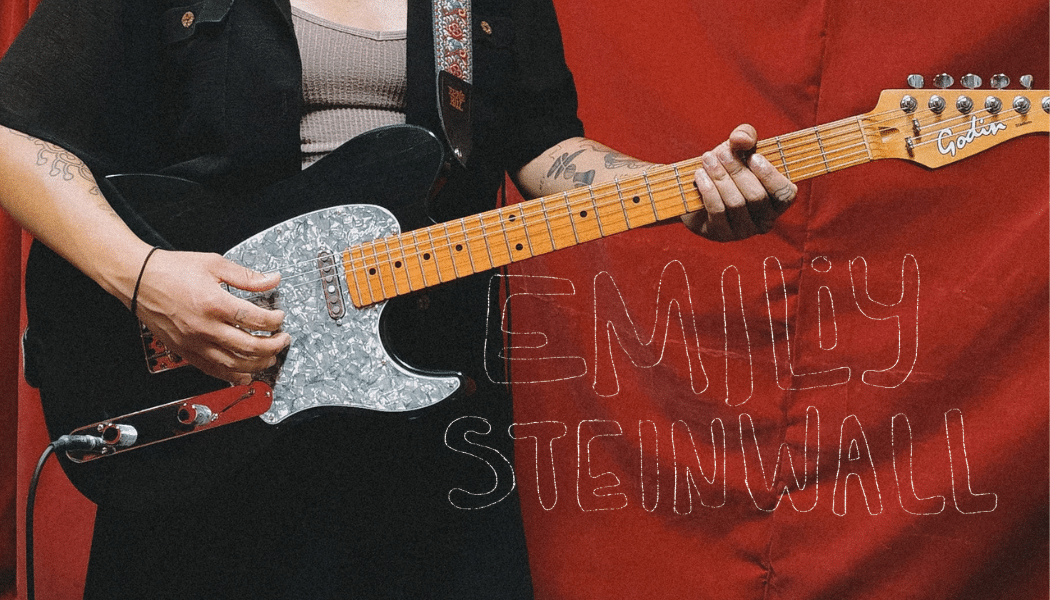
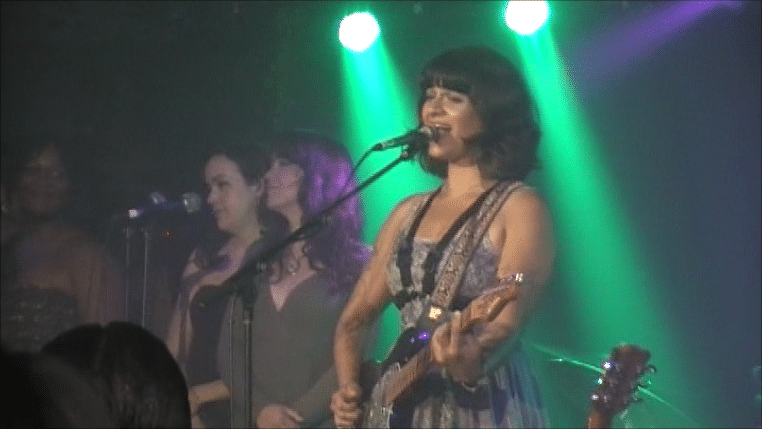
Emily Steinwall live in Toronto
Emily Steinwall's sophomore album, But, there's beauty in the fall from Grace, runs almost an hour and weaves between grungy art-rock edges, orchestral ballads which ask you to sit down to listen. In this conversation, we talk about how suffering and beauty are not opposites, why "No One Wins a War" and the longwinded road to finihsing this record. This episode also features a live session we recorded together, stripped down to her voice and a guitar. In many ways, this record is a healing balm, I hope it reaches you where you are!
Weajue: Hello, Emily. You just heard a live session we did with Emily Steinwall here at Met Radio, 1280 AM, in Toronto. Today we're also gonna talk a little bit about the record that you have—by the time this airs, it will have already been out in the world—and it is But, there's beauty in the fall from Grace.
Emily: Yes.
Weajue: It's such a beautiful title. I wanna start off by getting a little picture of what the album represents, what the title is coming from, where it's speaking from, and give us a little picture of it.
Emily: Okay. It's a bit loaded, but I'll do my best. There's beauty in the fall from Grace. So, one of the songs that I just performed—that's the last line of the song, and it kind of came to me. I wrote that song in one sitting after a couple years of not really doing music. It was lockdown, and I was working as a waitress and a barista and just not really writing songs. And then I wrote that song, and that whole song is kind of the thesis statement of the album, in that it's about how we, as a people, as a humanity, for whatever reason—and probably the students who study history and anthropology and sociology and stuff will have answers to that reason—have a kind of obsession with perfection, and with goodness, and with everything being righteous and everything being perfect.
I know in myself and in a lot of my friends, it's created this inability to just be in the moment and actually appreciate the beauty that is life itself, and the beauty of just being—kind of from a spiritual perspective—with suffering and conflict. And, you know, I was thinking a lot about incarnation, and what it means to be a spiritual being that came into this body—this body that, like, dies a little every day. We're getting older, we age, we're made of carbon. Carbon runs out and decays.
So inherent to the human experience is this pain and suffering, and we can get really caught up dwelling on that and focusing on that, and it stops our ability to appreciate the beauty of it, and the beauty of life itself. So that's the whole thesis of the album: almost trying to see the big picture of things, the full spectrum of human experiences and emotions and feelings, and to try to sit in appreciation and gratitude. And I really like the concept of beauty, because we create it.
We create it because we perceive it. Melancholic art is beautiful, and nobody will argue with that. There's so many people who love sad songs or sad movies and stuff. So we do have this capacity to find beauty in, maybe, things that aren't obviously beautiful, you know?
Weajue: Yeah. I love that there's so much depth in everything that you just described. I especially wanna pick out the idea of beauty, 'cause that's just kind of what you talked about. I've been reading this author—I'm already forgetting her name, I'll come back to it—but she was talking about how some of the only things we're able to pin down as humans are goodness and also beauty. It's hard to tell what's inherently good, because we have our own thwarted perception of what it is. But beauty, I think, feels like it lives outside of ourselves, whether or not we as humans are imposing our own identity or ideas onto it.
I wanna bring that into the track "Human Anymore," because there's a line that sticks out most to me, which is "everybody's gone crazy." And I think, to me, when we're going crazy, you lose a lot of that picture, and you lose a lot of that beauty or goodness, or everything that makes life feel not so ephemeral—or, I don't know. You know what I mean? Do you find yourself losing touch and going crazy as well? How do you stay away from falling into the craziness of everything?
Emily: I mean, I don't. I go crazy from time to time, as any human artist does, you know? But that song was really about the current society we live in. I spent a lot of my life being very cynical. I have this very distinct memory from childhood: I was at my grandma's house and I couldn't sleep one night, and I was standing in her kitchen in the middle of the night. I was full of McDonald's, I'd been watching TV all day, I was standing under these fluorescent lights, and the air smelled like cigarette smoke, and I was just like, everything is poison.
The whole world is poison. I got so sad, and I just felt this childhood dread, you know? And I think it's hard to look at the world and see so much capitalism, just this endless extraction of humans and nature, and it's really hard to stomach if you really are awake to it all. That's what I mean by "everybody's gone crazy." Even where we are—we're right at the heart of the Eaton Centre, with the traffic—it's really palpable downtown. And the song is about how no one wants to be human.
They've gone crazy in that they're running away from this humanity. I always try to put a very medicinal kind of thought and message in my music, and that ties back to the album. I really think if people were able to just appreciate the beauty around them, they wouldn't have this endless void they need to fill inside of them. We would have a lot less insanity. People wouldn't need to go buy a bunch of fast fashion clothes and new cars and watch TV and do all these things to just fill that void.
They'd just be like, isn't the sky pretty? I know. You know what I mean?
Weajue: Like, it really does go directly to the overconsumption.
Emily: Yeah. I think everything's intersectional and complicated, but I think the paradigm we live in is the endless need to fill the void, instead of just being okay with the fact that there is a void. You know what I mean? Not that you can summarise the whole globe's problems in one idea, but that is something I see, and that's what I was really talking about when I said everybody's gone crazy. Nobody's talking. And also, I'm very happy to be doing interviews like this, because I strive to speak the truth.
That's something I wanna do. I see a lot of media where people aren't really allowed to speak the truth. They just kind of have to say fluff to be pleasant, and nobody really stirs the pot. And it's like, if you actually were to just be like, what the hell is going on, guys? What are we doing here? What the frick—I know everything's kind of messed up. Why are we pretending it's not? Why are we just going through the motions, distracting each other from reality? So that's what that song's about.
Weajue: Yeah. There's a real fear, I think, when people are around someone who's reminding them that none of this—maybe not none of it matters, but it's all superficial.
Emily: Yeah.
Weajue: We're gonna die someday. Especially when we're speeding that up. We don't need half of the stuff that we have.
Emily: Yeah.
Weajue: It's scary to sit with that reality.
Emily: It is, but it also—because you have to—oh, sorry.
Weajue: No, I was gonna say—it is also kind of, when you are awake to that, it feels like you can appreciate the in-between space between all of that.
Emily: Totally.
Emily: Yeah. And a lot of times people are afraid to sit in the reality of themselves and take accountability and responsibility for how they—you know, here I am, I have an iPhone, I drove here. I'm not living on a farm somewhere, like a commune, you know what I mean? I'm in the machine, and so I can't get too nihilistic and hateful about it. Which, again, is back to the theme of the album: you just gotta accept things. And from that acceptance, you can love things. And from that love, can you actually look at yourself in the mirror and take accountability and do aligned evolution and work, rather than just numb out?
You know what I mean? If you think everything's messed up to the point where it bogs you down and makes you depressed, it makes you feel like nothing matters, and you don't have an appreciation for the beauty of things, you're not gonna do anything worth doing, 'cause it's not from an aligned place. You're just gonna manifest more hateful, nihilistic energy, and then we're gonna—you know what I mean?
Weajue: Yeah.
Emily: But when you sit in the full picture—integrated shadow, integrated light together, in the full experience that is humanity—then from that place of alignment and love and beauty, can you move and work in a way that will harmonise what's around you, you know?
Weajue: Absolutely.
Emily: Yeah.
Weajue: When you said the duality of the light and shadow, it brings me to track number eight, "There Is a Light." This is the one track that has a feature, if I'm not wrong.
Emily: Yes.
Weajue: I really appreciate where this is tucked in the record, but also, what did bringing in another voice add to the song that you needed and couldn't have done without?
Emily: Well, maybe it's wrong to say it's the only song that has a feature.
Emily: There's, like, a collaboration. Yeah, that's true. The whole band is featured, you know—everybody that contributed to the music. I couldn't have done it without them.
Weajue: Yeah.
Emily: And there's so many amazing musicians on the whole album. I just shouted out this feature 'cause it's a solo. You know what I mean? It's a saxophone solo. Kirk McDonald, who does the saxophone solo on that track, was my teacher and mentor from age 16 to 22.
Weajue: We should also say, for people who aren't familiar with more of Emily's stuff, you're an amazing multi-instrumentalist and—
Emily: Yeah, I studied saxophone before I started doing whatever it is I'm doing now. I went to school for saxophone, and I was in all these youth programmes when I was young, and Kirk was my mentor, so it's such an honour—it feels full circle to bring him onto this song. He was going through a lot in his life at the time, and so it was very special to have him featured on that song. He's just been such a mentor and inspiration to me as somebody who has such a strong integrity. The music he makes is different from the music I make, but the integrity that he creates his music with, the dedication to his craft, the dedication to being uncompromising—not selling out, so to speak—he's just so locked in.
As a student, he would push me so hard. He has this reputation for being kind of hard and old school, but I loved it, and I never found him mean. He saw that I would rise to it if he set the bar high, and he would push me to it. I think a lot of people don't do that. It's kind of old school, in a way that I really admire and appreciate. So yeah, it's very special to have him featured on that album.
Weajue: Yeah. I'm really glad that you got that opportunity to have him there. At this point in the record, what does light mean?
Emily: Oh yeah. Light is, you know, that beauty—it's not getting swallowed in the ocean. A lot of the imagery in the album is deep ocean, and I love the ocean as a metaphor for life, 'cause it's got calm parts, it's got storms and tsunamis, it's destructive, you can drown and get sucked to the bottom of the ocean or you can sail the seas. So it's a really timeless and beautiful metaphor, I think, for life. But light is, you know—hope. I wanna say hope, but I was reading and reflecting on the idea of hope recently, and I kind of don't love that term.
I don't know, it's got a kind of powerlessness about it, 'cause you're just kind of waiting and hoping things will get better. But I think the light's inside of us. We create the light in the dark, 'cause we're these little generators of energy. We have so much capacity as human beings to spread love, and you can smile when things are hard if you're really strong enough in that. So it's not really an external hope. It's more of a light shining in your heart to get you through the chaos of life.
Kind of your lighthouse through the storm of the ocean. Life will be messed up and you'll have challenges—nobody will ever not. It's just part of the contract of coming into a dying body. So you have to kind of shine your own light. That's what that's kind of about.
Weajue: Yeah. Well, I really like that track too. I'm gonna be a little redundant—I love this track 'cause the entire record is really beautiful. I especially love how you tied it thematically to the previous record you had. For me, when I'm listening to records that feel a little heavier, I give a lot of energy to paying attention, to being intentional with the way I listen and not feeling like I'm just bypassing. But at the same time, I imagine someone who's recording it spends a lot of time being equally intentional, and maybe that can lead you to be wallowing or, you know, feel like it's taking a lot of energy out of you.
And when you mentioned that we have a lot of energy in ourselves that we can generate, and not fall into that hole—is there anything that you actively had to do, whether it's while recording this or just in your daily life, to keep you from that?
Emily: Yes, I wallowed a lot. Okay. I had a lot of wallowing moments. This album took so long to make. There were so many challenges. It was not an easy, flowing process. It was expensive. I kept running out of money and needing to take time. I had the whole thing mixed, and then the guy that was mixing it got robbed and we lost everything. I had all these personal things—two of my grandparents died between when I started recording it and now. I was going through a lot. I was also kind of depressed, and I had to move home to my mom's house.
There was a lot of wallowing. But it was funny, 'cause my brother, the whole time, whenever I would complain about anything to do with the album, he'd be like, I don't know. You kind of set yourself up for it. Look at the title of the album. And I really appreciate you mentioning not just being passive when listening. As somebody who loves music and loves albums, I almost exclusively listen to full albums. I think there is a lot of depth you can get when you really dig into an album.
These timeless albums that I love, that are sometimes, like, 75 years old—I can still listen to them and get such deep experiences from them. And I think so much of modern culture, especially how we consume music, does not lend itself to that. This album was a live studio album. Everything was live. It was not easy. It's not like I just made it in my room with my computer and a producer. It was expensive, it was hard, I had many meltdowns, but I put everything I had into it. And the light for me—whenever I felt like I was gonna give up, I felt this inevitability.
Like, no, you have to do this. There's no giving up. I believe in the songs, I believe in the music, and I try to not put myself too much in the music. I'm kind of the conduit for the music. And I do hope that people sit on their couch, have a cup of tea, and listen to the album. It's almost an hour long. I hope with all my heart that there's at least a couple of people out there who consume the album that way, 'cause I think those people will really get it, you know what I mean?
It's funny—I'm like, which seven-second clip of this album do I share on social? And I'm like, that doesn't even make sense for this music. I didn't even think about that while I was making the music. I thought of the full long arc that I hope goes into people's bodies and changes with their own personal experiences, and means something different to them than it does to anyone else. You know what I mean? I do hope people feel the depth of it. But yeah, there's beauty in the fall from Grace.
I had to fall from Grace in making this album, and here we are, and I'm really proud of it, and it's done. It was a journey, and I learned so much. And in a weird way, that is what the whole album's about, and that's what life is all about: you go through challenges to learn and grow and expand, if you don't get sucked into them, you know? And I feel like I did learn and grow and expand from making this album, so I hope that's infused in the energy of the music too.
Weajue: Yeah. I mean, even from my listening, it felt palpable to me in a way that, like you're saying, not everything can be timeless. Not every track is a single, and not every single can be part of a grander record, but I really appreciate the way the entire album flowed together, with purposeful placement of things. Which I can imagine might also have made it hard to pick out the tracks that you were gonna play for our live session.
Emily: Yeah. I mean, a lot of it is dictated by just what I think sounds better as a solo performance, 'cause so much of it is so epic and orchestral.
Weajue: Yeah.
Emily: So, I tried to choose the ones that could lend themselves to a guitar and a voice.
Weajue: Well, I like the ones you picked.
Emily: Yeah. Thank you.
Weajue: One of the ones you did have was—I'm going so out of order—"No One Wins a War." And while you were talking, a lot of what you said also reminded me of something I read from Pascal, which is more on the idea that people who are chasing [comfort or conquest?] do it because they don't wanna sit with the futility of our lives. The longer you sit in it, the more you realise nothing can fill that. And the title here, "No One Wins a War," is so stark. And I wanna know, first of all, if that's a metaphor for the general, quite literal war, or were you speaking more into something personal?
I guess it can be both as well.
Emily: Every ring of the micro, macro, meta, you know? I believe in everything as energetics. I don't see the point in war on a global conflict scale. I am very against violence of any kind. I don't like it. It's horrible, and to me, unnecessary. And like you're saying, it's just people trying to fill this void, trying to find meaning, trying to find an identity and a purpose. And then also, in interpersonal relationships, if you have conflict in your relationships with people, a lot of that is you just trying to be seen and be accepted, and we create these dramas that are really, at the end of the day, just: can someone love me?
Because I don't love myself. You know?
Weajue: I don't wanna be alone.
Emily: I don't wanna be alone. And within ourselves we do that. That song really is about—I hope it means whatever level, whether it's inside yourself, in a one-on-one relationship, in a city-level society, in a global society, in a spiritual existence. Any ring of that, it can mean the same thing: if you are in conflict, you'll have conflict. If you are in peace, you'll have peace. Something I think about a lot is that you can't fight for peace.
Weajue: Yeah.
Emily: You can only be at peace. There's no fighting that will get you peace, because you are in the action of fighting—in that, you've created a hierarchy where someone has to be above the other, in righteousness or whatever. And therefore it will never—even before the fight happened, you can actually be at peace, you know? And from a place of peace and love, can you actually get to a place of peace and love again, whatever level of experience that is, you know?
Weajue: Yeah. It's like the stasis that you're seeking—maybe it's not even stasis, but the stillness—is never gonna come from more.
Emily: Exactly. Yeah.
Weajue: I will take us down to "Free Spirit." And then "Slow Burn" was also one of my favourites while I was going through it, but I think it was mainly because it felt like you had a story going through it. When I'm listening to longer songs, I always wonder how much the writer or musician is fighting the urge to end the song, or close it before it extends too long, or cut a story short. I appreciate when you let it go and let the story evolve and write itself out without forcing an end to it.
So that's kind of what I wanted to know: first, did you feel like you had to give the story of "Free Spirit" a closure while you were writing it?
Emily: No.
Weajue: [Laughing] Okay.
Emily: I know. Yeah. I mean, I come from a jazz saxophone background, where I will take a 12-minute saxophone song. My favourite songs on records are always the 24-minute live version. I love a long song where you can really just get into a vibe for a while. But no, that song is so proggy in that there's no hook, there's no chorus. It's not just verse after verse after verse. There are a lot of different sections with completely different key signatures and completely different arrangements.
And I had a story I wanted to tell. That song's really about a trickster, about the shadow self—all themes we kind of touched on. There's a protagonist or whatever who is like, I'm pure of heart, I'm made of light and love, and I'm [unclear]. And then she keeps getting sucked into this ocean in her dreams, and this dark angel comes and finds her in the depths of her dream world. And to me that's kind of a spiritual trickster energy. I really like Jungian concepts of the shadow self.
Weajue: Yeah.
Emily: And, you know, back to things we were already touching on: that integration of your shadow, being able to sit with yourself and with the parts of yourself you don't want as part of your identity or your ego—that you're not perfect, that you're not good, all these things we will do everything to run away from facing. We will have wars over it, just to not face the fact that we're not perfect. You know what I mean? And so in this song, this girl is like, no, I'm made of love and light, don't pull me down.
And then this dark angel's like, no, come into the depths of despair. And then she comes out the end, and the character who's the trickster archangel or whatever is like, you are free. You are whole. You shouldn't fear the dark, 'cause it's half of what you are. You are duality. To truly be free, you have to embrace that you aren't perfect. Because it's like a fricking—it's coming out of our colonial Christian patriarchal paradigm, to think that there's some ideal of holiness we must achieve to be able to enjoy ourselves and enjoy life, you know what I mean?
It's very deeply embedded in everybody's psyche. We think we need to uphold some kind of ideal in order to actually just enjoy life and be free. But it's actually the opposite. When you can accept that you'll never do that, and that it's a never-ending journey to try to achieve perfection, then you can really just sit and be at peace, be in appreciation of the beauty of life, you know?
Weajue: Exactly. And I think even in the imagery of falling into the ocean, or being pulled down, it feels like a consequence of fighting.
Emily: Yeah, exactly.
Weajue: And when you're able to stop searching for the answer all the time—'cause sometimes, for me, I always feel really irritable when I don't know what's wrong and there's something wrong, or I'm the thing that's wrong. Or when you can just stop needing to know. Totally, totally. Like, maybe there's something wrong—I'm like, okay, that's it.
Emily: Yeah, 'cause you put your defences up when you're trying to uphold an image or not be wrong.
Weajue: Yeah.
Emily: Then your defences—your back gets up, you know what I mean? Because you're like, oh, I gotta be vigilant. Is it me? Is it this? I gotta correct it. But it's like, just chill, take a breath. There's no fight. Defensiveness only exists in a fight, when there's opposition. You know what I mean? It's about really feeling okay with the chaos—the shadow chaos self that lives inside of all of us, you know? And like I was saying at the beginning, I think, from embracing that—I remember hearing this thing about anxiety: you can either have anxiety be this gremlin that drives the car, or you can have it be a backseat passenger that you maybe listen to.
You maybe don't. And it's kind of the same with this spiritual existential doom. It's like, yeah, it's gonna be there. You are just a little person in this big world and this big universe, you know? So you're gonna feel that need to fill the void or understand everything or whatever. But if you can just be okay with the fact that it's there—
Emily: And that's just part of being human. And then you won't be so irritable and up and down, you know. I only say that as someone who does get irritable and up and down.
Weajue: I mean, takes one to know one. Representing for us.
Emily: But I feel a lot less like that these days, 'cause I'm in my thirties—I'm 31. There is something to be said about it: as soon as I turned 30, I was like, I don't care about half of this stuff I used to care about. Everyone was so right about that. But especially when you're young, or when you spend too much time on your phone comparing yourself to everything that's happening, there's this urgent need to fix the whole world. You know what I mean? You literally will just go crazy and never enjoy a single breath.
If you try to do that all the time, it's just too hard. It's too much.
Weajue: Exactly. Which is also why I appreciate the record being so long.
Emily: Yeah.
Weajue: It forces us to sit and—
Emily: Sit, be present. Yeah. Stew-
Weajue: Don't do anything
Emily: - In these feelings. Have a cup of tea, smoke a doobie. Do what you need to do to just actually be present. Don't look at your phone. Don't have it on autoplay on Spotify, on algorithmic songs that sound alike. You know what I mean? That's another way I had to really accept the world as it is: I didn't put my first record on Spotify. I don't like how—it's funny, this is a little side tangent, and I don't know how much time we have left, but when I was coming up in jazz school, as a jazz student, it was pre-social media.
There was social media, but it wasn't what it is now. Facebook and Instagram existed, but it was people taking pictures of their food and putting a really heavy filter on it. It was not what it is now. I did not film myself practising when I was in college. I did not film myself at jam sessions and try to post it to get noticed. I was just present. I was just practising. I was in the moment. And I've really seen the shift in the last decade of this hyper self-awareness that has been created by everything having to be—and it's back to capitalism.
It's just turning every experience into something to capitalise off of. Every solo you might take at a jam session becomes an opportunity to have a viral video or something. And then you start—you know what I mean? That's just capitalism leaching itself into your everyday moment. And the same thing with how Spotify has changed people's capacity to create music: they don't want to make these 51-minute epics. It's hard to do that, but it's rewarding. Instead, the majority of young artists feel this pressure to make something with a hook that's gonna get them on the algorithm, so they get lots of streams.
Who cares if you get a lot of streams? It doesn't actually even mean anything. You know what I mean? And I really hope that this album, and what I stand for as a musician, can, if nothing else, make people a little bit aware of that hijacking of the experience of music that we've had, where live musicians are not playing with as much risk because there's a fear of it always being immortalised and captured on film. So when you go to a jazz jam session, people aren't doing risky stuff.
They're just trying to play what they know already sounds good. And the same with the way people produce records and produce music. There's not as much risk being taken, which I think leads to not as much creative innovation, if everybody's just trying to sound like what the algorithms are already feeding you, so that they also get on the algorithms. It's homogenising—it's a destruction of culture. The music used to live in localised scenes all over the world. You'd travel the world and be like, oh wow, I heard this cool sound in Chicago, and then I went to Berlin and heard this cool sound there, and I went to South America and heard this cool sound there.
You'd take a little bit of this, a little bit of that, and it would make your life so rich and meaningful. Some musician from overseas would come to a concert here and you'd be like, wow, that's amazing. And now everything kind of sounds the same, and what you're being fed is just more of what you already listen to. It's a weird dumbing down of our depth and capacity in music experience, you know?
Weajue: I even think that on a fundamental level, it's shifting what our consciousness is capable of.
Emily: A hundred percent.
Weajue: Which is scary.
Emily: Really, really scary.
Weajue: Yeah.
Emily: I've spent a lot of time being really stressed out about that. But now I'm like, if you keep it alive in you and I keep it alive in me, we can have this little flame that we protect through the storm that is this weird—you know, I don't think you can really extinguish humanity from itself. This is but a blip, you know?
Weajue: Exactly.
Emily: And—
Weajue: Everything else will die out first.
Emily: Everything else will die out first. And the human depth of emotion, and capacity for music and spirituality and experience, is so many hundreds of thousands of years old. I have a lot of faith in humanity. I love people. There's a couple bad ones that give us a really bad rep, but if you actually talk to other people, anybody is so deep and beautiful, you know what I mean? Once you get through the noise and through the ego, every single person has this deepness to them, because that's what they are.
And they can try to forget, and they can try to numb it out, and they can try to fill the void, but the depth is good. If you fill the void, there's no more depth, you know? It's full. And so you're shallow—to enter it is to be shallow, 'cause it's already full. But if it's just open, empty, if you really embrace it, that's where the magic happens, you know?
Weajue: Absolutely.
Emily: Yeah.
Weajue: That is such a good picture. I love how that ties everything together. I guess it all comes back to the same idea, the same chord that flows through the record. I'll give us one little send-off here. We've gone around the curvature of the record, and we've talked about the themes of it. If there's any other thing you think is necessary on our little map—before someone goes to walk the terrain of this record—what last thing should they know before they go off into the world?
Emily: I don't know. I feel like I've said everything. My work is done. I said what I needed to say in the music, and now I'm trying to get it out there and get more people to hear it. But ultimately I trust it will find people. I trust in the spirit of songs and the spirit of music, and as a creative person, I think you have to trust that if you're putting a medicinal intent into medicine, natural medicine always finds who it's meant for. You know what I mean? I just like to have a very open mind about things, and I hope the listeners approach this with an open mind and let the music really enter their body and touch and alchemize with their own personal experiences, their own human existence, their own identity, their own thoughts.
Because, again, everybody's so deep and beautiful and has such a cool perspective, and I hope that this can alchemize with that.
Weajue: Yeah.
Emily: And be a unique journey for everybody that listens to it. I believe in the magic of—I believe in these songs. I'm but the conduit. So, yeah.
Weajue: Absolutely.
Emily: Yeah.
Weajue: Thank you so much, Emily. Thank you for the record and for talking. I appreciate it so much.
Emily: I appreciate it so much too. It's really nice to have an actual conversation about music.
