
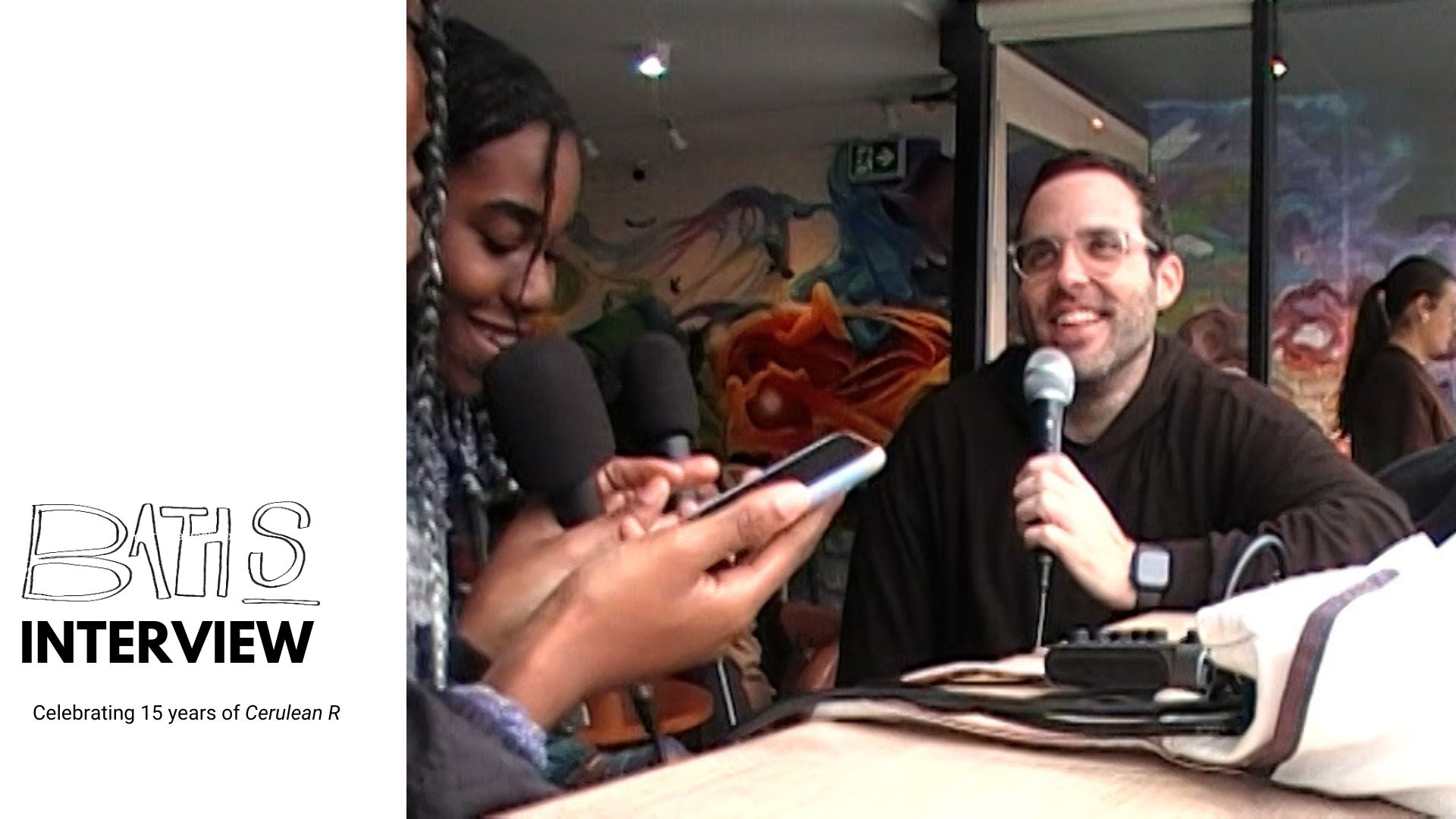
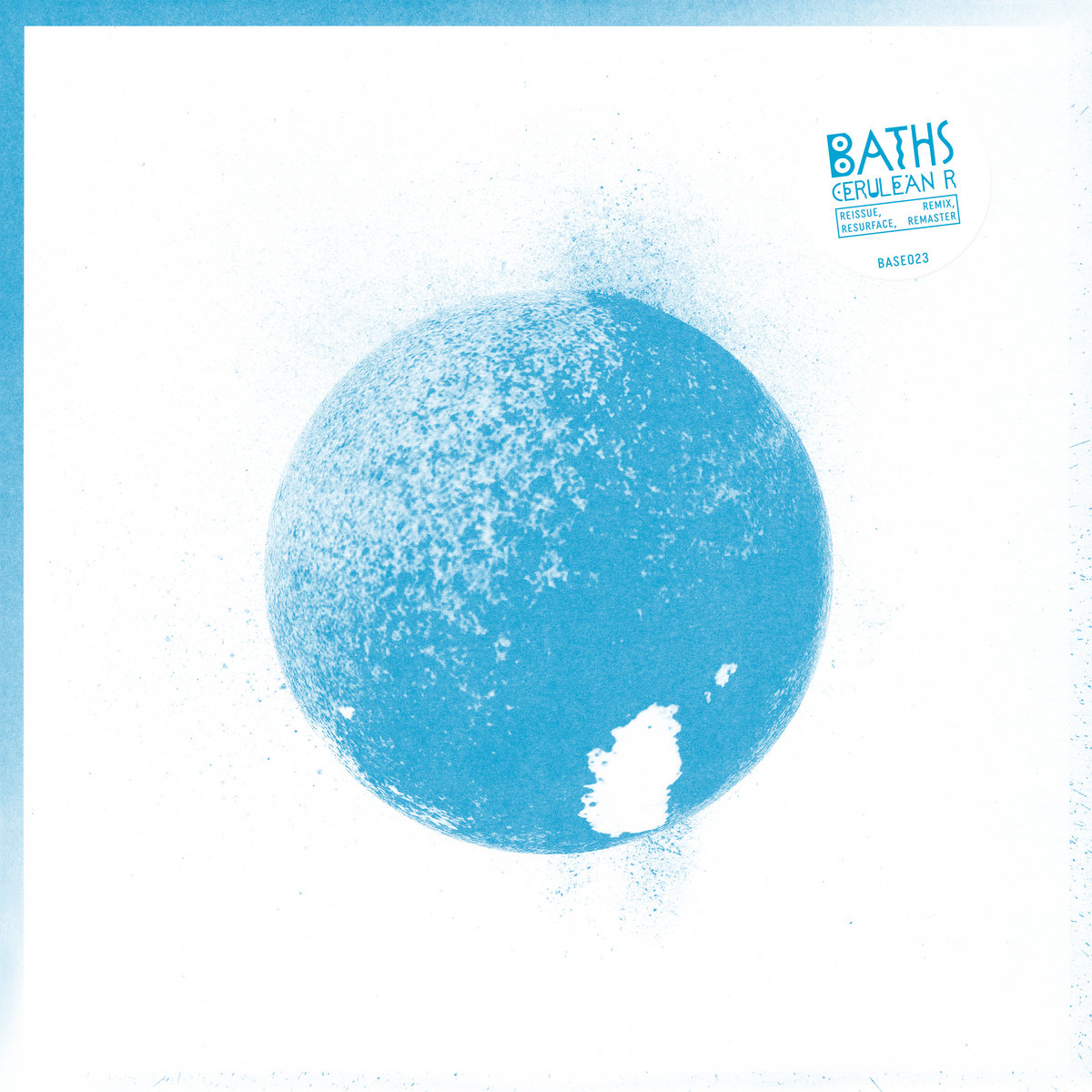
On this episode of Absent Sounds, Will Wiesenfeld (Baths) sat across from us at a coffee shop in Toronto, hours before his show at Lee's Palace. We talked about Cerulean R, his expanded reissue of the 2010 debut that launched his career, in full. What makes Cerulean R different from most reissues is its integrity to that era: every piece of it, from the unreleased tracks, the remixes, the demos, reflects the 2009–2011 window in which the original was made. A true time capsule.
We talked about what it means to revisit a record you no longer feel like yourself in, the one-to-one relationship between artist and listener, learning to leave songs unnamed so they stay open, and why "the better you are at something, the harder it gets." Also: the perfect touring top, eucalyptus oil in an Uber, and closing a chapter you didn't know needed closing.
Weajue: Hi, Will. You're currently listening to Absent Sounds — an album playthrough show on CJAM 99.1 FM in Windsor, Detroit. But we're not in Windsor or Detroit right now, we're in Toronto. The raison d'être for Absent Sounds is to go through from top to bottom of our favourite records. And you have continuously put out some of our favourite records. So I'm so excited to talk about Cerulean R — which is more than just a reissue. It feels like a time capsule.
Will: Yes. And that's even the way I tried to advertise it and put it together. All of it is very specifically from the era where the original record was made. The second LP is all remixes that were literally made at that time — 2011, 2010. And then the third is a mix of unreleased and rarer tracks from around that time. It's all stuff from then, which I find appealing as a listener — it's not something new. It's something that hasn't been heard or understood from 15 years ago. I think that's cool.
Weajue: Especially because it's in the context of yourself 15 years ago. One of the big questions I've always picked out with your work is that it feels like it's living in different places in your body. Obsidian feels like it's living in your colon. Gut is the most obvious place. Where does Cerulean exist for you, and where does that compare to Cerulean R?
Will: I think it's a little above my head. The whole thing with cerulean being cerulean sky — really bright blue — it was an aspirational record. When I was making it, nothing was happening for me. I wasn't popular, I wasn't doing anything. It was literally like, I want to make a record that I could perform and tour — similar to the likes of Daedalus, Flying Lotus, No Such Thing — that crew of beat people in Los Angeles. I wanted something for myself that I could imagine being a part of. Not that I was like, "It's going to happen." I was just like, "Feels like a cool idea." So it existing above my head a little bit, a little out of body — that makes sense to me.
Weadee: It's interesting that you mention doing it all on your own. That's such an important point of the record — almost every track is just your voice.
Will: Yeah. My favourite music in the world has always been one-to-one — you are hearing one person, and the music you're hearing is a direct result of just that one person, with as little interference as possible. People like Mica Levi, Ninajirachi — where it literally is her work. Even Björk — there are sometimes people working on her records with her, but it's so much the presence of that artist directly to the listener. Versus one song produced by 12 people and all these interfering parties. All of that is great, but the thing I seek — what really riles me up emotionally — is the idea of the musician as artist, almost like a painter. One person accomplishing the thing, and you are hearing that. That's where all of me making music comes from.
Weajue: Before Cerulean there was another project — Post Foetus. How much of that was haunting Cerulean, or seeping in?
Will: Post Foetus was very decidedly pop music — my weirdo version of electronic pop, very inspired by Morr Music. Bands like Lali Puna, Miss John Soda. And then Baths — it was still pop music in some way, but it was the LA influence. I wanted something way thicker and heavier. And the funny thing is, where I am now with Baths, a lot of those ideals have merged. I couldn't escape it. You just kind of smear all your interests together. I would get the question a lot — "What makes something a Geotic song versus a Baths song?" And often the only way I can differentiate those is if I have a goal at the beginning. But when I'm not thinking about it, it's like everything happens at once. I try not to think about it too much. That's when it gets tough.
Weadee: Is compartmentalisation something you struggle with in everyday life too?
Will: Oh, yeah. Labelling too in general. Also just being a gay person — and how important it was that I had that right. The same way I was obsessed with being known as a metal kid, not screamo. Not emo. Being so specific about it. And then the older you get, you're like: I'm a lot of things. Definitely gay, but my sexuality veers in very different directions. The type of music I'm into is obviously all over the place. You just lose the necessity of a definitive label. But at the same time it's very important to other yourself from things that are radically against your nature. It's complicated. I have ADHD. I talk a lot. Everything's a challenge. I love it. I never know what I'm doing. This is all very normal for me.
Will: I had this magic thing where I got to teach for a little bit last year. I say magic, but I was also in a financial crisis and needed to teach something. But it became extremely rewarding. A lot of it was talking to younger people who didn't know how to find their style — which is a big question for people starting out making music. I would encourage this annoying level of detailed listening. Like, if you want to sound like Caribou — it's less important to do exactly what they do, and more important to start pointing out to yourself what you actually like about those things. Listen to a song you love. What specifically are you into? And then listen to a song you don't like, and find one thing you do like. And I was like — great. You just identified something you'll act on in the future. Without even thinking about it, you're already thinking about the way you prefer a bassline to move. All those things coagulate into what becomes your style. That was me. I was just a nerd. And I would constantly identify to myself why I liked things. And when I make music, it just happens.
Weadee: I think that's why I was so impressed by the fact that you were able to come back with these tracks that lived within the Cerulean era of yourself, and give them new life without feeling like they were just tacked on.
Will: That's a very real fear — being a hack, or being corny, or worst of all being a colonizer, like "I know how to do this and nobody else does." Those nervousnesses are much clearer to me now. At the time I was just like, "I hope people like me." But it was serendipitous. It just came out at the right time, the right way. All that stuff just made sense.
Weajue: The people around you at the time — it feels indicative of one of the remixes, by Daedalus, who was the first person to give you your first show. Was that a deliberate full-circle choice?
Will: I think so. Alfred just loved that song and did that remix I think without us even really approaching the idea first. They'd been performing it, playing their version out. I remember going to see Alfred's set and that came on — I lost my mind. Full circle crazy geek moment. They were just a really important mentor for me early on. They were the reason my album got in the hands of Anticon in the first place. They really pushed me into that scene. I ended up getting a residency at Low End Theory — apparently I was the first guest residency in that club's history, which is crazy. I get to hold onto that for the rest of my life.
Weajue: There are also two remixes for Rain Smell. Was there something pulling people toward that track specifically?
Will: I think it's just that there's a lot of space in it. There's a lot more room to do something with it. When a song is really dense, it can be harder to approach as a remix. Whereas just listening to Rain Smell, you can almost already start hearing ideas on top of it. And maybe that's why we got more than one.
Weadee: When you think about sensory things — smell, taste — what brings you back to a certain era?
Will: Music, absolutely. There's this beautiful quote — I forget who said it — "Art decorates space, and music decorates time." That's exactly what it does. There's music I hear that will immediately take me to a specific time in my life. But smell is visceral. If I smell something from an era I haven't encountered in a long time, it's like the whole day stops. Eucalyptus is like that for me — it always equates to calm and space and quiet. If I need to centre myself, that will totally activate me.
Will: I used to travel with scent rollers. There's this bougie shop called Saje — S-A-J-E — they had scent tubes you could literally shove under your nose to regulate. I had a eucalyptus one for years. It just ended up smelling like a shoe because I used it so much. I would use it mostly in car rides — every Uber and Lyft driver makes me nauseous. I have so many stomach problems, so a centering smell helps so much.
Weajue: I used to do that with the COVID masks — put scent on the inside.
Will: How have I never thought of that? I'm still using masks on every plane ride for this tour. I'm terrified of getting sick. Genius.
Weajue: I wanted to ask about Aminals — you remixed it yourself as Geotic, and I've heard people say it's the one you hate the most.
Will: It is. That was my weird reversal on that track. I have such an antagonistic history with what happened with that song. I almost got sued for it. One of my most traumatic early memories is a live video of me performing it where I just look like an idiot. I do all these weird cute animal things, and I'm just so distanced from that person. Everything around that song made me feel crazy, but I also owe my career to it — it's by far the most played thing I've made. So it's a really complicated relationship, and that remix is kind of a bookend. I've never really put this into words, but it's like a gentle bookend — "I had my life with you. It was great. I'm doing other things now." Shoot it in the head. Take it out back.
Weadee: It's so interesting that you call it a bookend, because with the reissue, whatever would have been the ending is now the middle.
Will: Yeah, exactly. And that's what's fun to me — I always like most things to feel like they're leaning towards the future. Most of my records end in a very open-ended way. Very few hard stops. I like the idea of: there's more to come.
Weajue: I always say — everything works out in the end, and if it hasn't worked out yet, it's not the end.
Will: That's my entire life. This tour especially — the start was a total nightmare. So many flights and layovers, I didn't sleep for 36 hours, and then I played a show immediately. I was telling Chicago that from the stage. "I'm insane." It was crazy.
Will: The way I was making songs for Cerulean, every file title was just a number — ONE, TWO, THREE — and I was like, I think it's more appropriate to just leave it like that. My practice is much weirder now, where applying a number puts too much emphasis on how I think about the song emotionally. All my songs are gibberish working titles now. Crazy on purpose. I'll show you — I'm working on a record right now. The titles are: Ictonura, Geertrid Trish, Necoryaxon. Yogurt Salad. All crazy stuff where I just want something I can't get emotionally tricked by. Gibberish on purpose — so that I get to create the emotion.
Weadee: It almost sounds like a little protective safe distance.
Will: I think so. I'm afraid of going down a route with making something that is not emotionally accurate. If I start working on a song and immediately call it "Cliff's Edge" — before I've written a note of music, I already have a feeling and an idea about it, which doesn't serve the creative process. Whereas if it's gibberish, it can go any direction, and I create the emotion as it's happening, or I discover it. It's always just the effort of leaving it to the future, leaving it open — "Whatever needs to happen to the song can still happen to it."
Weadee: What does Cerulean R mark for you? Is it a comma, a question mark, or a full stop?
Will: I'm still very proud of that record. There are songs I still really connect to. It launched my career — it's the only reason I'm still able to do what I'm doing. But I am not the person who made that record. And so putting this out was timely. It was very helpful for me to make an effort to close the past. All I wanna be doing is thinking about the next things, the next music I'm working on. My brain is always future-focused. So having this little stint of remembering the past and appreciating it — it's almost like building its little shrine, so I can say goodbye. That's what it marks. Being like: this is done now. This means I don't have to have any allegiance left. I can do this tour, play these songs, put out this record, and now if people are bothering me about it, it's like — I did it. I am free. That's what it is. Giving myself the freedom to move on.
Will: Outside my artistic aspirations, financially it was also a very good idea. It's the 15th anniversary of a record that people really love, at an era where musicians are struggling — myself extremely included. We were like, "Financially this makes sense, but does it make sense conceptually and musically?" And we were really lucky that it did. There's all this stuff I'd never put out that people would be really happy to hear. 28 tracks, which is ridiculous. I don't listen to albums that are 28 songs long. But I know people who do and will be down for it.
Will: And the mastering job in particular is a really special thing for me — it's Kev, who mastered the original. He's also the same person who ran Low End Theory. His approach was so attentive. You can listen to the old master and then this one, and the tracks are just so much more alive and detailed. He's a genius, and he's only grown better. For me, that's the greatest joy of this reissue — how good it sounds. I'm happy to just have this version of the record and be like: this is exactly it.
Will: If we're talking about Cerulean — aspirational, in the sky — that's how I still want to think about my career. It's all open-ended in the future. The 15 years being one part of a much longer script. Hopefully I have another 15 years, 30 years, maybe 45 if I'm all scienced out. I'm 36 right now, but nothing about me feels like I'm aging out of anything. I feel like I'm still in the thick of it and having a really good time.
Will: Something my dad said to me that I still think about: the better you are at something, the harder it gets. Very true when it comes to art. So I have to actively remind myself not to take it so seriously — back off a little, have fun, let myself discover new things. And I feel like I get really caught up in the production culture on Instagram Reels — it makes it feel like you're always 1,000 steps behind everybody else. And I'm 36, I've been doing this for 16 years, and I feel crazy. I feel like I'm worse than I am. Those things can be cool helpful tools, but if you're chasing being the best producer on Earth and you always feel left behind — that's not what turns people on. I've heard a million perfectly produced songs that I can't remember. And the thing that people like, circling back to the beginning of this conversation, is hearing a person. When people self-actualize through music and do the things they want to do from a real place. The one-to-one of it all.
Weadee: Your social media feels like it captures that too — I remember a little series of you trying to find the perfect touring top.
Will: Yes. And I have it for this whole tour. It was a very real thing — I was obsessed with a concept of a top for men that does not exist, and I need it. I detailed exactly what it was, exactly how I wanted it to feel. And this brilliant designer, Efren Nava, reached out and was just like, "I can do that." And did it. Literally in less than a week from talking to the thing being in my hands. I have toured with it ever since. It's exactly the performance top I've always wanted — made out of a sporty jersey material, I can perform in it, wash it in the sink, leave it to dry overnight, and it will be dry in the morning. I have three of them now. One of the best decisions I've ever made for my entire career. It's so simple and small, but it's just the top. And it's great.
Weadee: It's tasting the concept of a thing. That's what this whole thing is.
Will: That's art, baby.
Weadee: That's art. And that's a wrap.
Will: Amazing. I feel good. Thanks y'all for having me.
